 Google
Google
Google
Google
Google
 OpenAI
 System Design
We’re introducing Instantaneous PowerLoss Storm, a new testing paradigm within Meta’s infrastructure for handling and mitigating instant or zero-notice power loss in our data centers. We’re sharing: how we built readiness to tolerate instant failures into our existing systems with defense-in-depth strategies; tradeoffs made in implementing it, and how we validated our readiness. Disaster preparedness [...] Read More... The post Lights Out, Systems On: Validating Instant Power Loss Rea...
 Stripe
 EVs and Transportation
 Data Governance
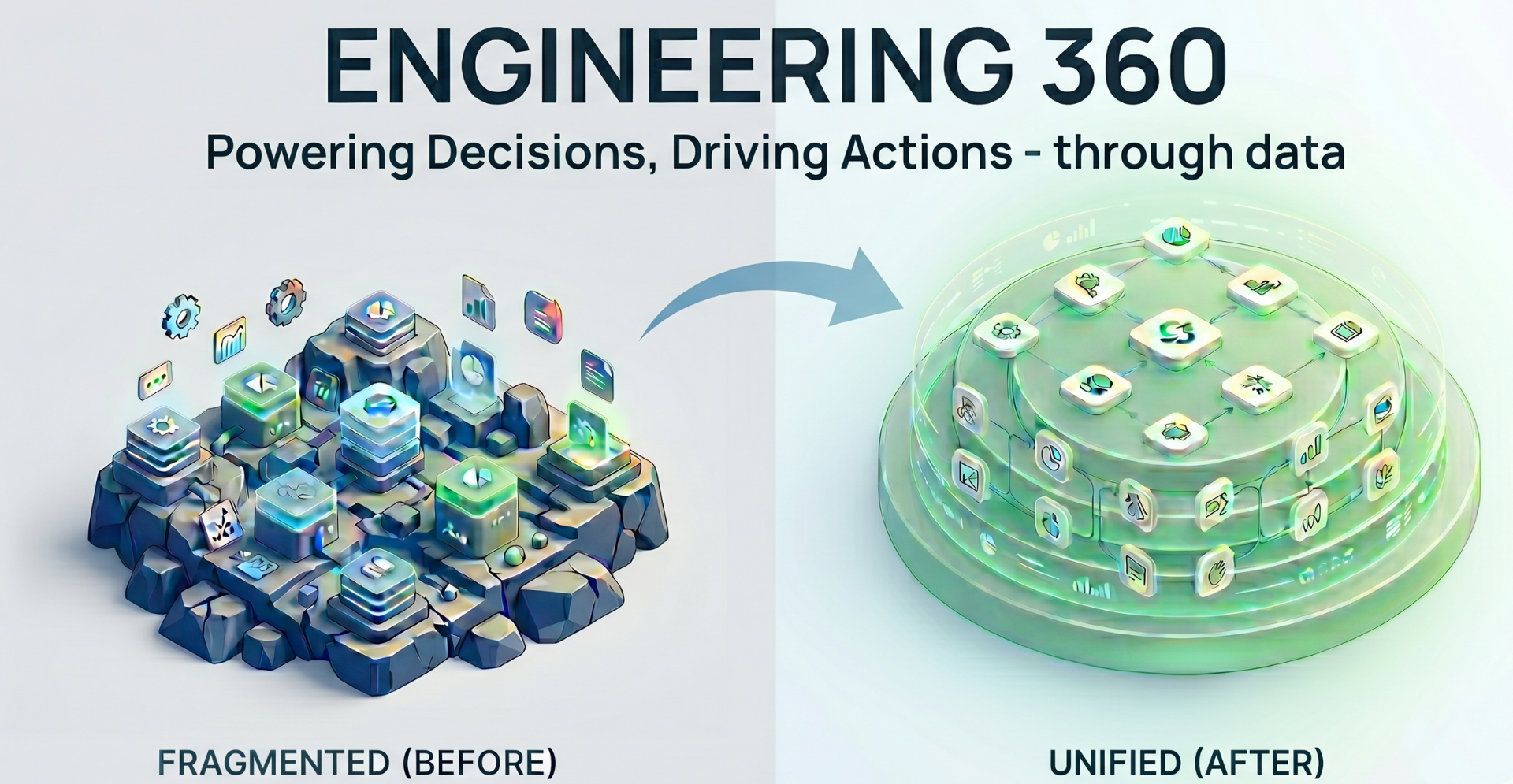
By Shiva Nimmagadda, Arun Lakshmi Narayanan, and Arun Gangavarapu. Salesforce engineering teams encountered a significant operational hurdle as the organization scaled. Critical data lived across dozens of fragmented dashboards and systems, each maintaining its own definitions. This chaos forced teams to navigate up to 40 separate tools just to complete basic engineering reviews. Leaders lacked […] The post How Engineering 360 Unified Operations at Scale and Reached 80% Adoption appeared fi...
 Robotics
 Agentic Commerce and Payments
 Google
“It's striking, concerning, disappointing, and saddening to think that members of the bar would forward cases to a court that don't exist, and to think that the lawyers on the other side of that didn’t read it for whatever reason, didn’t check it.”
 Apple
Apple
 Stripe
At Sessions 2026, Stripe unveiled dozens of products and capabilities to help businesses turn global demand into revenue. See how to go global faster with localized checkout and Adaptive Pricing, smarter fraud tools, multicurrency treasury support, and automated tax compliance.
 Cloudflare
 Google
Google’s CEO says 75% of the company’s code is AI-generated. The people who write that code say the AI they’re using is overhyped.
 AI Coding Tools
 Microsoft
 Cloudflare
BGP is vulnerable to routing hijacks and path leaks that negatively impact traffic on the Internet. RPKI helps solve some of these problems, but for some forged paths, we need to rely on a simpler mechanism: First AS enforcement in BGP.
 X / Twitter
This is today’s edition of The Download, our weekday newsletter that provides a daily dose of what’s going on in the world of technology. How courts are coping with a flood of AI-generated lawsuits Most days in her chambers, Judge Maritza Braswell, a federal magistrate judge in Colorado, sifts through stacks of documents written by…
 PostgreSQL
Most PostgreSQL outages that trace back to file descriptor exhaustion get misread as a database problem. The failure is one layer down: the kernel runs out of file descriptors and PostgreSQL takes the hit. This post covers how that happens under high connection counts, how to read the log sequence when it does, and how to fix it.What are file descriptors and why PostgreSQL burns through themIn Linux, the kernel represents almost everything as a file descriptor: TCP sockets, open table files...
Privacy
Most days in her chambers, Judge Maritza Braswell, a federal magistrate judge in Colorado, sifts through stacks of documents written by people without a lawyer. Many of them can’t afford to hire a lawyer, and others have cases too weak or too small to interest one. She reads each one carefully, mindful of how daunting…
 AI Coding Tools
 Privacy
 AI Hardware
 Defense Tech
Percona Transparent Data Encryption for PostgreSQL (pg_tde) is an open-source PostgreSQL extension that provides Transparent Data Encryption (TDE) to protect data at rest. pg_tde ensures that data stored on disk is encrypted and cannot be read without the proper encryption keys, even if someone gains access to the physical storage media. A few months ago, Percona published a blog post describing how pgBackRest can be used with encrypted data, although not all features are supported. In that ...
 MySQL
MySQL
 Space Tech
 Diffusion Models
arXiv:2606.04030v1 Announce Type: new Abstract: This paper presents an efficient reduced order modeling (ROM) framework for simulating spatio-temporal pattern formation in three-species diffusive Lotka-Volterra systems. To alleviate the high computational cost associated with long-time simulations of the high-dimensional full order model (FOM), we apply proper orthogonal decomposition (POD) to project the solution onto a low-dimensional subspace. Further efficiency is achieved through tensor...
Artificial Intelligence
arXiv:2606.04029v1 Announce Type: new Abstract: Reinforcement Learning (RL) has received increasing attention and adoption in real-world use cases. Most of these systems follow a train-then-fix paradigm, where trained agents do not learn while interacting with the world until performance degrades and retraining becomes necessary. In this position paper, we argue that deploying an agent that is incapable of optimality, but receives an evaluative reward signal, is inherently a continual RL pro...
C++
arXiv:2606.04028v1 Announce Type: new Abstract: The IEEE P3109 draft standard defines a parameterized family of binary floating-point formats and associated operations, with a focus on facilitating machine learning. These formats allow efficient and consistent representation of values in a small number of bits. The defined formats are parameterized over width and precision in bits, signedness, and the presence of infinities. Operations are defined by decoding floating-point values to the set...
Prompt Engineering
arXiv:2606.04027v1 Announce Type: new Abstract: Diffusion large language models (dLLMs) generate text by iteratively denoising partially masked sequences under bidirectional context, exposing a safety surface distinct from autoregressive LLMs. Because mask tokens are native inputs and tokens are committed by confidence rather than position, harmful content can be induced through infilling and outside the monitored prefix. Existing jailbreaks either miss this native infill capability or rely ...
Artificial Intelligence
arXiv:2606.04025v1 Announce Type: new Abstract: Dominant programming paradigms inherit an execution model optimised for a bygone era of a single human mind instructing a local machine, leaving contemporary systems burdened with historical path dependencies. When forced to host multi-dimensional, connectionist intelligence, this brittle assembly model fractures under the weight of a profound probabilistic-symbolic impedance mismatch. While contemporary Software 3.x frameworks attempt to patch...
LLM Evaluation
arXiv:2606.04023v1 Announce Type: new Abstract: While large language models (LLMs) have been extensively evaluated on code generation tasks for general-purpose programming and GPU-accelerated environments (e.g., PyTorch, CUDA), their capabilities in CPU-oriented high-performance computing (HPC) across diverse architectures remain underexplored. To bridge this gap, we introduce CodegenBench, a comprehensive benchmark suite designed to evaluate the generation of efficient parallel code across ...
Diffusion Models
arXiv:2606.04018v1 Announce Type: new Abstract: We study neural approximation of elliptic PDE solutions from a variational perspective. The central point is the distinction between the geometry of neural parameters and the convergence of the corresponding physical states. Even when the original elliptic energy is coercive and strictly convex in the natural energy space, its restriction to a nonlinear neural ansatz may fail to be coercive in parameter space. This failure is caused by non-clos...
AI Agents
arXiv:2606.04017v1 Announce Type: new Abstract: Long-running AI agents fail not only when inference fails or tools are underspecified, but when independently evolving model and harness layers change the semantics of belief, capability, and goal commitments across their boundary - a failure class this paper terms Interface Volatility. This paper argues that Agent Epistemic Integrity (AEI) must be treated as a first-class architectural constraint, achievable only through joint model-harness de...
Computational Complexity
arXiv:2606.04016v1 Announce Type: new Abstract: We describe a reproducible computational framework for upper-bound searches on r_3(N), the maximum size of a 3-term-arithmetic-progression-free subset of [1,N]. The framework combines a verified lower-bound witness, endpoint forcing, depth-d witness-variable splitting, OEIS A003002 window-cardinality pruning, and recursive refinement of timed-out subproblems. Applied to the frontier case N = 212, K = 44, it found no feasible 44-set across milli...
Machine Learning
arXiv:2606.03995v1 Announce Type: new Abstract: Background: Alzheimer's disease (AD) affects over 55 million people worldwide. Accurate, interpretable detection of normal cognition (NC), mild cognitive impairment (MCI), and AD from routine clinical assessments remains a critical unmet need. Methods: An XGBoost classifier was developed for three-class detection using eight clinical features from the Alzheimer's Disease Neuroimaging Initiative (ADNI): MMSE, CDR Global, CDR Sum of Boxes (CDR-SB...
 Startups and Venture
 CSS
CSS
 ML Infrastructure
Authors : Marsan Ma, Nikhil Lopes, Raj Amrit, Hong Lu, Dipankar Biswas, Trent Kyono Leadership: Iris Wang, Madhu Kurup Recommendation and ranking systems power many of the most important experiences on large internet platforms. Yet the models that run in production are rarely the largest models we can train. They are usually compact, latency-sensitive supervised […]
 AI Inference
 Query Planning
The planner assumes cursors fetch only 10% of results by default. If you're actually reading them all, that fast-start bias could be killing your performance.
 Anthropic
 Amazon
 AI Psychosis
 Query Planning
 EVs and Transportation
 Apple
Apple
 Startups and Venture
 Information Theory
 Replication
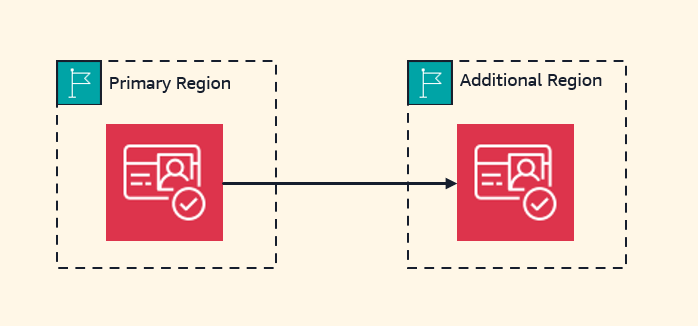
Amazon Cognito now offers multi-Region replication that automatically synchronizes user data, credentials, and pool configurations to a secondary AWS Region, enabling uninterrupted authentication during regional failovers without forced password resets—plus new support for customer managed KMS keys for encryption control.
 Wasm Edge Computing
 Rust
Rust
 Google DeepMind
 Developer Tools
 PostgreSQL
Hello listeners! Yesterday, with little fanfare (yay 🎉) we pushed out a minor release to pg_clickhouse, the interface for querying ClickHouse from Postgres. As with previous minor releases, yesterday’s v0.3.0 release requires no reload, restart, or ALTER EXTENSION UPDATE, just reload your session when you’re ready and you’re good to go. But don’t let the minor version increment deceive you: we made a significant change to pg_clickhouse in this version. What change, you ask? Here it...
 Mobile Development
 Embedded Systems
 Security Engineering
 EVs and Transportation
 Defense Tech
 eBPF
eBPF