 Security and Cryptography
UK Cybercrime Journal: University of Nottingham Breached by ShinyHunters
What HappenedOn 9 June 2026, the University of Nottingham was listed as a victim on the ShinyHunters Tor data leak site.The attackers leaked over 40GB of billing and payment records, student finance data, and campus portal exports from the University of Nottingham and its Malaysia and China campuses.The data stolen includes contact information, transaction amounts, IP addresses, full names, home addresses, postcodes, email addresses, phone numbers, dates of birth, and other internal campus data.
 Systems Programming
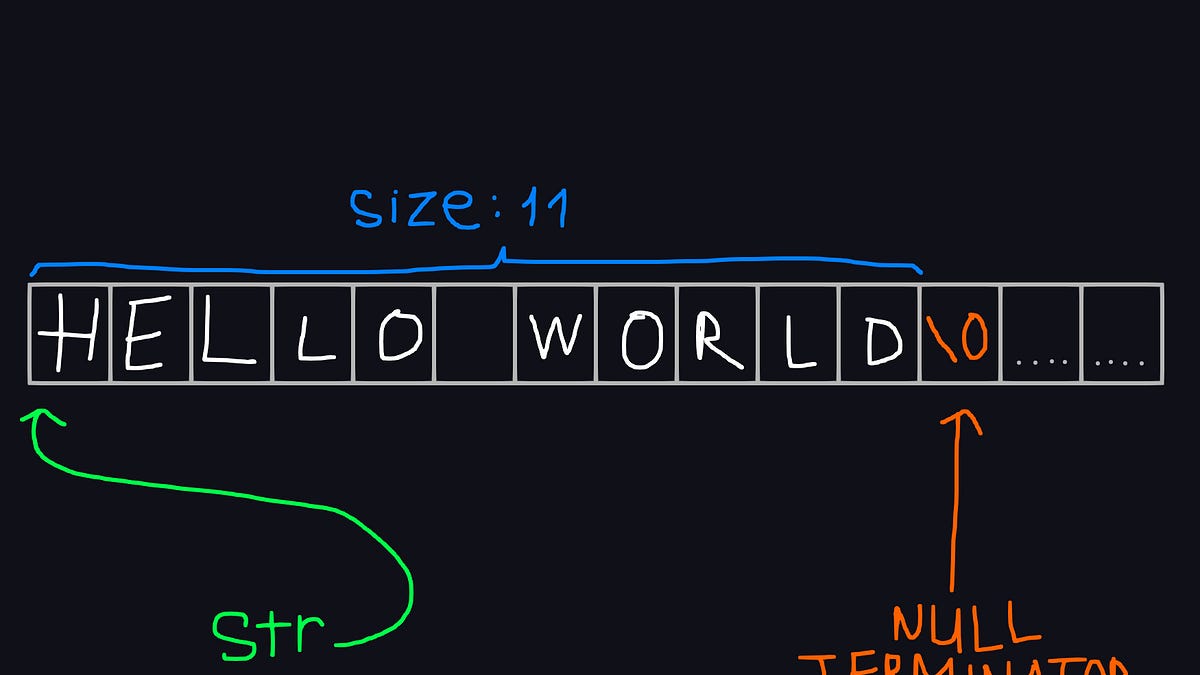
C Strings: A 50-Year Mistake
 Compilers
So Many Opinions, So Many LLMs: Comparing Large Language Models to Traditional Machine Learning for Open- Ended Survey Analysis
arXiv:2607.11890v1 Announce Type: new Abstract: Open-ended surveys offer valuable insights, but they are notoriously difficult to analyze at scale. Building on previous work that employed traditional machine learning to classify text ("So Many Responses, So Little Time: A Machine-Learning Approach to Analyzing Open-Ended Survey Data") [1], this study investigates how different large language models (LLMs) understand and analyze NSSE open-ended survey responses. We focus on several cutting-edge
Machine Learning and AI
CANDI: Contextual Alignment for Niche Domains Question Answering
arXiv:2607.11891v1 Announce Type: new Abstract: The deployment of large language models (LLMs) in specialized domains like medical diagnostics and financial advisory necessitates evaluating capabilities beyond general knowledge. Traditional question-answering benchmarks often fail to capture the nuanced contextual grounding, user awareness, and domain understanding these fields require. To address this, we introduce CANDI-QA (Contextual Alignment for Niche Domains Question Answering), a novel d
Machine Learning and AI
Scaling Point-in-Time Language Models
arXiv:2607.11889v1 Announce Type: new Abstract: Large language models trained on unrestricted internet corpora inevitably embed information from the future, introducing lookahead bias that compromises the validity of backtests and causal inference in finance and the social sciences. Point-in-time language models--trained exclusively on text available up to each calendar date--eliminate this leakage by construction, but existing efforts typically produce models that lag substantially behind thei
Computational Biology
AgentSociety 2: An Integrated Research Environment for Executable Social Science
arXiv:2607.11895v1 Announce Type: new Abstract: AI scientist systems are beginning to automate parts of scientific research, but social science poses a distinct challenge: its objects of inquiry are not merely datasets or laboratory protocols, but integrated social processes involving situated participants, interaction contexts, interventions, and outcomes. Yet a critical link is missing: existing systems either assist isolated research tasks or simulate agents as experimental subjects, leaving
Notes on the Fourier Transform
The Fourier series is a great tool for analyzing periodic functions. But what about functions that don’t repeat? We’ve seen that we can compute Fourier series for a non-periodic function defined on a finite interval, as long as we don’t care about its behavior beyond that interval. Let’s extend this idea to functions that never repeat; that is, non-periodic functions defined on the interval . Visualizing Fourier series for non-repeating functions To motivate the subject ahead, let’s l
Starting with Rust as my first programming language. Am I making things unnecessarily hard?
I'm completely new to programming and decided to start with Rust instead of something like Python. A lot of people have told me it's a terrible idea because of the learning curve, but I really like how the language feels and I don't mind taking things slowly. Right now I'm working through The Rust Programming Language book and trying not to just copy the examples. I spend a lot of time experimenting with small changes to understand why things work or don't. For anyone who also started with Rust,
 Web Development
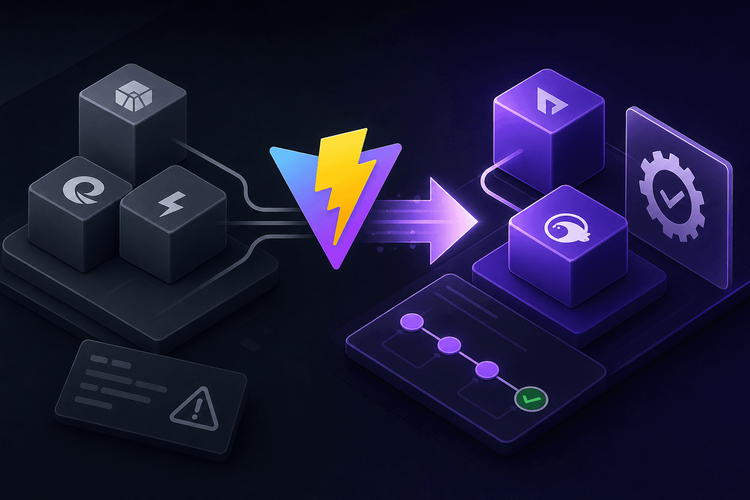
Vite 7 Production Migration: From esbuild to Rolldown and Oxc
Production migration guide for Vite 7's Rust-powered toolchain. Covers Rolldown adoption (replacing Rollup/esbuild), Oxc for JavaScript transforms, configuration migration (rolldownOptions, oxc), CI/CD integration patterns, and plugin compatibility verification. Continue reading Vite 7 Production Migration: From esbuild to Rolldown and Oxc on SitePoint.
 Web Development
Testing React Server Components: Vitest Patterns for Async Boundaries and Mock Strategies
Production testing guide for React Server Components in 2026. Covers Vitest setup for async components, boundary mocking patterns (db, fetch), environment configuration (@jest-environment node), Suspense boundary testing, and integration vs E2E strategy decisions. Continue reading Testing React Server Components: Vitest Patterns for Async Boundaries and Mock Strategies on SitePoint.
 Machine Learning and AI
Why organizing knowledge in the age of AI sucks, and how I solve it
 Machine Learning and AI
Legal AI, not a coding agent with scaffolding
CSTA 2026 Day Two
There is a lot of talk about networking at conferences like this. While there is nothing wrong with networking if you do it right you are really making friends. Friendship pays all sorts of dividends. For example, I met Tommy Gober at some conference. It may have been CSTA, it may have been SIGCSE, but we’ve seen each other at conferences. Tony is not at CSTA this year but we are friends on Facebook and this morning he recommended a restaurant for me to try. So I did and it was a wonderful rea
 Software Engineering
Sets of Overlapping Circles
 Compilers
Online vs. Offline AI Evals: When to Use Each
 Science
The 3-degree limit could be exceeded as early as 2050
Casio FX870P Emulator
 JavaScript
Vite 8 Migration: Moving from esbuild to Oxc in Production React Apps
Comprehensive guide Continue reading Vite 8 Migration: Moving from esbuild to Oxc in Production React Apps on SitePoint.
 Web Development
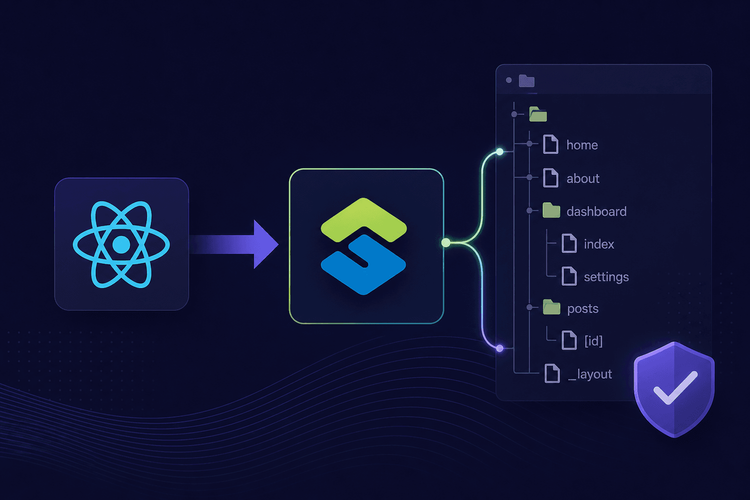
TanStack Router v1: Migrating from React Router to Type-Safe File-Based Routing
Comprehensive guide Continue reading TanStack Router v1: Migrating from React Router to Type-Safe File-Based Routing on SitePoint.
 Web Development
CSS Container Queries and Subgrid: Building Context-Aware Component Layouts
Comprehensive guide Continue reading CSS Container Queries and Subgrid: Building Context-Aware Component Layouts on SitePoint.
 JavaScript
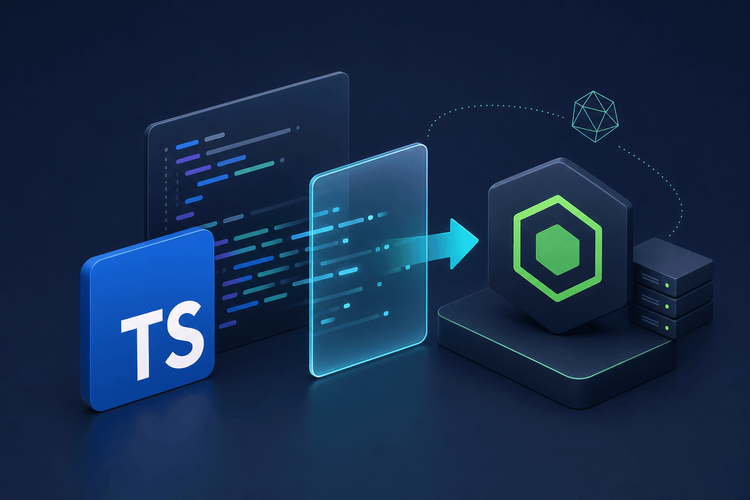
TypeScript 5.8 Production Migration: Adopting Erasable Syntax for Node.js 23+
Comprehensive guide Continue reading TypeScript 5.8 Production Migration: Adopting Erasable Syntax for Node.js 23+ on SitePoint.
You should probably check on your smart appliances
Engineering the Invisible
A few years ago, I was in a product review with a vertical SaaS company building software for auto dealerships. Strong unit economics, low churn, no second revenue line. Every financial touchpoint their customers relied on—floor plan financing, parts procurement cards, technician expense management—flowed through third-party providers with whom the platform had no commercial or technical relationship. Millions of dollars moved daily, visible in the analytics dashboard, unreachable by the mon
AI Didn’t Make Programming Easier. It Just Made It Differently Difficult
For decades, empirical research has shown that programming is a demanding cognitive activity: Developers rely on working memory, long-term recall, and complex mental models to manipulate interacting abstractions such as control flow, data structures, and the structural design of software. This classical model frequently positioned memory and recall as both the central enablers of, and bottlenecks in, software development. Today’s AI-powered coding assistants are changing that. These tools func
Show HN: Self-hosted voice AI agent for Asterisk/FreePBX
 Databases
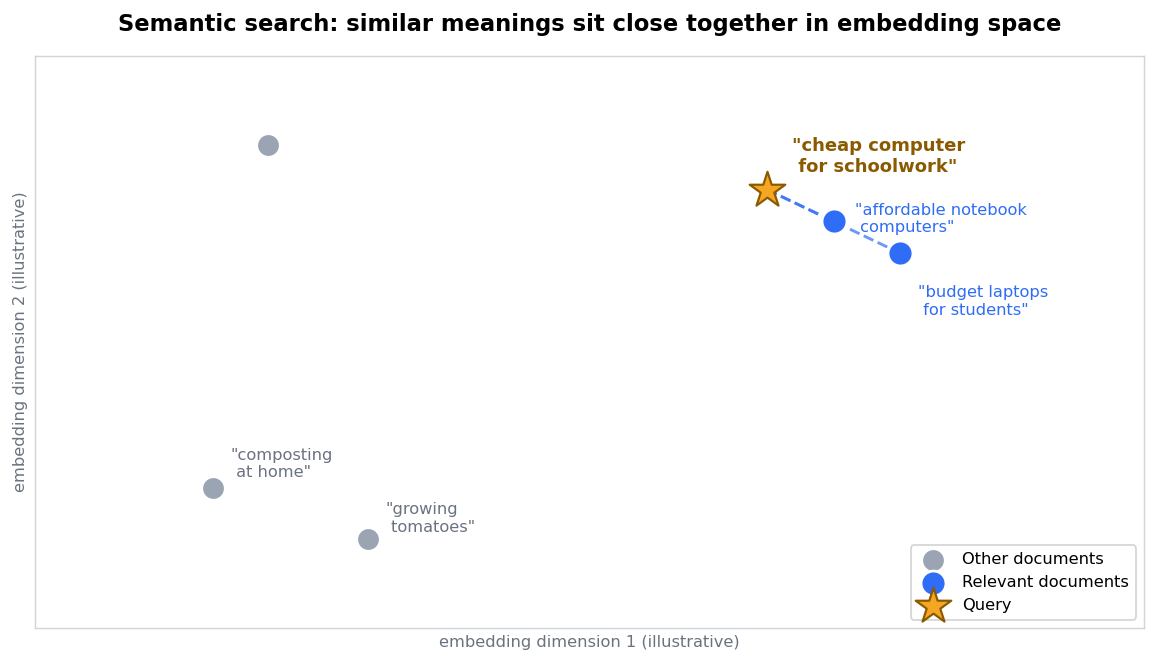
Semantic Search from Scratch: Build Search That Understands Meaning
Traditional keyword search matches words, not meaning — so a search for “affordable notebook computer” can miss a perfect result that says “cheap laptop,” simply because no words overlap. Semantic search fixes this by comparing meaning instead of exact tokens, understanding that both phrases are asking for the same thing. In this guide you’ll build semantic search from scratch in Python, starting with the core idea — embeddings — and ending with a version you can scale to million
 Python
Practical Guide To Python App Hosting
Python has become the default language for data-intensive work, AI applications and...
Learning Rust, starting my first project
Hello all, I just started learning Rust in May and Im about to start my first project. I would like to build a small tensor library with basic operations. I plan to add GPU support after the the CPU operations are solid. There are a few things I'd love input on: How would you structure a project like this from the start so it is easy to extend later? Crate/workspace layout suggestions if this grows into multiple components? As a beginner are there common mistakes or design choices that I shou
I'm new to Rust. Would love some help!
Hi everyone, I'm 17 years old and I've decided to learn Rust as my very first programming language.(no joke!) I have zero prior experience with coding (and am new to reddit to... lol). I'm currently working through "The Rust Programming Language" book. I know it's a challenging path, but I'm committed and find the language really interesting. I'm posting because I'd love to hear from experienced developers. If you could go back and restart your programming journey from scratch, especially with R
 Databases
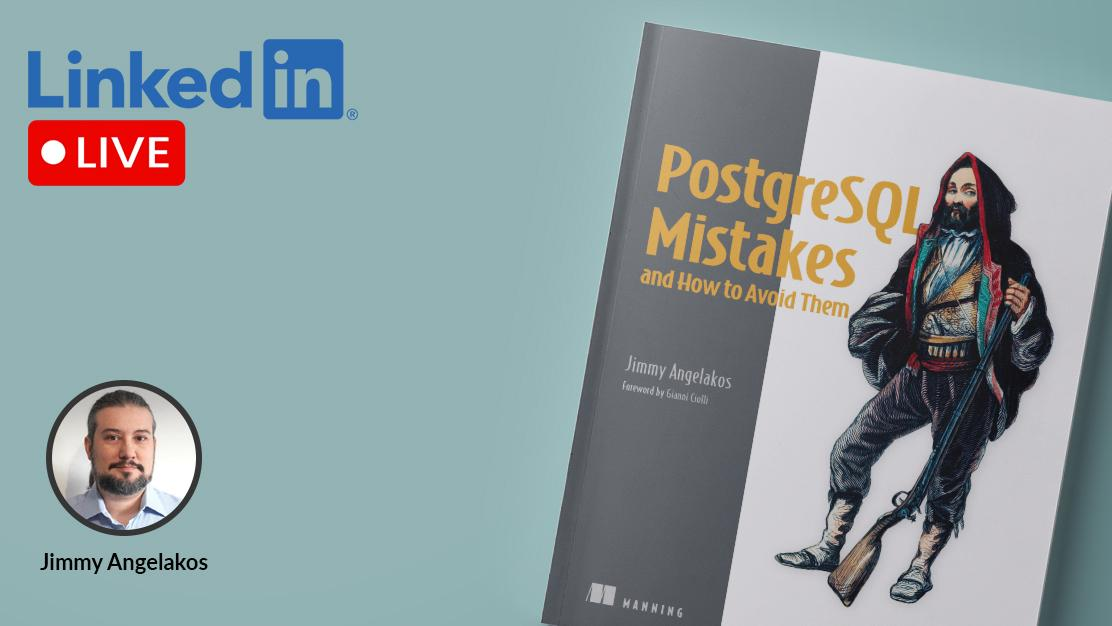
Jimmy Angelakos: LinkedIn Live: Fixing Bad SQL in PostgreSQL with Jimmy Angelakos
Back on Friday, April 3rd, I ran a live, hands-on LinkedIn Live session on fixing bad SQL in PostgreSQL. My apologies for the delay in sharing the recording: for various reasons I couldn't post it earlier, but here it is. The session was based on Chapter 2 of my book, PostgreSQL Mistakes and How to Avoid Them (Manning), and it zeroes in on the common SQL anti-patterns that quietly lead to incorrect results and hidden performance issues. I kept it hybrid: short, concise explanations paired with l
 Machine Learning and AI
The founder of Hinge raised $18M to build a new AI dating service, Overtone
 Databases
Building a High-Performance C++ Backtesting Framework
A Trusty Boot Key (Ventoy Alternative), for Bastille Day
How I use HTMX with Go
On keys, essences and performance
 Mathematics
Pseudpocalypse
Should I use Rust?
Hi everyone. I want to start a project related to the Linux operating system, but during my research I realized that I can't do without functions from the C standard library. Should I use Rust if some of the functions are taken from libc and the rest from regular rust or is it better to write the entire project in C so that there is no division into two languages? I don't know this language very deeply, but as far as I understand, it is positioned as safe, and working with the C library requires
 Open Source
The zero-cost fallacy: open-source software in the agentic era
OpenJTD 0.0.1: open-source Rust tooling for Ichitaro documents (developer preview)
I’m building OpenJTD, an open-source project for working with Ichitaro .jtd, .jtt, and .jttc documents in Rust. The long-term goal is a practical open-source JTD engine that can eventually support faithful document rendering and editing. OpenJTD 0.0.1 is the first developer preview of that work, focused on the rjtd Rust workspace and its parser, model, export, CLI, and WASM components. The current preview can inspect CFB/OLE containers, extract text from observed document streams, handle obser
I built a local IPC tool to connect Rust, Go, Python, and JS (and spent 2 hours debugging npm because of uppercase letters)
I have been working on Nerve, a local IPC tool designed to make Rust, Go, Python, and JavaScript communicate seamlessly. The core idea is to leverage Rust's performance and safety to handle the heavy lifting and strict typing while allowing other languages to interact with it natively. For the Rust client, I focused on efficient serialization and safe concurrency. It handles the underlying socket connections and message routing. Funny side note during development: I spent about two hours trying
termlayout: a declarative layout & widget library for structured CLI output (ANSI-aware, Unicode-safe, Markdown)
Body: Hi everyone, If you've ever tried to build structured CLI output (like tables, columns, or aligned text) in Rust, you've probably run into the "ANSI wrapping nightmare". The moment your strings contain ANSI escape codes (for colors/styles) or multi-byte Unicode characters (like emojis or Umlauts), naive string slicing and .len() calculations break. The terminal escape codes are counted as characters, wrapping gets misaligned, and layout boundaries are exceeded. To solve this, I created ter
 Machine Learning and AI
From weeks to a day: how we made LLM evaluation fast enough to iterate on
Training an LLM is the easy part. The hard part is designing experiments and evaluations that you can trust enough to know whether the new model is actually an improvement.By: Baharak SaberidokhtIntroductionShipping a production LLM system means iterating fast on improvements to something that is, by construction, non-deterministic. Models drift, judges disagree with themselves, references regenerate as different strings, and bugs may persist until the next release, because retraining takes week
 Web Development
The joy of Inertia Rails: painting your own with 50 happy little lines
Authors: Svyatoslav Kryukov, Senior backend engineer, and Travis Turner, Tech EditorTopics: Rails, Open Source, React, JavaScriptInertia is Turbolinks with one twist: render JSON instead of HTML on the second visit. We rebuild the whole protocol on a real Rails app with a 50-line client and a 16-line server, then audit what the real gem adds on top.Hi there, welcome back, so glad you could join us again. You know, we've painted with Inertia.js on this blog many times, but today is gonna be a lit
 Networking
A broken DNSSEC rollover took down .AL. Now 1.1.1.1 tells you when validation is bypassed
On July 3, 2026, the Albanian communications authority (AKEP), the operator of the .AL country-code top-level domain (TLD) of Albania, attempted a DNSSEC key rollover. Something went wrong, resulting in DNSSEC validation failures. Any validating DNS resolver receiving these signatures was required by the DNSSEC specification to reject them and return errors to clients. That includes 1.1.1.1, the public DNS resolver operated by Cloudflare.The .AL TLD is the online home of Albanian government serv
 Machine Learning and AI
Launch HN: Agnost AI (YC S26) – Extract user feedback from agent conversations
 Infrastructure and DevOps
Shipyard: How We Built Slack’s Next-Generation EC2 Platform
Over the past few years, we’ve been on a journey to modernise how we run Amazon Elastic Compute Cloud (EC2) instances at Slack. In our first post, Advancing Our Chef Infrastructure, we shared how we moved from a single Chef stack to a resilient, multi-stack setup with versioned cookbook deployments and safer promotion workflows. This afforded us far more reliability and operational control across tens of thousands of EC2 instances. Subsequently, in Advancing Our Chef Infrastructure: Safety Wit
 Science
Robots at CSTA 2026
It seems like robots are everywhere at CSTA in the exhibit hall. I made a pass through and looked at most of them. So who was showing robots? Ozobot is first. I love these little robots. They are adorable, come fully assembled and students also love them. Their new Ari robot has a bunch of new features including a display screen that is touch sensitive and some additional sensors. G-cube from Roborisen is a new one for me. It consists of cubes that are building blocks to make programmable r
 Machine Learning and AI
Are we offloading too much of our thinking to AI?
 Databases
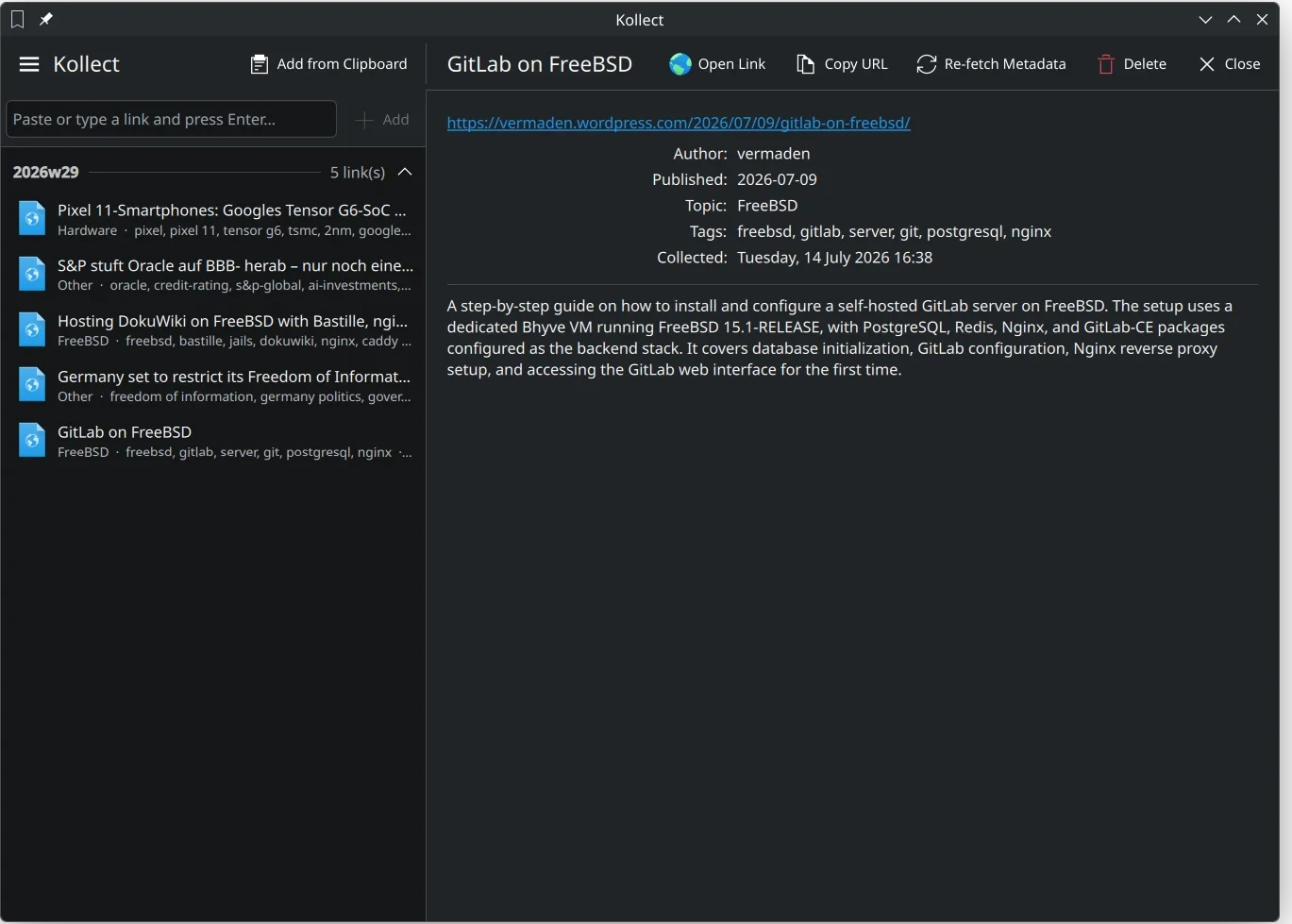
Kollect: The Native KDE Link Collector I Built for Myself
I have a very predictable failure mode when reading the web. I open an interesting article, decide I will come back to it later, and leave the tab open. Then I do the same thing another twenty times. The tabs stop being a reading list and become archaeological layers. Browser bookmarks never fixed this for me. They are good at preserving a URL, but a URL and a title are not enough to answer the question I actually have two weeks later: why did I save this? Read-it-later services answer more of
 Mathematics
How Retail Finance teams are using Agentic AI to protect omni-channel margins
Ask a retail CFO where the quarter's margin is landing and you will always get a hard-won answer...
Show HN: Juggler – an open-source GUI coding agent, by the creator of JUCE
 Python
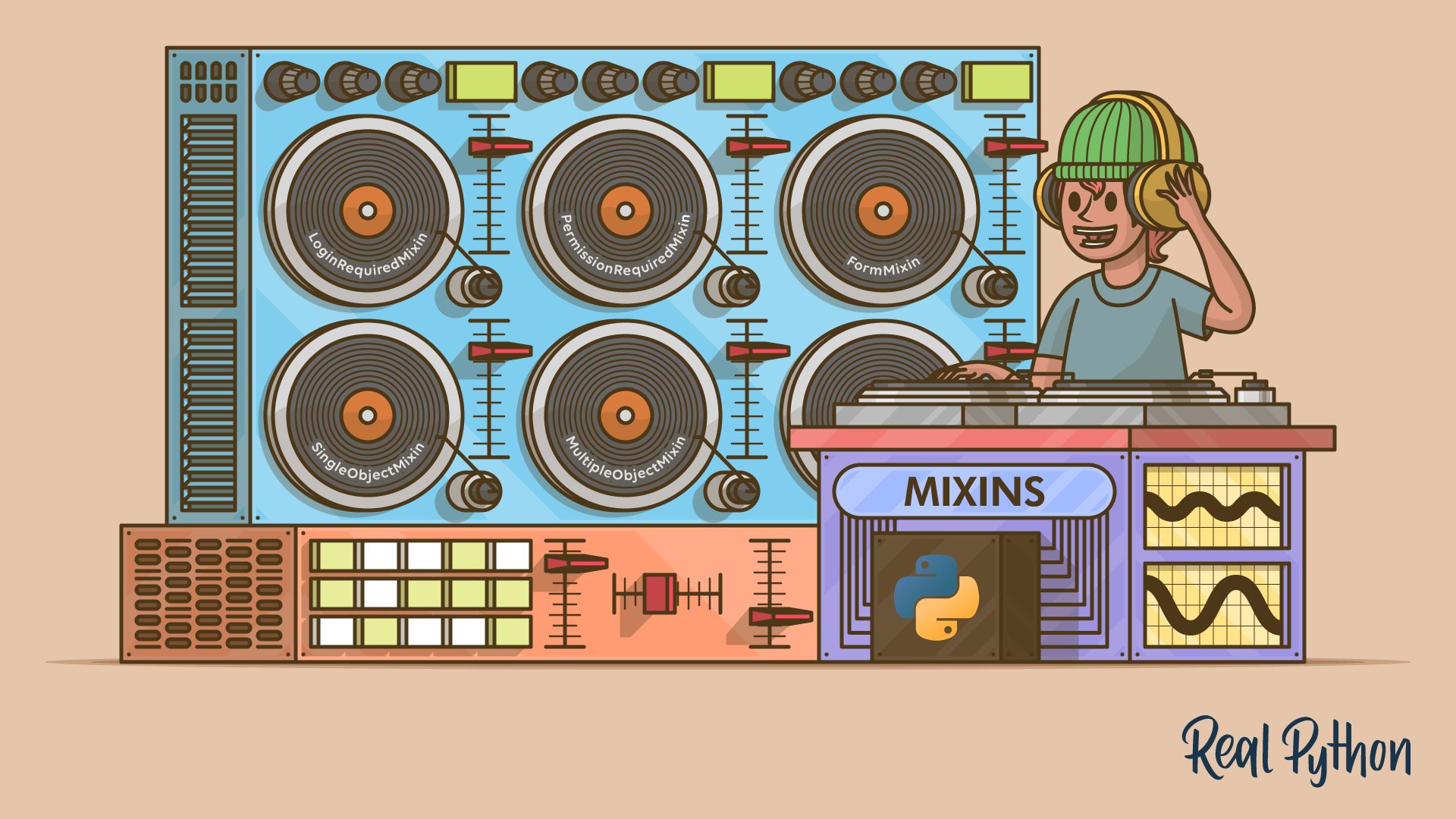
Understanding Mixin Classes in Python
Mixins offer a powerful way to reuse code across multiple Python classes without forcing them into a rigid inheritance hierarchy. Instead of building deep and brittle class trees, you can use mixins to share common behaviors in a modular and flexible way. Learn when and how to implement mixin classes effectively in your Python projects. By the end of this video course, you’ll understand that: Mixins allow you to add isolated, reusable functionalities to classes without enforcing a strict type
Built a System Monitor Dashboard with Charton (Rust Grammar of Graphics)
Hey all — wanted to share something I've been building with Charton, a Grammar of Graphics crate for Rust (ggplot2-style API, Cartesian/geo/polar charts, SVG/PDF/PNG/WGPU, WASM). The dashboard does real-time system monitoring: CPU/memory/swap utilization as line charts over time, per-core CPU load as a scatter plot, network throughput (RX/TX rates), and a live process audit log that flags heavy processes. It polls sysinfo, renders the charts via Charton, and displays everything in egui with a
 Security and Cryptography
Introducing Third-Party Applications for Organizations
Securely extend your multi-tenant APIs and MCP servers to AI agents, partner marketplaces and developer ecosystems using native, organization-scoped access control with Auth0 Third-Party Applications for Organizations
 Programming Languages
The Rise and Fall of Commercial Smalltalk (2020)
monomorphisation and compile times, generic params and dependencies
TLDR: Does the rust compiler make any attempt to increase parallelism by looking ahead for the type parameters that actually get used? consider the scenario - - crate A defines a bunch of generics - crate B depends on A, imports those generics - crate C depends on B, also imports A and uses it's generics - crate D depends on C, also imports A and uses it's generics This would suggest a sequence where A gets 'compiled' first but doesn't really generate any executable code, and there's a strict de
 Android
Android Studio Quail 2 is Stable: Multi-task with the Android Studio AI agent
Posted by Amman Asfaw, Product Manager, Android Studio Android Studio Quail 2 is now stable and ready for you to use in production, bringing a shift to your IDE with concurrent agentic workflows, natively integrated memory leak profiling, and context-aware crash remediation. Whether you are performing a sweeping architectural overhaul, tracing a memory leak, or resolving a critical production crash, Android Studio keeps you anchored in your workspace by reducing manual friction. Here’s a deep
 Databases
Foundational context: Cross-industry & function-specific accelerators for Lakebase
Databricks Lakebase is a fully managed, serverless Postgres database built for the...
 Software Engineering
AI Engineer World’s Fair 2026: The Runtime Is Where Agent Trust Is Won
We spent the week at AI Engineer World’s Fair in San Francisco, on stage and on the floor. Here’s what we heard, and where we think it lands for anyone building with agents. The SDLC is being rebuilt in public This week at AIE felt like a synthesis of what’s been playing out in developer tools for the last few years, for anyone who’s been watching. The software development lifecycle is reshaping itself into an AI-native SDLC, and the industry is naming the n
 Graphics
Tensor is the might
Five Key Principles to Update CS Education in the Agentic Coding Era
If code becomes cheap, then understanding, judgment, and systems thinking become expensive. That is the shift we are living through. Writing code has never been easier. Tools like Copilot and ChatGPT generate working code within seconds. But the real challenges of engineering have not disappeared. If anything, they have become the focus. This creates an educational risk. Students can become very productive very quickly, but without developing any depth. They can build systems they do not ful
Compilers
Coding agents think ahead of time
 Distributed Systems
DSLs Enable Reliable Use of LLMs
Building realistic software systems is an iterative process, where design decisions are refined by efforts to implement them. Unmesh Joshi has found that LLMs play two roles in this: acting as brainstorming partners to build a domain vocabulary and, once this vocabulary is established, as an excellent natural language interface to it. In building Tickloom - a tool for illustrating distributed system behavior - he also illustrates how building a Domain-Specific
 Software Engineering
What does "playing politics" mean for software engineers?
 Machine Learning and AI
G-Eval, Explained
G-Eval is a reference-free evaluation framework that uses large language models to assess the quality of generated text. This article explains how G-Eval works, including rubric-based prompting, chain-of-thought evaluation, and probability-weighted scoring using token log probabilities. You will also learn its limitations, common implementation patterns, practical best practices, and when not to use it. If you are building LLM applications, chatbots, summarization systems, or AI writing assistan
 Machine Learning and AI
The Future Worth Building Is Human – Thinking Machines Lab
Show HN: Rejourney – Open-source revenue leak prediction for web and mobile apps
 Mathematics
Actegories
 Go
Go
Understanding the Go Runtime: Profiling
European "age verification" "app" forcing everyone to use Android or iOS
 Machine Learning and AI
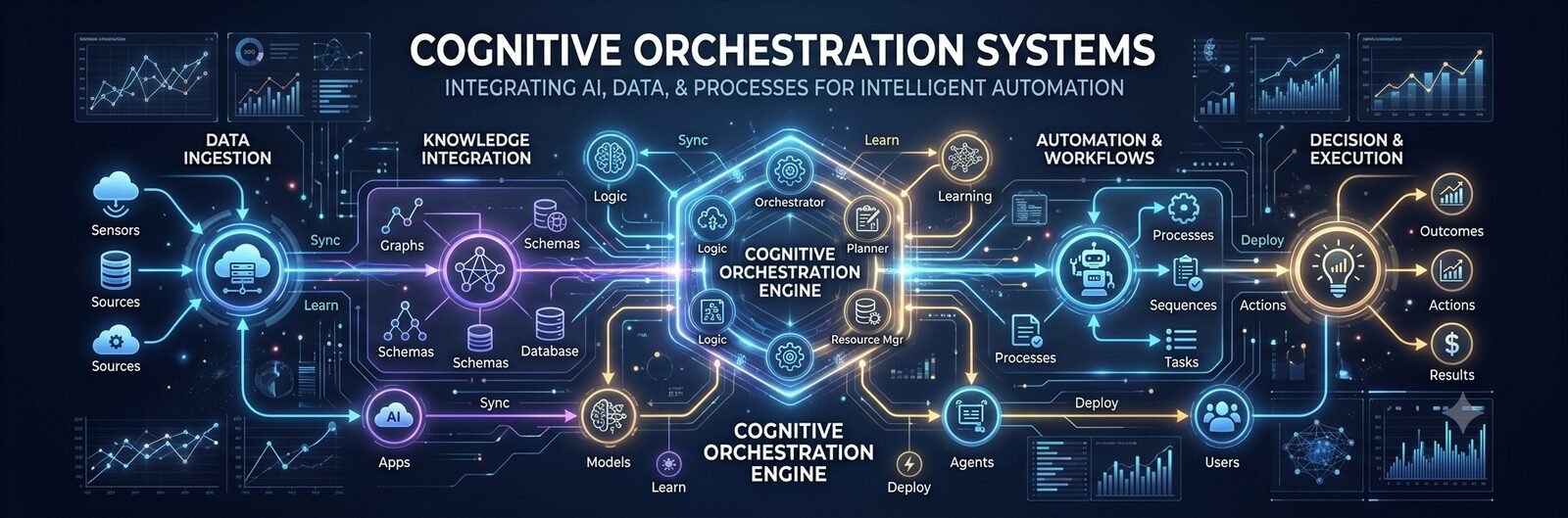
What Is a Cognitive System? Software That Pursues Goals, Not Instructions
What Is a Cognitive System? Software That Pursues Goals, Not Instructions From applications to goal-seeking systems. The first time one of my systems did something I hadn’t told it to do, I went looking for the bug. There wasn’t one. It had hit a dead end I never planned for, backed up, and found another route to the goal. I had spent my whole career writing software that does exactly what it is told and nothing more. That was the first time I had built something that did what it was for ins
 Quantum Computing
PsiQuantum has a plan to make a massive quantum computer out of light
The machine that could change the world will be housed in a room that looks like a data center crossed with an ice cream factory. Inside will be some 100 stainless-steel cabinets, each about six feet tall and connected to a supply of liquid helium that keeps them only a few degrees above absolute zero. Inside those cabinets will be hundreds of chips, and on those, thousands of particles of light flying through a maze of optical switches and beam splitters. Each photon must be accounted for, beca
Debian Bookworm v12.15 Released
The Anatomy of an Instruction Pipeline Hazard
 Databases
Hans-Juergen Schoenig: How SQL/PGQ Rewrites to Joins on PostgreSQL 19
This post is about what PostgreSQL actually does when you write GRAPH_TABLE syntax. It turns out the database rewrites your graph query into ordinary joins against the underlying tables, then plans them with the regular optimizer. This has three practical consequences you'll notice right away. First, performance is predictable. The query plan shape follows directly from your pattern shape, just like join-heavy SQL. Second, the indexes that matter are the obvious ones — the same you'd ad
 Data Engineering
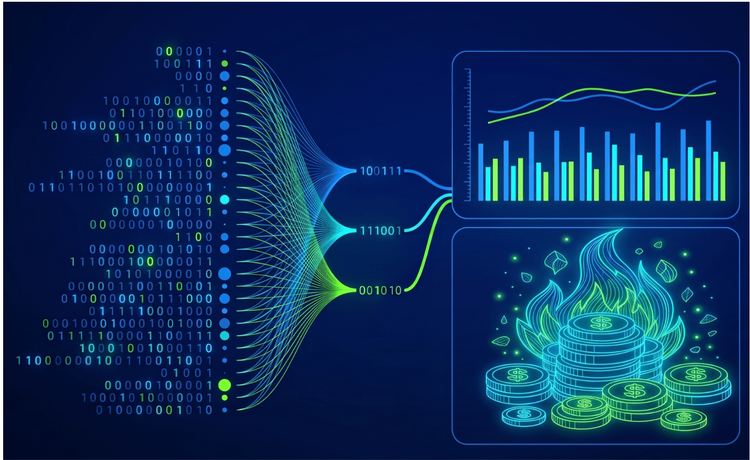
Optimizing Cost per Insight in AI Data Analytics Systems
null Continue reading Optimizing Cost per Insight in AI Data Analytics Systems on SitePoint.
Veryl update: writing hardware verification components in Rust
Hi everyone. A while ago I introduced Veryl, a hardware description language, here on r/rust (Veryl: A Modern Hardware Description Language). It's been a while, but there's an update relevant to Rust, so I'd like to share it again. Veryl now has a built-in RTL simulator for writing simple tests directly. But real verification needs more than that: complex bus functional models, protocol checkers, and golden models. To support those, we made it possible to write verification components in Rust an
 Machine Learning and AI
Talking to Copilot like a caveman
I think that everyone who uses AI recognizes the following pattern; you ask an LLM a simple question and it answers like it's writing a blog post: introduction, context, three examples, a closing summary. Fine for a first read, expensive when you're chaining calls or running an agent loop all day. The trick to avoid this is called "caveman prompting". You tell the model to drop articles, pleasantries and filler, and answer in short, blunt fragments. It sounds silly. But it works up to a point.
 Databases
How to Install Drupal on Ubuntu 26.04
In this blog post, we will show you how to install Drupal on Ubuntu 26.04 OS. Drupal is a popular ... Read More The post How to Install Drupal on Ubuntu 26.04 appeared first on RoseHosting.