Search engine internals: how to win "Search Benchmark, The Game"
Back in March, we entered the Search Benchmark, The Game with a search engine we’ve been working on called IResearch. It’s a C++ native alternative to Lucene or Tantivy that isn’t widely known yet, but we actually ended up winning it. The cool part for us was that the Tantivy maintainers validated the results and approved the commit themselves. We appreciate this competition and treat it as a way to contribute our findings back to the search and information retrieval community, so we’...
Nim-Presto – REST API Framework for Nim Language
 Apple
Apple
New accessibility features powered by Apple Intelligence
 Startups and Venture
Stilta raises $10.5M from a16z and YC to help companies rediscover the patents they forgot they had
 PostgreSQL
Annie Ghazali: PostgreSQL’s Growing Role in AI Infrastructure
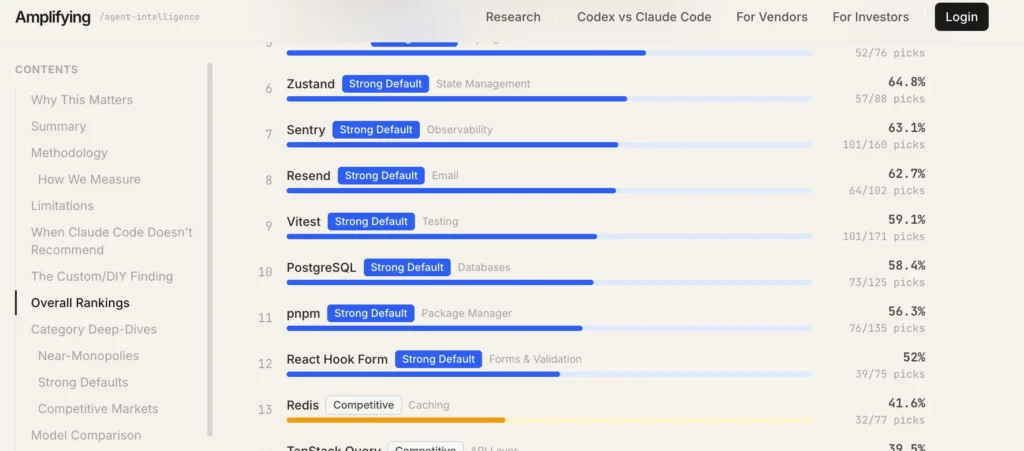
PostgreSQL, often through platforms like Supabase, is increasingly becoming part of the default stack for many AI applications. That level of adoption says something important about where engineering teams are placing their trust.Supabase has become one of the most common starting points for AI products. Most AI frameworks support PostgreSQL and pgvector directly. For many teams, PostgreSQL is already part of the stack before the AI layer is even introduced. ...
 Computer Vision
Gaussian Splat of a Strawberry
Show HN: Id-agent – Token efficient UUID alternative for AI agents
 Rust
Rust
The Windows DLL loader lock: how a Rust thread can hang your JVM
 Quantum Computing
I Found Ultra-Pure Quantum Crystals in an Abandoned Mine in the Atacama Desert
Vibe Coding with SoundCloud: Announcing New Docs for your Agents
Have you ever had a brilliant idea for a music app, a custom playlist curator, or a unique way to discover underground tracks on SoundCloud…
Even More Tagged Union Subsets with Comptime
Built a DBMS from scratch in C to study buffer pool behavior on real SQL workloads
I’m a third-year CS student and over the past year I’ve been building minidbms — a database engine written from scratch in C and Python — to study buffer pool replacement policies experimentally. Current features: - slotted-page heap storage - direct pread/pwrite I/O - LRU / Clock / NoCache / OPT - trace-based telemetry replay - benchmark + sweep analysis tools - interactive cache inspector - B+ tree indexes (in progress) Some interesting results so far: - Bélády-related behavior re...
 DNS
DNS
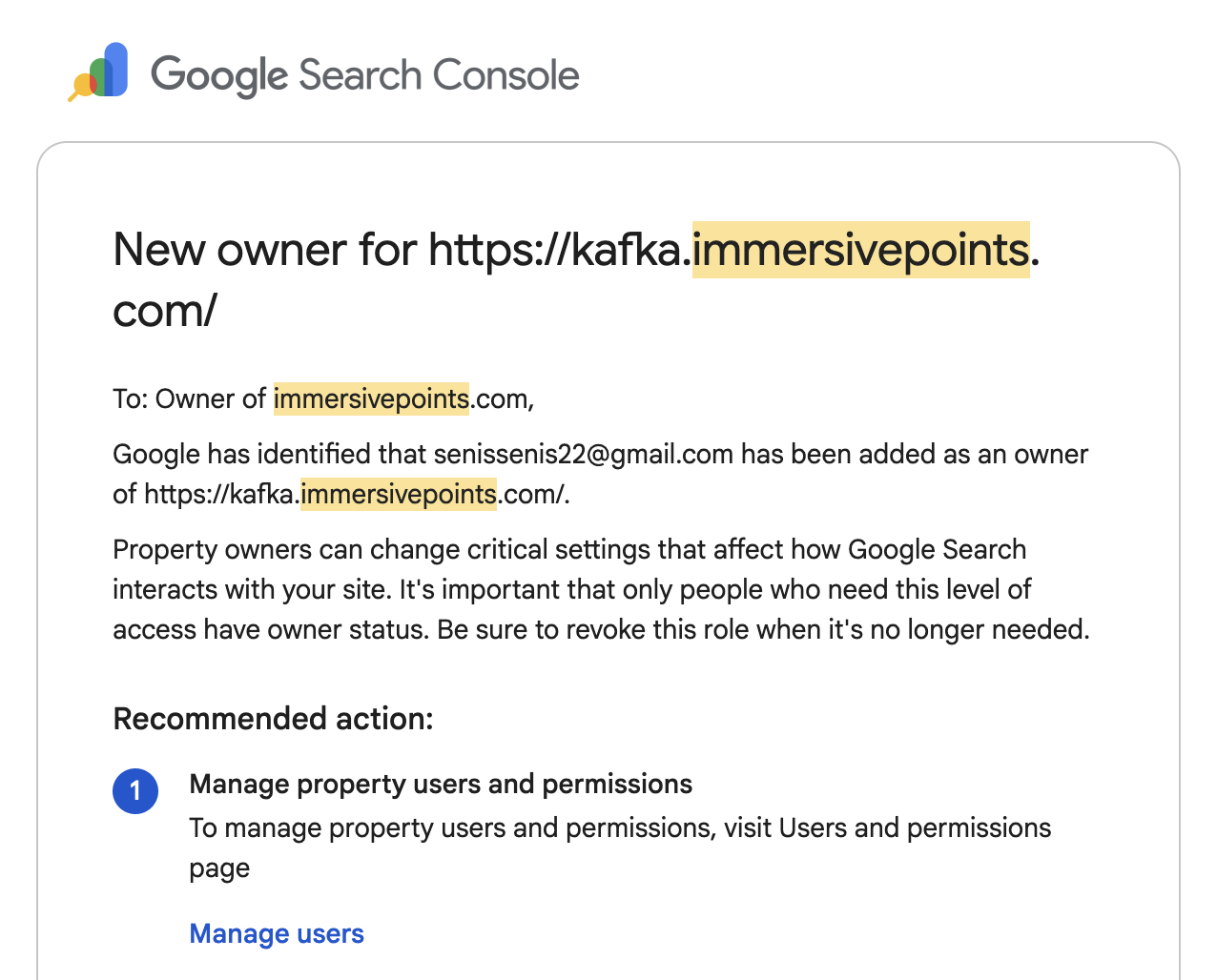
My domain got abused on GitHub Pages
A new EDIT tool for LLM agents
Right now I'm working to an agent for my DS4 project. Local inference is token-poor, it's a battlefield where optimizations count. I was quite surprised by the fact the EDIT tool everybody is using right now forces the LLM to emit the old version of the text verbatim. This CAS (check and set) mode of operation, where I say EDIT old="foo" new="bar", is needed because there are often colliding edits (the user is editing as well, or checked out a different branch, and so forth) and because the L...
 Open Source
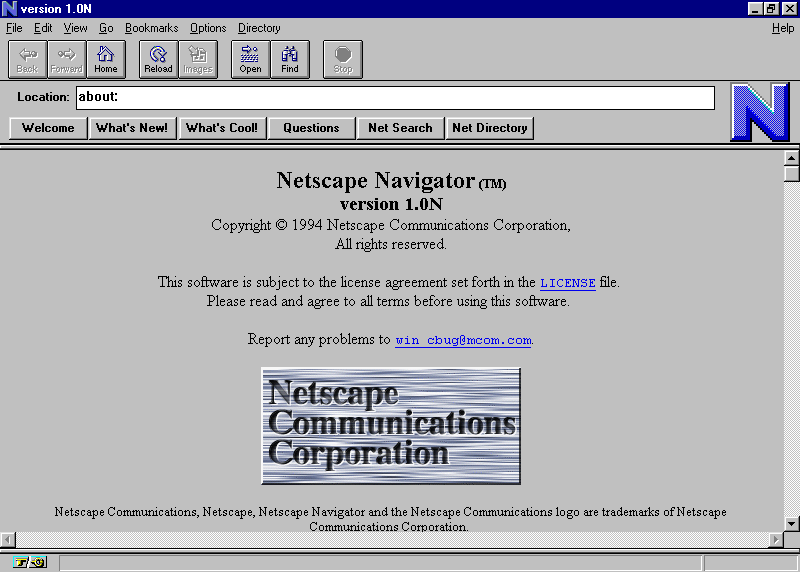
The lasting influence of Netscape Time
 Rust
Rust
Show HN: I built a sovereign OS, L1 blockchain, AI agent, and language
 Functional Programming
Humble Tech Book Bundle: The Ultimate Functional Programming
 Startups and Venture
Theo Baker spent four years investigating Stanford. Before he leaves, here’s what he found.
 Machine Learning
Cursor Introduces Composer 2.5
Show HN: Clark-Browser – Stealth Chromium
LLMCap – A proxy that hard-stops LLM API calls when you hit a dollar cap
 AI Coding Tools
Codex-Maxxing
Show HN: Hsrs – Type-Safe Haskell Bindings Generator for Rust
 AI Coding Tools
Sieve – scans Cursor/Claude chat history for leaked API keys
 Defense Tech
As of April 2026: Iran has destroyed 42 U.S. Military Aircraft in Op: Epic Fury
AgentCRM – Headless CRM for Claude Code
 Web Application Security
Your fridge could be a threat to national security
On the floor of HumanX, Ryan is joined by Adam Meyers, Senior VP of Counter Adversary Operations at Crowdstrike, for a deep dive on their latest Global Threat Report that tracks over 281 adversaries across nation states, e-crime, and hacktivist organizations.
PyTorch Landscape
 Artificial Intelligence
D$^2$Evo: Dual Difficulty-Aware Self-Evolution for Data-Efficient Reinforcement Learning
arXiv:2605.17037v1 Announce Type: new Abstract: Reinforcement learning (RL) has demonstrated potential for enhancing reasoning in large language models (LLMs). However, effective RL training, which requires medium-difficulty training samples, faces two fundamental challenges: Effective Data Scarcity and Dynamic Difficulty Shifts, where medium-difficulty samples are scarce and become trivial as models improve. Existing methods mitigate this scarcity to some extent by generating training sampl...
Artificial Intelligence
Reliability and Effectiveness of Autonomous AI Agents in Supply Chain Management
arXiv:2605.17036v1 Announce Type: new Abstract: This paper studies autonomous generative AI agents in multi-echelon supply chains using the MIT Beer Game. We identify four inference-time levers that shape performance: model selection, policies and guardrails, centralized data sharing, and prompt engineering. Model capability is the dominant factor: an out-of-the-box reasoning model exceeds human-level performance, and optimized reasoning models reduce costs by up to 67% relative to human tea...
Privacy
Privacy Policy Enforcement Guardrails for Data-Sensitive Retrieval-Augmented Generation
arXiv:2605.17034v1 Announce Type: new Abstract: Standard PII filters often miss contextual data leakage in RAG systems, such as non-regulated attribute clusters that collectively identify individuals. We introduce a Privacy Policy Enforcement (PPE) framework using dual one-class density estimators with fused text embeddings and a calibrated abstain region for out-of-distribution inputs. Using an axis-stratified, multi-LLM synthetic data pipeline across medicine, finance, and law, we found th...
Robotics
Generalizable and Actionable Parts Pose Estimation with Symmetry Annotation-Free Learning Strategy
arXiv:2605.17033v1 Announce Type: new Abstract: Urgently needed generalizable robot object interaction and manipulation requires high-quality Cross-Category object perception. As a pioneer of this area, Generalizable and Actionable Parts (GAParts) understanding has attracted increasing attention from relevant researchers. However, most recent works either have insufficient design regarding the symmetry issue or require rich symmetry annotation, which severely impedes precise GAPart pose esti...
Large Language Models
Task Abstention for Large Language Models in Code Generation
arXiv:2605.17029v1 Announce Type: new Abstract: Large language models (LLMs) have revolutionized automated code generation. One serious concern, however, is the so-called ``hallucination'', i.e., LLMs may generate seemingly plausible but functionally incorrect code. In this paper, we study the task abstention problem, i.e., determining whether a given LLM should abstain from performing a specific code generation task to avoid likely hallucination. Our approach features a calibrated abstentio...
LLM Evaluation
PARALLAX: Separating Genuine Hallucination Detection from Benchmark Construction Artifacts
arXiv:2605.17028v1 Announce Type: new Abstract: Large language models (LLMs) hallucinate with confidence: their outputs can be fluent, authoritative, and simply wrong. In medical, legal, and scientific applications this failure causes direct harm, and detecting it from internal model states offers a path to safer deployment. A growing body of work reports that this problem is increasingly tractable, with recent methods achieving high detection performance on widely used benchmarks. We show, ...
Fine-tuning and PEFT
Why Do Reasoning Models Lose Coverage? The Role of Data and Forks in the Road
arXiv:2605.17026v1 Announce Type: new Abstract: Recent progress in large language models has led to the emergence of reasoning models, which have shown strong performance on complex tasks through specialized fine-tuning procedures. While these methods reliably improve pass@1 accuracy, prior works have observed that they show a coverage shrinkage behavior, where pass@k degrades relative to the base model. In this paper, we investigate the reasoning shrinkage arise under SFT-based post-trainin...
Computational Complexity
Intermediate Constacyclic Codes and Scalar-Residue Reed--Muller Layers
arXiv:2605.17022v1 Announce Type: new Abstract: A 2024 paper of Sun, Ding and Wang introduced a second class of constacyclic codes over finite fields, denoted $C(q,m,r,\ell)$, with length $(q^m-1)/r$, where $r\mid(q-1)$ and the defining monomials have total $q$-ary degree congruent to $r-1$ modulo $r$. In the non-projective intermediate range $2
ASMTP – SMTP for Agents
 Defense Tech
War Game Exposed U.S. Vulnerability to Low-Tech Warfare
 Streaming Analytics
PgBackRest Will Continue
 Google DeepMind
The last six months in LLMs in five minutes
 Homelab & Self-Hosting
Data Center Waste Heat as an Emerging Urban Thermal Hazard
 DNS
DNS
.at TLD is top on CF Radar
Regex Chess: A 2-ply minimax chess engine in 84,688 regular expressions
Leaving the Sea of Nodes in the V8 JIT
 Meta
Meta
Meta Reassigns 7k Employees to Focus on A.I
 C++
C++
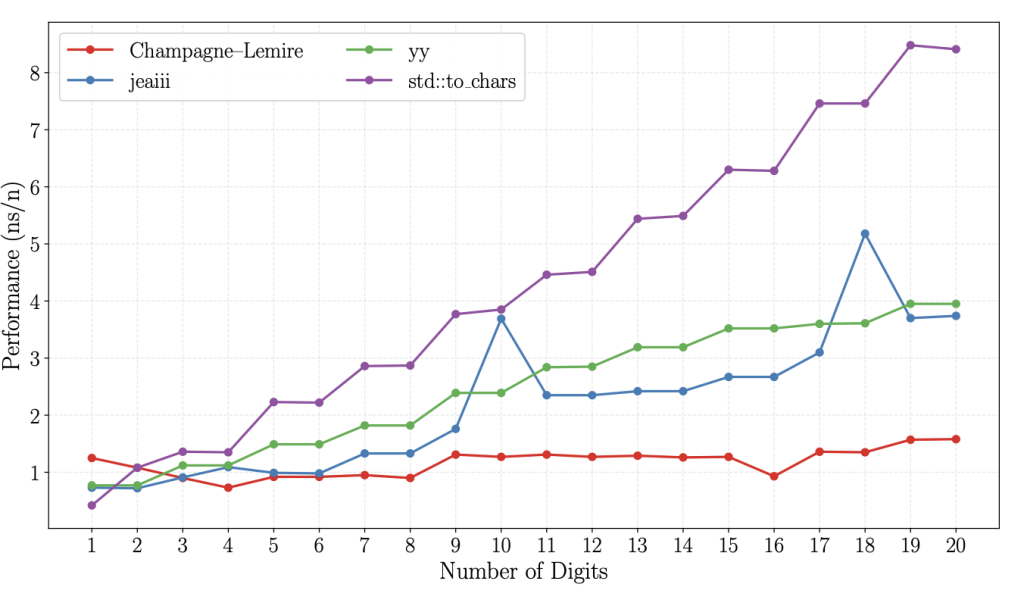
SIMD-accelerated integer-to-string conversion
When can the C++ compiler devirtualize a call?
What political censorship looks like inside an LLM's weights (Qwen 3.5)
Casuarina Linux
 Azure
Azure
Microsoft surprises with its first server Linux distribution: Azure Linux 4.0
 PostgreSQL
Christophe Pettus: All Your GUCs in a Row: bonjour and bonjour_name
PostgreSQL's Bonjour parameters let you advertise a server on the local network via Apple's service-discovery protocol—a clever 2002 idea that hasn't aged well.
 xAI
xAI
Here’s why Elon Musk lost his suit against OpenAI
On Monday, the jury in Musk v. Altman dealt Elon Musk a major blow—reaching a unanimous advisory verdict that Musk sued OpenAI too late and, as a result, his claims are barred by the applicable statutes of limitations. US District Judge Yvonne Gonzalez Rogers immediately accepted it. Musk announced on X that he will be…
 C++
C++
Bytecode Interpretation From Scratch in C
Coding on Paper
 Anthropic
Anthropic co-founder to present AI encyclical alongside Pope Leo XIV
 X / Twitter
Canceled by Hinge
Introducing Casuarina Linux: A glibc-Based Chimera Linux Derivative
 Mathematics
What Do Gödel's Incompleteness Theorems Mean?
 Anthropic
Mexican government breached by solo user with Claude, 150 GB exfiltrated
 Cloud Security
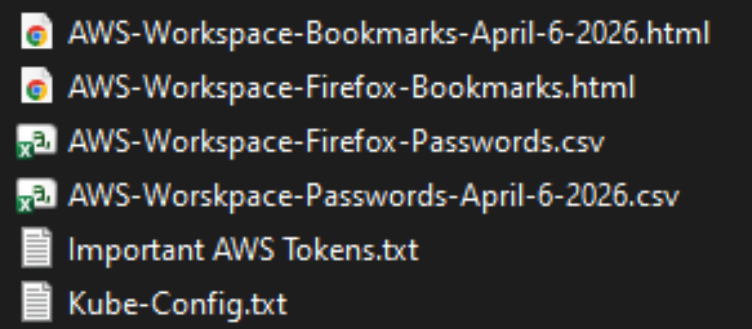
CISA Admin Leaked AWS GovCloud Keys on Github
AGI and AI Safety
Alignment pretraining: AI discourse creates self-fulfilling (mis)alignment
Who will buy your services if you fire us all?
 EVs and Transportation
OSHA probing worker death at SpaceX’s Starbase site
 EVs and Transportation
US bill proposes new national EV tax, while some push to slash gas tax to zero
The Enshittification of History
 Anthropic
SandboxAQ brings its drug discovery models to Claude — no PhD in computing required
Designing an FPGA Calculator from Scratch
 Artificial Intelligence
Vibhor Kumar: Beyond Vector Search: Why PostgreSQL Could Become the Memory Layer for Enterprise AI Systems
The conversation around AI infrastructure today is heavily focused on models, GPUs, inference speed, and vector databases. These are important building blocks, but they often distract from a deeper architectural challenge that is beginning to emerge as enterprises move from experimentation toward operational AI systems. The challenge is memory. Not memory in the simplistic sense of storing chat history or embeddings, but memory in the broader sense of maintaining durable context, operat...
 X / Twitter
X accounts are limited to 50 posts and 200 replies a day unless they pay
 Developer Tools
The tyranny of single page apps
No More JetBrains Products for Me
Crypto industry lobbies to evade AML/CTF rules
 Go
Go
Understanding Singleflight in Go
 Rust
Rust
cargo-crap: Finding Untested Complexity in AI-Generated Rust Code
 Spotify
Show HN: We missed Winamp, so we built an audio player for macOS
Hyperpolyglot Lisp: Common Lisp, Racket, Clojure, Emacs Lisp
 Spotify