 CVE and Exploit Development
CVE and Exploit Development
CVE and Exploit Development
CVE and Exploit Development
CVE and Exploit Development
 EVs and Transportation
 Linear Algebra
arXiv:2605.24231v1 Announce Type: new Abstract: For some kernel matrices, low-rank approximations can be quickly obtained via analytic techniques. One important class of analytic methods that has received attention in recent years is based on the use of proxy points. Accuracy analysis for various proxy point methods has often been heuristic in nature, other than for certain special kernels. For more general cases, the methods lack an explicit number or location of proxy points required to yi...
Anthropic
arXiv:2605.24229v1 Announce Type: new Abstract: Frontier AI developers now train models against long written behavioral specifications, such as Anthropic's constitution (Anthropic, 2025a) and OpenAI's Model Spec (OpenAI, 2025a), integrated into post-training via methods like character training (Anthropic, 2024) and deliberative alignment (Guan et al., 2024). These documents serve a governance function, but it is unclear how well models actually follow them under adversarial, multi-turn press...
Artificial Intelligence
arXiv:2605.24225v1 Announce Type: new Abstract: In this paper, we introduce a model of evolution and learning in robots that co-optimizes a distribution of latent design vectors (genotypes) and a mixture of control experts (neural modules), which are gated by the latent coordinates of each decoded design (phenotype). This provides a scalable alternative to co-design algorithms that either train an individual policy for every robot, which is inefficient, or a monolithic universal controller f...
AI Coding Tools
arXiv:2605.24228v1 Announce Type: new Abstract: We investigate sketch-like pen input as an alternative way to support execution control in interactive debugging. In our interface, programmers draw lightweight marks to set breakpoints, use symbolic strokes to control execution, and extend strokes into spirals to repeat traversal actions. The prototype combines gesture recognition with Python execution tracing in a conventional editor interface. In a controlled study with 24 programmers, we co...
Distributed Consensus
arXiv:2605.24222v1 Announce Type: new Abstract: Peer-evaluation and selection systems are used when sets of agents evaluate each other in order to select the best $k$ among them. These are commonly used in real-world settings, including academic conferences where those reviewing papers are often the set of submitters. Conferences have attempted to better allocate their reviewing resources by moving to a two-stage mechanism, in which some papers are eliminated after a first stage of review an...
AI Agents
arXiv:2605.24220v1 Announce Type: new Abstract: Reinforcement learning for language agents increasingly depends on custom harnesses that manage long-running context, multi-turn tool use and multi-agent orchestration. However, porting these harnesses into RL environment interfaces remains difficult and often loses important training signals. We bridge this gap with polar, a rollout framework for scalable asynchronous RL over arbitrary agent harnesses. Polar treats the agent harness as a black...
AI Agents
arXiv:2605.24219v1 Announce Type: new Abstract: Large Language Models (LLMs) are increasingly deployed as autonomous agents that reason, use tools, and act over multiple steps. Yet most hallucination benchmarks still evaluate only the final output, missing failures that originate in intermediate Thought-Action-Observation steps. We present Trajel, a dataset and evaluation framework for auditing trajectory-level hallucinations in multi-agent industrial workflows. Trajel introduces a five-type...
Artificial Intelligence
arXiv:2605.24218v1 Announce Type: new Abstract: Deep research agents extend the role of search engines from retrieving keyword-matched pages to synthesizing knowledge, fundamentally changing how humans interact with information. However, frontier systems remain proprietary, while existing open agents often generalize poorly across different task types, leaving unclear how to train a broadly capable deep research agent. We release QUEST, a family of open models (ranging from 2B to 35B) that s...
LLM Evaluation
arXiv:2605.24217v1 Announce Type: new Abstract: As Large Language Models (LLMs) transition from research environments to production deployments, evaluating their performance against strict Service Level Objectives (SLOs) has become critical. However, current evaluation methodologies suffer from severe measurement bias at scale. We demonstrate that widely used benchmarking utilities rely on single-process, asyncio-driven architectures that introduce fundamental client-side queuing bottlenecks...
 xAI
xAI
From the floor of HumanX, Ryan Donovan is joined by Peter Salanki, CTO and co-founder of CoreWeave, to chat about what it really takes to run AI in production; the growing importance of observability, utilization, and scheduling; and Peter’s advice for avoiding the trap of over-architecting too early.
 Homelab & Self-Hosting
 Prompt Engineering
 Large Language Models
 Spotify
 Cryptography
 Frontend Frameworks
 AI Psychosis
 PostgreSQL
`client_min_messages` controls what your session sees, not what the server logs—a confusion that spawns most of its trouble.
 Agentic Commerce and Payments
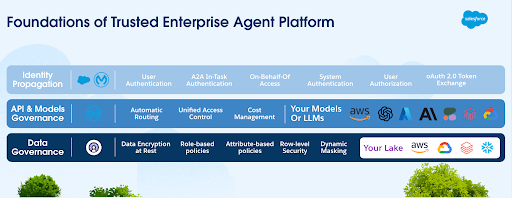
While enterprises deploy AI agents at a rapid pace, their governance strategies often remain fragmented. Most organizations enforce identity, data access, and API security in separate silos, which creates dangerous gaps as agents move across systems. Salesforce Engineering addresses this by shifting the focus from securing individual agents to enforcing governance at the platform level. […] The post Building an Enterprise Agent Platform: Enforcing Identity, Data, and API Governance appeared...
 AI Agents
 Cryptography
 Anthropic
 AI Agents
 Space Tech
 Spotify
 X / Twitter
 Google
 AI Psychosis
 Monitoring and Alerting
 Serverless
 CVE and Exploit Development
 Hardware Design
 Meta
Meta
 Anthropic
 Apple
Apple
 Privacy
 LLM Evaluation
Introduction I recently wrote a post about WAL log shipping and how a standby built on log shipping is a great way to give data analysts production data without putting the primary at risk. Having access to the production data in this way is great, but it’s read-only. How can we create views of this data for better analytics work? I want to make the case today that Foreign Data Wrappers and Materialized Views can make a great solution – not only in accessing production Postgres data, ...
 Developer Tools
 OpenAI
There’s something genuinely energizing about working with startups — something I’ve been doing intensely for more than two years now. Startups operate at a different frequency: the urgency is real, the constraints are tight, and the stakes are personal. Helping them navigate the challenge of proving their business model requires not just technical depth but […]
 X / Twitter
Hello Tumblr! @jubs here, today, to tell you about a feature we’re building: Comments by author!Comments (or replies) have been around for a while, but they have always been tucked away from your regular feed, and so we’re working on a few ways to integrate them into the rest of our experience.Soon, blogs will have a Comments tab alongside Posts, Likes, and Following. There, you will be able to see posts other people have been commenting on, and, more importantly, find your own comments...
 Space Tech
 Homelab & Self-Hosting
 EVs and Transportation
 Google
 Privacy
Hardware Design
Privacy
Hardware Design
 AGI and AI Safety
 NVIDIA
 Artificial Intelligence
 Meta
Meta
 Startups and Venture
High end NVIDIA cards, and the server and power needed to run them, cost a lot of money, especially if you plan to reach enough VRAM to run massive models. The alternative, so far, has been Apple hardware, or the DGX Spark that even if severely limited because of memory bandwidth allows to run LLMs prompt processing (prefill) fast enough. The Mac Studio provided up to 512GB unified memory, a solution with modest memory bandwidth (but much better than the Spark) and compute at a price that was...
 Startups and Venture