Dear KV,
The hype cycle that is AI seems as if it will never end. What I was doing as a developer two years ago seems very different to what I am doing now that management has required us to use LLMs in our work. Some of what these things do seems helpful—roughing out a general framework or helping with tasks such as creating unit tests that have often seemed like drudgery. From your writings, I suspect you remain skeptical and continue to be part of the old school that thinks this is a fad th
The history of computing is a story of escalating abstraction. From the painstaking manipulation of machine code to the elegance of high-level languages, every major leap has been defined by a desire to shorten the distance between human intent and machine execution. Grace Hopper’s first compiler was a monumental step, freeing programmers from the tyranny of the hardware. Structured programming, object oriented paradigms, and now, the rise of large language models (LLMs) have continued this tr
The autovacuum process has been dutifully tending Postgres tables since version 8.1, and almost every release since has acquired some new refinement: smarter thresholds, insert-aware triggering, resource cost limits, and so on. It's the reliable maintenance workhorse that heroically forestalls transaction ID wraparound and keeps statistics fresh. So how did the devs improve it this time around?For most of its life, an autovacuum worker built its list of tables needing attention and then worked
Codeberg recently changed its
terms to
exclude projects that are largely written with generative AI. Since I want
GitHub to face competition I have thoughts.
Codeberg is entirely within its rights to do this. It is an association with
members and a democratic process, and that process produced a result. But
democracy is a way of making a decision, not a guarantee that the decision is
inclusive, wise, or even good for the people already depending on it. A
majority can still decide that certai
Background: literature-track high school, a languages degree, zero tech. In 2024 I was in a basic computer-skills course. I picked Rust as my first language because I’d read it was "hard but honest". Best decision of my journey — the compiler taught me how computers actually work. What I’ve built since, all open source (MIT): minikv — distributed key-value & object store. Raft consensus, 2PC transactions, WAL durability, 256 virtual shards, S3-compatible/REST/gRPC APIs, encryption, RBAC.
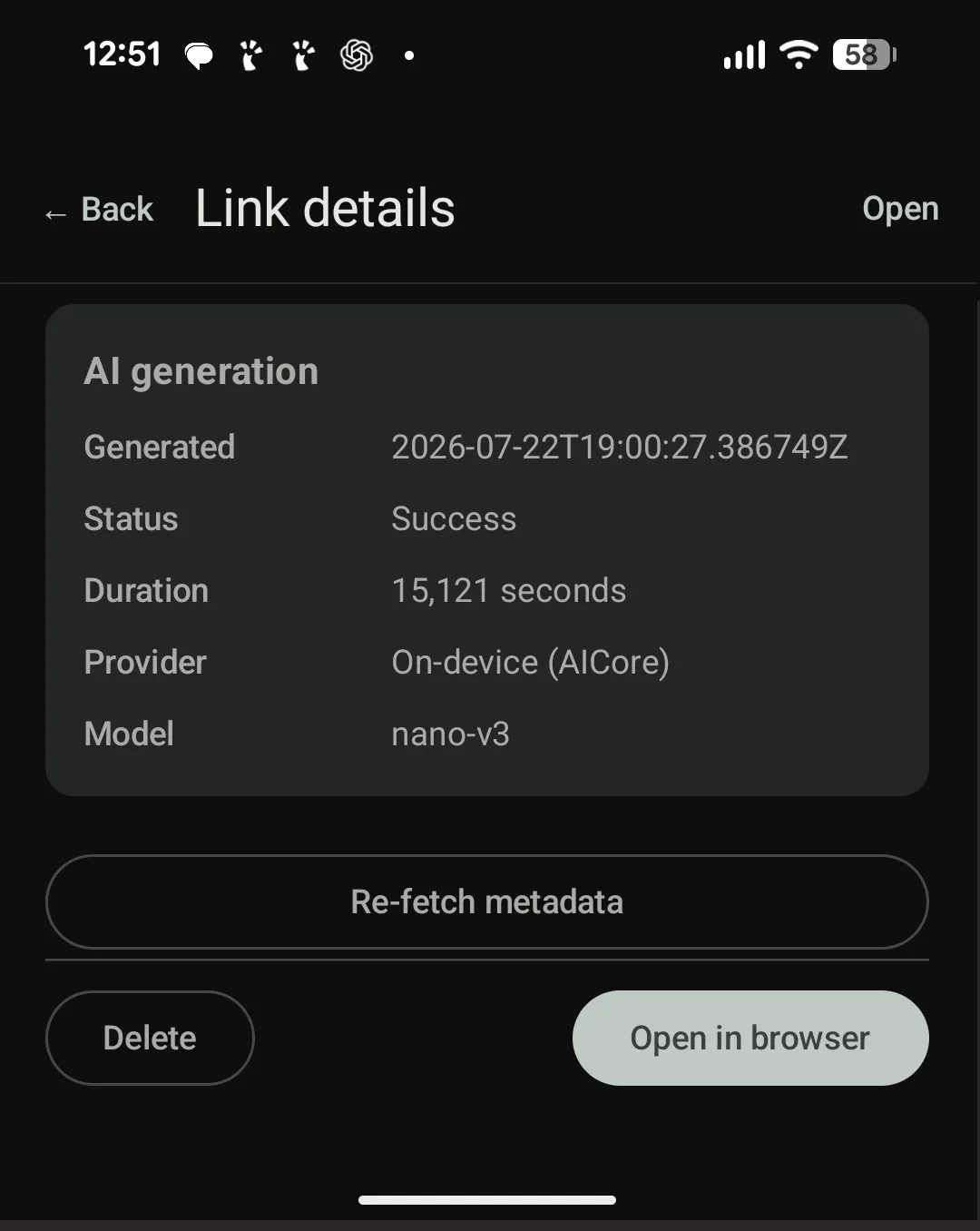
I recently wrote about Kollect, the native KDE link collector I built for myself. At the time it was primarily a Plasma application: give it a URL, let a language model turn an untidy web page into useful metadata, and store the result in plain files or on my small sync server.
The predictable next step was an Android companion. Links often reach me on my phone first, and Android already has exactly the capture mechanism I want: the share sheet. Share a page to Kollect, let the application fetc
If I asked this question in a C forum, it would be easy, they would quickly whip up traumatizing UB and memory allocation problems. But in Rust that category goes out the window (unless you use unsafe poorly). So, what’s a Rust concept that’s booby-trapped, very unintuitive, and difficult to fix if it sneaks up in your codebase? I’m looking for things like messed up usage of trait objects, cursed lifetimes, non-deterministic parallelism bugs, a usage of unsafe that WOULD BE safe if it were
It has long been fashionable to say the public sector should be more like the private sector, which typically means to be faster, better, and to deliver more. These are frequently fair critiques in technical projects and there has been no shortage of late, buggy, and failed governmental solutions, such as those described in Jennifer Pahlka’s book Recoding America (Metropolitan Books, 2023). The needs are real, and so are the complexities and issues.
To be fair, though, it’s not like t
It is by no means the gravest linguistic crime of the React epoch,1 but "state management" grates like nails on chalkboard. A Socratic dialogue I keep having about it goes something like this:
me: This UI is far too heavyweight for what it does, have you considered not using React?
them: But how will we do state management without React?
me: What do you mean? <alternatives> are reactive.
them: React manages state in our app.
me: It does? Then what are <various_libraries> for?
them: Oh, those m
Go behind the scenes of Cerebrium to explore the design, 3D, and WebGL techniques that turned complex AI infrastructure into an intuitive interactive experience.
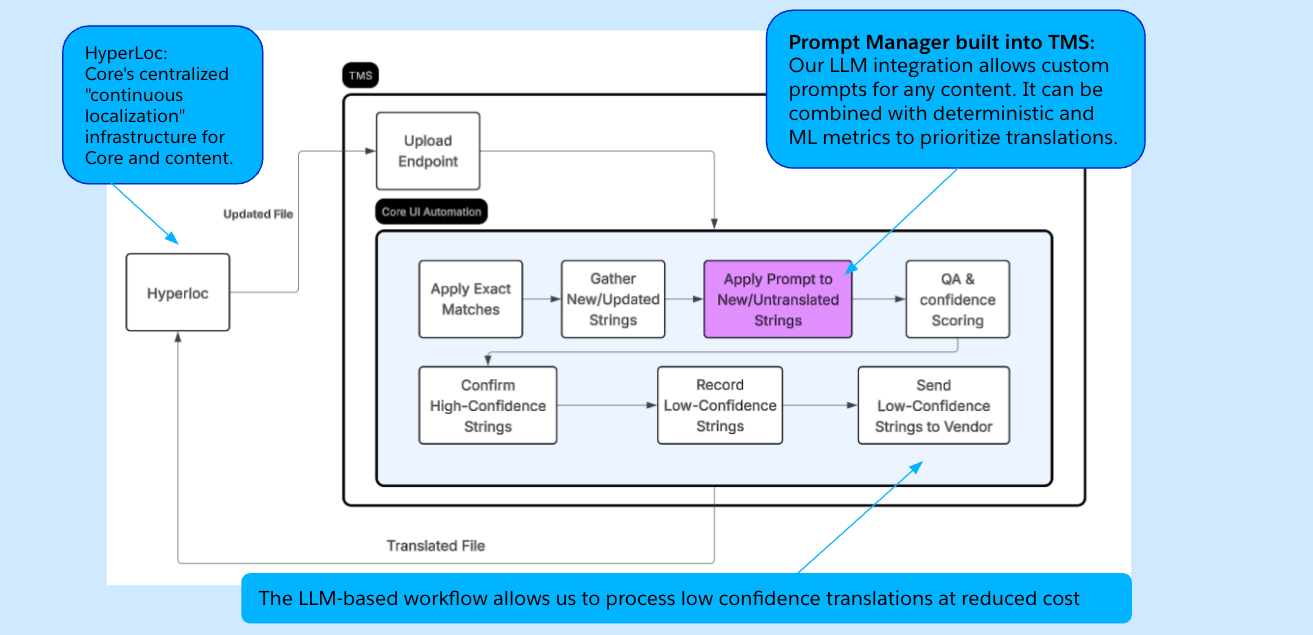
In our Engineering Energizers Q&A series, we highlight the engineering minds driving innovation across Salesforce. Today, we spotlight Teresa Marshall, Vice President of Localization. Teresa’s team delivers every Salesforce release in up to 34 languages. As Salesforce engineering accelerated, product volume grew by more than 35% between releases while localization budgets and release windows remained essentially fixed, forcing a pipeline that had supported Salesforce for decades to deliver sig
Giving an external team access to your PostgreSQL database is one of those decisions that deserves a little thought. The easiest option is to hand over a superuser account, but it’s rarely the right one. A better approach is to create a dedicated role with only the privileges they actually need, and it takes just a few minutes to set up. Over the years, I’ve been on both sides of this conversation. I’ve been the external DBA being onboarded onto a client’s database, and I’ve been the
Ryan welcomes VoidZero’s Evan You and Cloudflare’s Dane Knecht back to the show to discuss Cloudflare’s recent acquisition of VoidZero and what it means for JavaScript development, how partnerships like theirs can help open-source projects stay maintained and sustainably monetized, and how Cloudflare’s distributed systems are helping to improve developer experience in Vite and beyond.
The role of AI tools (LLMs, mainly) in Linux is under discussion, or it was, until Linus Torvalds “put his foot down” in support of the use of AI in Linux kernel development.I can identify two major ways in which AI is used for Linux kernel development: authoring code and reviewing code. There are, at the time of writing, just over 1,200 kernel commits with an “Assisted-by” tag, from September 2025 to the present, most of which indicate patches which were written or assisted by LLM tools
In my previous blog on the pgEdge Vectorizer and RAG Server, I showed how to build a semantic search pipeline using dense vector embeddings. The RAG Server already did hybrid search, combining vector similarity with BM25 keyword matching, but BM25 was handled at the application layer, not inside PostgreSQL.That changes now. The pgedge-vectorizer extension adds BM25 sparse vector generation directly into the vectorizer, running inside PostgreSQL alongside the dense embeddings. Results are fused u
Designing and developing a new medicine is an expensive, failure-prone scientific challenge. A new drug can take many years to develop, at the cost of a significant investment. And even then, most possible candidates never reach the patient. For biologic medicines, therapies made from engineered proteins rather than synthetic chemistry (which are often used to treat conditions across most major acute and chronic diseases), the complexity is even greater.
Scientists explore vast quantities of
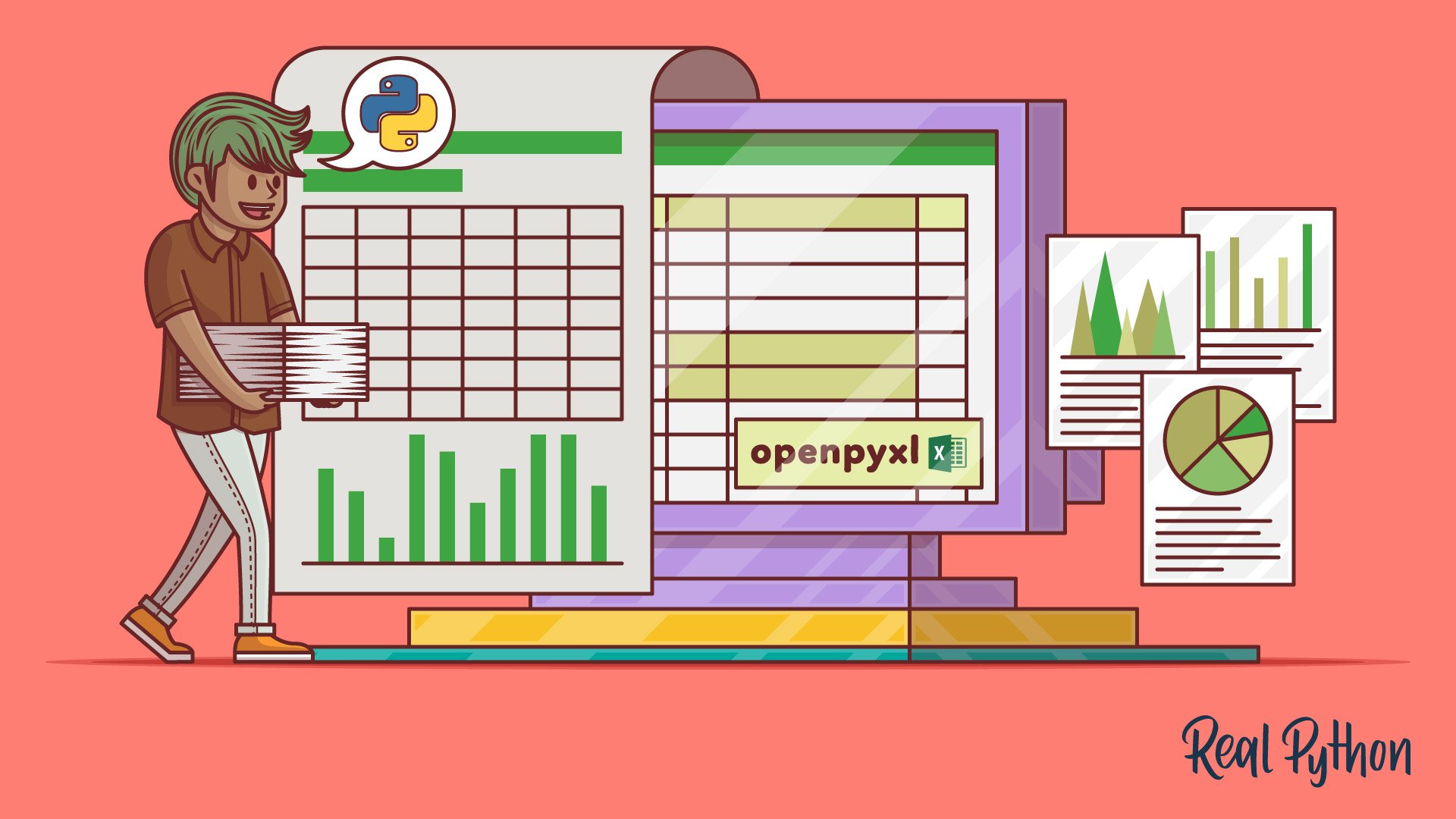
In this quiz, you’ll test your understanding of
A Guide to Excel Spreadsheets in Python With openpyxl.
By working through this quiz, you’ll revisit how to read data from spreadsheets,
create new workbooks, and work with cells, rows, and columns. You’ll also review
adding formulas, styles, conditional formatting, images, and charts with openpyxl.
Spreadsheets show up everywhere in data work, so knowing how to handle them
programmatically is a handy skill whether you’re importing product d
MCP (Model Context Protocol). At this point, you might have come across this term if you’ve worked with any kind of AI agent. But if you still haven’t, here’s a quick refresher on what it is and why it’s important.
In simple terms:
MCP is like a USB-C port for AI. Instead of building a custom connection for every app or database, MCP gives AI a standard way to connect to external tools.
For example, imagine an AI assistant that needs to:
Read files from Google Drive
Check yo
The regulatory framework has changed significantly over the last decade. GDPR was once largely theoretical. But now, multi-billion euro fines have made it a solid statement on European privacy. India’s DPDP Act has enforced privacy protections for Indian citizens, Brazil’s LGPD is actively enforced against multinational corporations, and China’s PIPL and DSL impose strict cross-border transfer restrictions. Simply put, there’s never been a time when data is better protected by regulation
Robert A. Heinlein imagined a self-aware computer named Mike, the “brain” of a lunar penal colony, which develops humor, agency, and ultimately helps lead a revolution.5 His 1966 science fiction novel, The Moon Is a Harsh Mistress, offered a vision both alluring and unsettling: a machine endowed with self-consciousness, yet playful enough to test its personhood through jokes. Sixty years later, Mike returns, not in fiction, but in philosophical and scientific speculation: the question now is
In the beginning...I first heard about the Fourier Transform in a stuffy lecture theater. I was fighting off sleep at the time and thought the whole thing was just too abstract and so did my fellow students judging by their nodding heads. Still, I was good at math and I learned what I needed to get through the exam. It's only years later that I realized how fundamental and important the Fourier Transform is in the real world. The professor could have made his lectures come alive if only he'd