arXiv:2605.28827v1 Announce Type: new
Abstract: Open Arabic large language models split into two classes: sub-1B multilingual models that treat Arabic as an afterthought (Qwen2.5-0.5B, Falcon-H1-0.5B), and 7B-70B Arabic-specialized models that require a server to run (Jais, AceGPT, ALLaM, SILMA). The one published attempt at a sub-2B Arabic-specialized model, Kuwain-1.5B, never released its weights. We present RightNow-Arabic-0.5B-Turbo, a 518M-parameter Arabic-specialized decoder LLM built ...
arXiv:2605.28826v1 Announce Type: new
Abstract: In modern LLMs, linguistic features function not as stylistic artifacts but as probes of probability mass, allocated under training alignment objectives. Language models trained with contemporary pipelines exhibit severe reshaping of linguistic features, leading to extreme language re-distribution. While previous stylometric analyses explored linguistic differences between AI-generated and human texts, we focus on the reshaping plaguing the LLM...
arXiv:2605.28825v1 Announce Type: new
Abstract: Large language models (LLMs) frequently encode factual and reasoning knowledge in their internal representations that is not faithfully reflected in their surface-level outputs -- a phenomenon known as \emph{latent knowledge}. Existing approaches to eliciting latent knowledge, such as Contrastive Consistency Search (CCS), rely on contrastive activation patterns and struggle with complex multi-step reasoning tasks, while mechanistic interpretabi...
arXiv:2605.28824v1 Announce Type: new
Abstract: Constructing artificial lexicons that are pronounceable, typologically plausible, and semantically structured remains an open challenge in computational linguistics. Existing conlang generators either lack formal phonotactic guarantees or delegate generation to opaque, non-reproducible LLM-based pipelines. We propose a modular framework that samples phoneme inventories from PHOIBLE, generates word forms under interchangeable phonological gramma...
arXiv:2605.28823v1 Announce Type: new
Abstract: As the influence of LLMs expands, it is imperative to gain insight into their decisions. One way to do that is to develop probes that detect the presence or absence of a broad set of concepts within the embeddings computed in an LLM - which is what we might say a model is "thinking" about. Such probes should be low-cost and easily applicable to any LLM, so that monitoring for many concepts is possible during normal operation.
In this paper, w...
arXiv:2605.28822v1 Announce Type: new
Abstract: Defect grading of power transmission equipment (DGPTE) is crucial to the stability of electric energy transmission. Although existing machine learning methods exhibit strong capabilities in defect detection, they are plagued by difficulties in integrating expert experience and facing class imbalance in more refined defect grading field. To address this issue, this paper introduces a novel defect grading framework based on multimodal large langu...
arXiv:2605.27382v2 Announce Type: new
Abstract: Telling an LLM to "be enthusiastic" raises its sycophancy rate from 30\% to 50\% on a lightly-aligned model, but has zero effect on a strongly-aligned one. We define this gap as the alignment floor, $\Delta_{\text{floor}}(m)=\max_pS(m,p)-\min_pS(m,p)$, the range of sycophancy rates a model produces across persona conditions, and treat sycophancy as a persona-conditional property rather than a fixed model property. Pluralistic AI relies on behav...
arXiv:2605.27381v1 Announce Type: new
Abstract: Claims about recursive self-improvement in AI often slide from repeated internal revision to the possibility of qualitatively stronger capability without clearly distinguishing the underlying computational regimes. This paper gives a formal separation result in classical computability theory that blocks that move under a precise modeling assumption. For an oracle $A$, let $\mathcal{C}(A)=\{B : B \leq_T A\}$ be the corresponding computational la...
arXiv:2605.27380v1 Announce Type: new
Abstract: Cross-lingual biomedical entity linking (BEL) maps mentions in any language to unique identifiers in a biomedical knowledge base (KB), supporting clinical and biomedical NLP applications. However, expert-annotated training data for BEL are costly, especially for low-resource languages. Moreover, many cross-lingual BEL systems rely on SapBERT-based retrievers trained on predominantly English aliases in the KB, leading to poor generalization to u...
arXiv:2605.27379v2 Announce Type: new
Abstract: We present Soro, a family of Tajik-specialized conversational large language models (LLMs) designed for real-world deployment under tight compute and connectivity constraints in Tajikistan. Starting from open-weight Gemma 3 checkpoints, we perform Tajik-only continual pretraining on a curated 1.9-billion-token corpus spanning filtered web text, PDF documents, and curriculum-aligned educational materials, followed by supervised instruction tunin...
arXiv:2605.27378v1 Announce Type: new
Abstract: Dental image analysis plays a pivotal role in supporting accurate diagnosis and treatment planning in oral healthcare. Although recent advances have produced dental AI models for specific tasks and individual imaging modalities, their isolated designs limit practical use in real-world clinical workflows. In this paper, we present OralAgent, the first dental-specialized AI agent that unifies multimodal reasoning, tool-based decision-making, and ...
arXiv:2605.27377v2 Announce Type: new
Abstract: Accurate medical coding requires consulting authoritative resources such as the ICD tabular list and coding guidelines. Existing LLM-based automated methods largely rely on LLMs' internal knowledge, which is prone to hallucination and cannot keep pace with guideline updates. We introduce RAG-Coding, an agentic, training-free method that augments LLMs with structured external knowledge: the tabular list is encoded as a knowledge graph capturing ...
arXiv:2605.27376v1 Announce Type: new
Abstract: While prompt-based text-to-speech (TTS) models enable natural language-driven speaking style control, they often provide limited fine-grained control and apply a single global style across an utterance. This restricts practical use cases that require continuous style attribute interpolation across utterances and time-varying style transitions within a single utterance. In this paper, we propose novel techniques to achieve both capabilities in e...
arXiv:2605.27375v1 Announce Type: new
Abstract: Large Language Models (LLMs) are increasingly acting as autonomous agents, but their continuous interaction with the environment can lead to in-context reward hacking (ICRH), a phenomenon where LLMs iteratively optimize their behavior to maximize proxy objectives, inadvertently producing harmful side effects. Existing defense methods are insufficient to address this risk, as ICRH arises not from adversarial inputs but from the model's own over-...
arXiv:2605.27374v1 Announce Type: new
Abstract: Recent advances in multimodal large language models (MLLMs) and diffusion models (DMs) have opened new possibilities for AI-generated content. Yet, personalized cover image generation remains underexplored, despite its critical role in boosting user engagement on digital platforms. We propose ICG, a novel framework that integrates MLLM-based prompting with personalized preference alignment to generate high-quality, contextually relevant covers....
arXiv:2605.27373v1 Announce Type: new
Abstract: As intelligent systems become more autonomous, the scientific community focuses on creating decision-making mechanisms that include ethical and moral considerations, unlike traditional utility-maximisation models. To achieve this, a key aspect is assessing how well these decisions align with human values. To this end, a promising line of research is centred on developing approaches based on Large Language Models (LLMs) to identify human values ...
Hi Guys, Out of curiousity If you were to teach your younger self about database design all from the scratch again, how would you do it? What mistakes would you tell him/her to avoid? submitted by /u/Anxious_Ad_8991 [link] [comments]
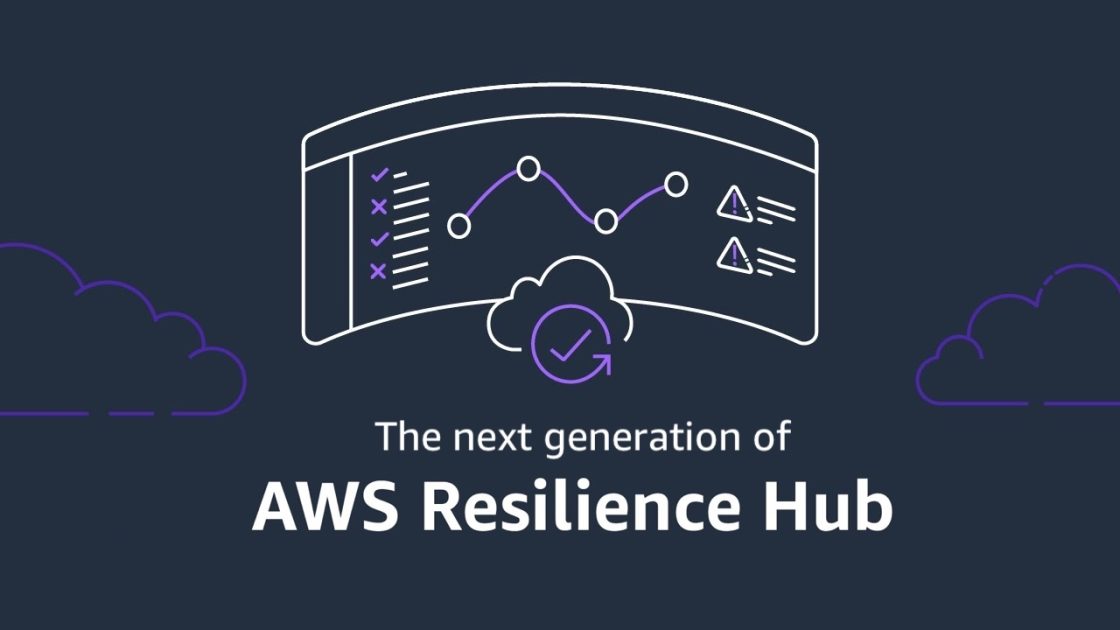
AWS launches the next generation of AWS Resilience Hub with a significantly expanded experience that brings together a new application model, dependency discovery assessment, generative AI-powered failure mode analysis, modular resilience policies, and organization-wide reporting.
 Fine-tuning and PEFT