arXiv:2605.30365v1 Announce Type: new
Abstract: Retrieval-augmented text-to-music (TTM) systems augment underspecified user prompts using captions retrieved from a music caption dataset. This design introduces an integrity dependency on the music knowledge database. We show that an attacker can poison the database by injecting a small number of crafted music captions, causing the system to retrieve malicious captions that bias prompt augmentation and steer generation away from the user's int...
arXiv:2605.30362v1 Announce Type: new
Abstract: Spiking neural networks (SNNs) hold promise for demonstrating superior learning and representation capabilities in deep models. Given the tremendous success of ResNet in deep learning, it would naturally follow to train deep SNNs with residual learning. However, existing residual structures for constructing deep SNNs still present challenges of spike redundancy or information loss, as well as redundant learning. In the present study, we first a...
arXiv:2605.30361v1 Announce Type: new
Abstract: Spiking Neural Networks (SNNs) offer compelling energy efficiency on neuromorphic hardware, yet their training remains challenging because the discrete spike threshold is non-differentiable. Surrogate-gradient methods sidestep this by approximating the derivative, but they impose backpropagation infrastructure that is incompatible with on-chip learning. Evolution Strategies (\es) are a natural gradient-free alternative, yet their computational ...
arXiv:2605.30360v1 Announce Type: new
Abstract: Distributed systems must frequently keep track of many different types of performance metrics across many different computers. For example, the latency distribution of certain operations may be computed for a large combination of computers, users, and operations. These empirical distributions need to be collected at minimal expense on the individual software components, efficiently aggregated across multiple dimensions, and stored in a compact ...
arXiv:2605.30359v1 Announce Type: new
Abstract: Generating high-performance GPU kernels remains challenging due to the need for both correctness and hardware-aware optimization. While large language models (LLMs) show promise in code generation, they often fail to produce kernels that are both correct and efficient.
We propose Kernel Foundry, a diagnosis-driven evolutionary framework for automatic GPU kernel optimization. Our method combines expert-guided, retrieval-augmented initializatio...
arXiv:2605.30358v1 Announce Type: new
Abstract: Quantum computing remains in the Noisy Intermediate-Scale Quantum (NISQ) era, where the performance is highly constrained to noise. Addressing the limitation often requires hardware-facing capabilities beyond gate-sequence circuit specification, including mid-circuit measurement and classical feedback for quantum error correction (QEC), precise timing control for dynamical decoupling (DD), and pulse-level waveform access for calibration. OpenQA...
arXiv:2605.30357v1 Announce Type: new
Abstract: The rapid proliferation of artificial intelligence, connected devices, and high speed mobile networks is driving unprecedented computational demands that challenge traditional sensor architectures. This article explores the shift toward edge computing, where computation is performed directly at the data source, and highlights the key architectures and performance metrics that may define the next generation of intelligent sensor systems.
arXiv:2605.30355v1 Announce Type: new
Abstract: We introduce Collective Switched Motion (Cosm), a heuristic algorithm for solving sparse Ising-type optimization problems. Cosm combines locally interacting continuous circular variables with global coordination rules that facilitate collective dynamics. Pairwise interactions occur sequentially over a set of conflict-free edge partitions, resulting in an interaction network that switches periodically. Unlike conventional gradient-based approach...
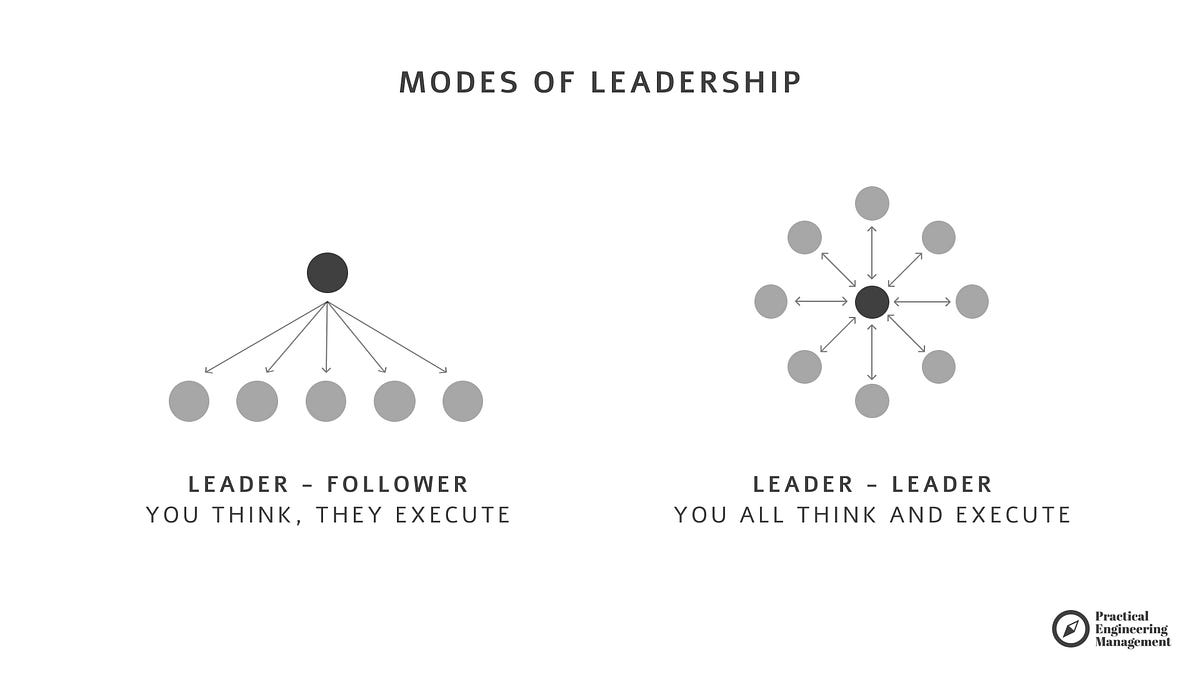
As companies adopt AI tools, a lot of time is spent on thinking about AI policies from a security, compliance, or even cost-focused angle. But many leaders are neglecting to address how their teams should work with AI in the context of the team as a whole. This creates a lot of unresolved tension, and it’s time for leaders to step up and set some guidelines not just for how to use AI in an “approved” sense, but how to use it respectfully.When I say respectfully, I am not talking about t...
As the title suggests how many of you are really using claude / codex for true production database development. I have been experimenting codex on duckdb and I found it really good. So good that I told to rewrite duckdb in java for my own sake . I want to hear opinions and anecdotes from others as well. Thanks. submitted by /u/PrizeDrama7200 [link] [comments]
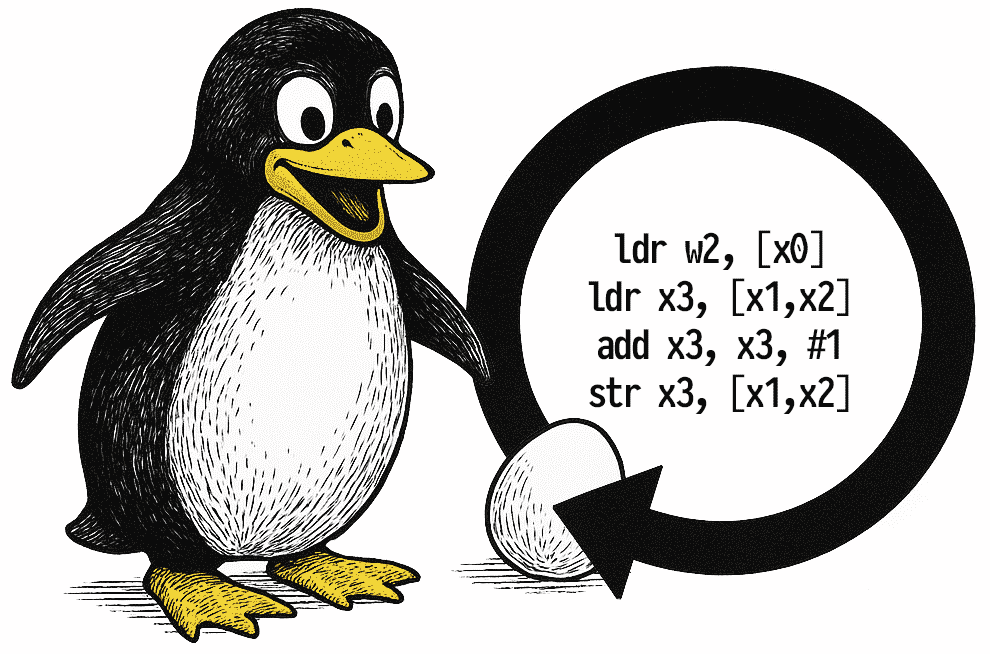
Watch now | How large is a process’s virtual address space, why is it split between user space and the kernel, and what are canonical virtual addresses?
 Generative AI