 Performance Engineering
Why isn't Quarkus 2x faster than Spring on my machine?
 Apple
Apple
Sweet Jeebus, macOS 27 Golden Gate Removes the Dumb Icons from Menu Items
 Defense Tech
Cheap Iranian drone downed $25M US Army helicopter–maybe by chance
 Frontend Frameworks
The Conductor Rewrite: What They Changed to Make It Fast
 Defense Tech
Pokémon Go Scans Trained the Navigation Tech for Military Drones
Macaroni – a single HTML file messenger
Validation, Docs, tests, and database schemas from one source of truth
hax: A Rust verification tool
 OpenAI
OpenAI mulls slashing prices as it competes with Anthropic for users
 Anthropic
It blocked us at 'hello ' Anthropic Fable 5 refusing innocuous prompts
 Reverse Engineering
Reverse engineering the Creative Katana soundbar to control it from Linux
 Software Engineering
When the cost of code approaches zero, what does engineering leadership look like?
On this episode of Leaders of Code, Eric Anderson, director of engineering at Intuit, joins Stack Overflow engineering director Ben Matthews to talk about what happens to software teams when AI makes code generation seemingly free.��...
 Anthropic
Anthropic Walks Back Policy That Could Have 'Sabotaged' Researchers Using Claude
 WebAssembly
The Road to the WASM Component Model 1.0
 Startups and Venture
Opendoor’s India exit is fueling a bigger conversation about AI and outsourcing
 Large Language Models
LatticeBridge: Rare-Event Sequential Inference for Faithful Structured Sequence Synthesis
arXiv:2606.11203v1 Announce Type: new Abstract: Structured sequence generation often requires a model to satisfy several input-derived constraints in a single output. Standard decoding methods may assign high probability to fluent continuations while placing low mass on continuations that realize all required anchors jointly. We study this regime as a rare-event sequential inference problem. LatticeBridge combines a compact prefix language model, instance-compiled surface automata, and a twi...
Reverse Engineering
One Jailbreak, Many Tongues: Learning Language-Insensitive Intention Representations for Multilingual Jailbreak Detection
arXiv:2606.11202v1 Announce Type: new Abstract: Large language models (LLMs) are increasingly deployed in applications for global multilingual users, yet safety training remains concentrated in dominant languages and has not progressed in parallel with multilingual capability, creating exploitable gaps for jailbreak attacks. Current jailbreak defenses are largely developed and evaluated in dominant languages, and their effectiveness is limited by the scarcity of aligned multilingual supervis...
LLM Evaluation
To Intervene or Not: Guiding Inference-time Alignment with Probabilistic Model Blending
arXiv:2606.11201v1 Announce Type: new Abstract: The wide deployment of LLMs has made model alignment necessary to make newly trained models safely and effectively respond to user instructions. Among different methods, inference-time alignment is often cheaper as it intervenes (i.e., offers guidances) only during output generation. Existing proposals apply guidances extracted from certain aligned models without properly assessing their reliability. Nonetheless, our systematic evaluation revea...
Generative AI
Detecting AI-Generated Content on Social Media with Multi-modal Language Models
arXiv:2606.11200v1 Announce Type: new Abstract: Generative AI has enabled the creation of photorealistic images and videos that are increasingly disseminated on social media, often used for spam, misinformation, manipulation, and fraud. Existing AI-generated content (AIGC) detection methods face challenges including poor generalization to new generation models, reliance on single modalities, and lack of interpretable explanations. We present our pipeline that mitigates these issues by contin...
RAG
NightFeats @ MMU-RAGent NeurIPS 2025: A Context-Optimized Multi-Agent RAG System for the Text-to-Text Track
arXiv:2606.11199v1 Announce Type: new Abstract: We present NightFeats, a structured multi-agent retrieval-augmented generation (RAG) system submitted to the MMU-RAGent competition at NeurIPS 2025, where it was awarded Best Dynamic Evaluation in the text-to-text track. Rather than targeting benchmark maximization, this work proposes a principled pipeline that decomposes knowledge synthesis into three coordinated phases: retrieval, curation, and composition, each governed by explicit intermedi...
RAG
The Structural Attention Tax: How Retrieval Format Hijacks In-Context Learning Independent of Content
arXiv:2606.11198v1 Announce Type: new Abstract: Retrieval-augmented generation (RAG) systems inject external knowledge to improve LLM outputs, yet the format of injected content -- distinct from its semantic relevance -- can independently distort the model's attention distribution. We identify and formalise a phenomenon we term the structural attention tax: knowledge graph (KG) triples, due to their relational delimiters and repeated slot patterns, capture 2-3x more attention per token than ...
LLM Evaluation
PoQ-Judge: A Multi-Architecture Evaluation Framework for Cost-Aware Proof-of-Quality in Decentralized LLM Inference
arXiv:2606.11196v1 Announce Type: new Abstract: Decentralized LLM inference networks need lightweight, reference-free quality evaluation for Proof of Quality (PoQ). We present PoQ-Judge, a framework that trains dedicated judge models to score query-output pairs without ground-truth references. We study three architectures across the quality-cost tradeoff: a TextCNN judge, a MiniLM cross-encoder, and a DeBERTa judge. Using two-stage training on UltraFeedback plus GPT-labeled in-domain data, t...
Artificial Intelligence
From Consumption to Reflection: Designing Human-AI Relations for Stable Reasoning
arXiv:2606.11195v1 Announce Type: new Abstract: Large language models (LLMs) have transformed how humans access information, but not how we reason with it. Their fluency accelerates consumption while bypassing the slow, reflective processes that underpin sound judgment. This paper introduces Relational Reflective Intelligence (RRI), an inference-time governance layer that operationalizes reflection through auditable reasoning loops. RRI operates not inside the model but around it, providing ...
 NVIDIA
Anthropic’s Dario Amodei has just one direct report
 AI Coding Tools
Are insecure code completions in PyCharm a vulnerability?
 AI Inference
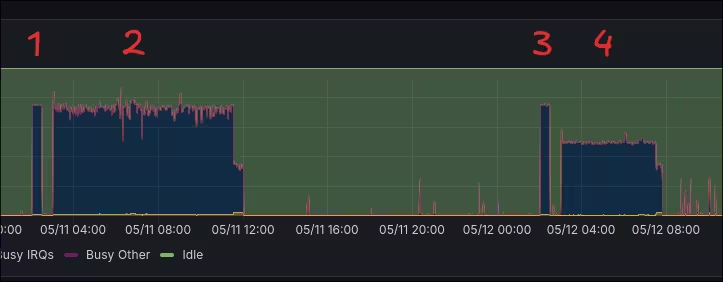
Building a Korean ambiguity solver fast enough to skip the GPU: 7,300 words/SEC
Richard Yen: PGDay Boston 2026
Introduction PGDay Boston 2026 was a rewarding reminder of why I value the PostgreSQL community so much. It was delightful to reconnect with familiar faces, meet new people, and finally put some faces to names for the first time. One of the best parts of the day was the sense that this community is larger than any one employer or project. It is built on shared curiosity, shared responsibility, and a willingness to help one another learn. I’m honored to have been able to share my own thoug...
 Stripe
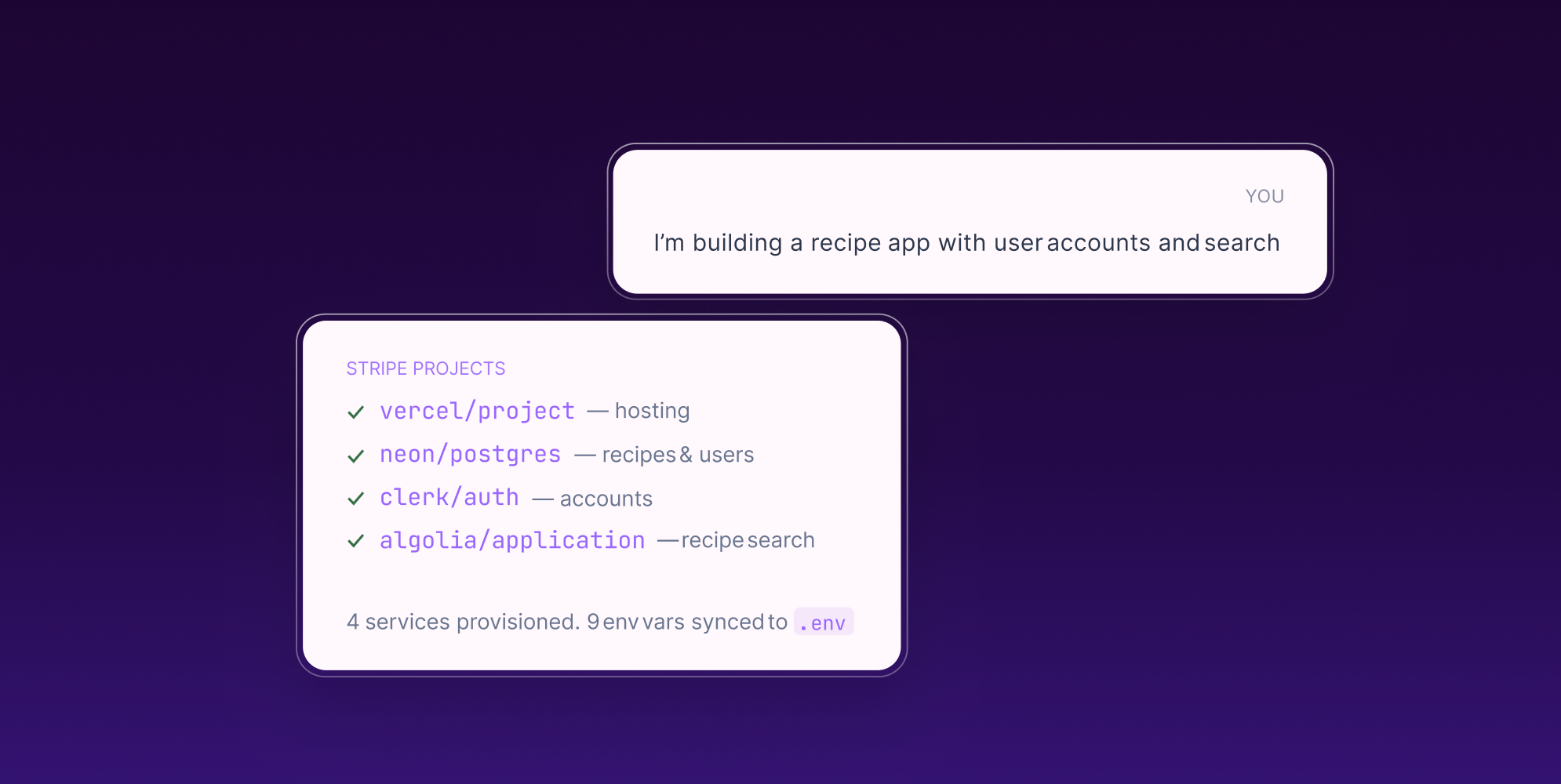
Stripe Projects adds new agent integrations, more providers, and custom developer controls
Our data shows that agents are now fully capable of independently writing code and integrating with APIs like Stripe’s. And yet, many of the steps adjacent to writing code are still too hard for agents to do on their own. We’re expanding Stripe Projects to solve this.
 Artificial Intelligence
PRC-linked influence operations are targeting AI debates in the US
AI Psychosis
Aesthetic Perspectives in Information Systems Research: A Hermeneutic Analysis
arXiv:2606.09839v1 Announce Type: new Abstract: How might implicit aesthetic perspectives shape what Information Systems (IS) scholarship recognises as worthy of study (or not)? In this hermeneutic literature analysis, we surface foundational aesthetic assumptions underpinning IS research. We identify four perspectives (aesthetics as imitation, sensory experience, world-making, and political doing) that guide how IS scholars perceive and appreciate sociotechnical phenomena. These perspective...
Large Language Models
Self-EmoQ: Plutchik-Guided Value-based Planning to Drive Streaming Emotional TTS
arXiv:2606.09837v1 Announce Type: new Abstract: Emotional interaction is increasingly crucial for conversational AI, yet current systems lack a self-emotion determination mechanism to drive the streaming text-to-speech (TTS) synthesis. We propose an emotion-planning framework that determines the emotion prior to the textual generation, grounding the downstream emotional TTS in a streaming manner. The framework is implemented by a plug-and-play LLM module, initialized from pretrained LLMs, an...
Robotics
Equanimity in HRI: Applying Calm Technology Principles to Human-Robot Interaction
arXiv:2606.09836v1 Announce Type: new Abstract: This paper explores how {\textit{Calm Technology}} can be integrated into Human-Robot Interaction (HRI), with a particular focus on the household environment. It offers comprehensive guidelines for designing assistive robots that prioritize and enhance the human need for {\textit{equanimity}}, ensuring interactions are calm, non-intrusive, and harmonious. The paper examines the widespread influence of technology in contemporary life and its imp...
Business Intelligence
Thinking Inside the Box: Considerations for Putting Data Physicalization Workshops in a Box
arXiv:2606.09835v1 Announce Type: new Abstract: Visualization researchers utilize workshops both for applied research and to engage different populations with visualization-based activities. While there are many benefits to running visualization workshops, their utility and impact rely on the presence of a researcher who has deep knowledge about visualization theory and practice. In this work, we introduce workshop-in-a-box as a design concept intended to challenge the researcher-centric app...
AR and VR
Weather Synchronization in Digital Twin Environments for Shared VR Experience Using Commercial Metaverse Platforms
arXiv:2606.09834v1 Announce Type: new Abstract: Digital twin technology creates bidirectional synchronization between physical and virtual environments, yet current implementations fail to provide authentic environmental experiences that enhance user presence in shared virtual spaces. While digital twin environments using commercial metaverse platforms for IoT sensor data visualization have been proposed, translating environmental information into meaningful sensory experiences remains large...
AI Agents
CollabSkill: Evaluating Human-Agent Collaboration On Real-World Tasks
arXiv:2606.09833v1 Announce Type: new Abstract: AI agents are reshaping the workspace, leading to drastic change of how humans work. Despite the considerable potential of human-agent collaboration both in preserving human agency and generating economic value, this paradigm remains largely absent from occupational task evaluation, hindered by the difficulty of gathering real human data and accounting for inter-human variability. We introduce CollabSkill, a framework for evaluating human-agent...
AI Psychosis
Agentic Social Affordance Framework (ASAF): Agent Identity Design as a Collaboration Interface in Multi-Agent Systems
arXiv:2606.09832v1 Announce Type: new Abstract: As AI systems evolve from single conversational agents to complex multi-agent architectures, a critical design dimension has been overlooked: how the social identity of individual agents shapes human behavior within the collaboration. This paper introduces the Agentic Social Affordance Framework (ASAF), a theoretical framework that extends Social Affordance theory into the context of multi-agent AI systems. We propose that agent identity design...
Artificial Intelligence
AI-Driven Analytics of Team-Teaching Talk: Acoustic Patterns across Experience, Cohorts and the Learning Design
arXiv:2606.09831v1 Announce Type: new Abstract: As classroom cohorts expand, team teaching is increasingly used to integrate the expertise and pedagogical perspectives of multiple teachers. Yet, there is limited empirical understanding of how team teaching unfolds in practice, particularly regarding differences in teachers' contributions across experience levels, student cohorts, and learning task design. Prior research on team teaching has largely relied on retrospective self-reports or sma...
LLM Evaluation
Automated Scoring of Arabic Text Using Large Language Models: A Literature Review
arXiv:2606.09830v2 Announce Type: new Abstract: In modern educational systems, Automatic Text Scoring (ATS) plays a central role by enabling scalable and consistent evaluation of learner responses without human intervention. Recently, the increased accessibility of LLMs and Arabic-specific datasets has sparked renewed interest in this area. In this work, we investigate LLM-Based approaches for the automated evaluation of Arabic texts, focusing on both short answer grading (ASAG) and essay sc...
 C++
C++
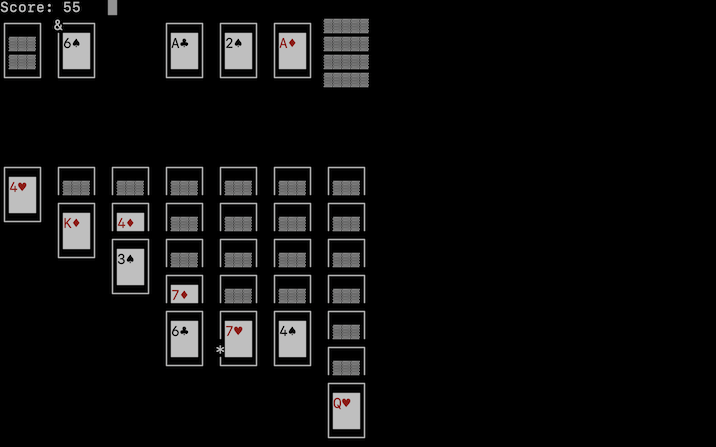
Klondike Solitaire game for curses in 5k of C
 CVE and Exploit Development
Windows 11 sucks slightly less due to June update
 PostgreSQL
Christophe Pettus: All Your GUCs in a Row: the debug_* family
PostgreSQL's dozen `debug_` parameters are its own testing machinery, exposed as runtime settings.
I was tired of repos that say they run but don't
 DNS
DNS
Aws.com and google.com don't have DNSSEC enabled
 Performance Engineering
Linux latency measurements and compositor tuning
 C
C
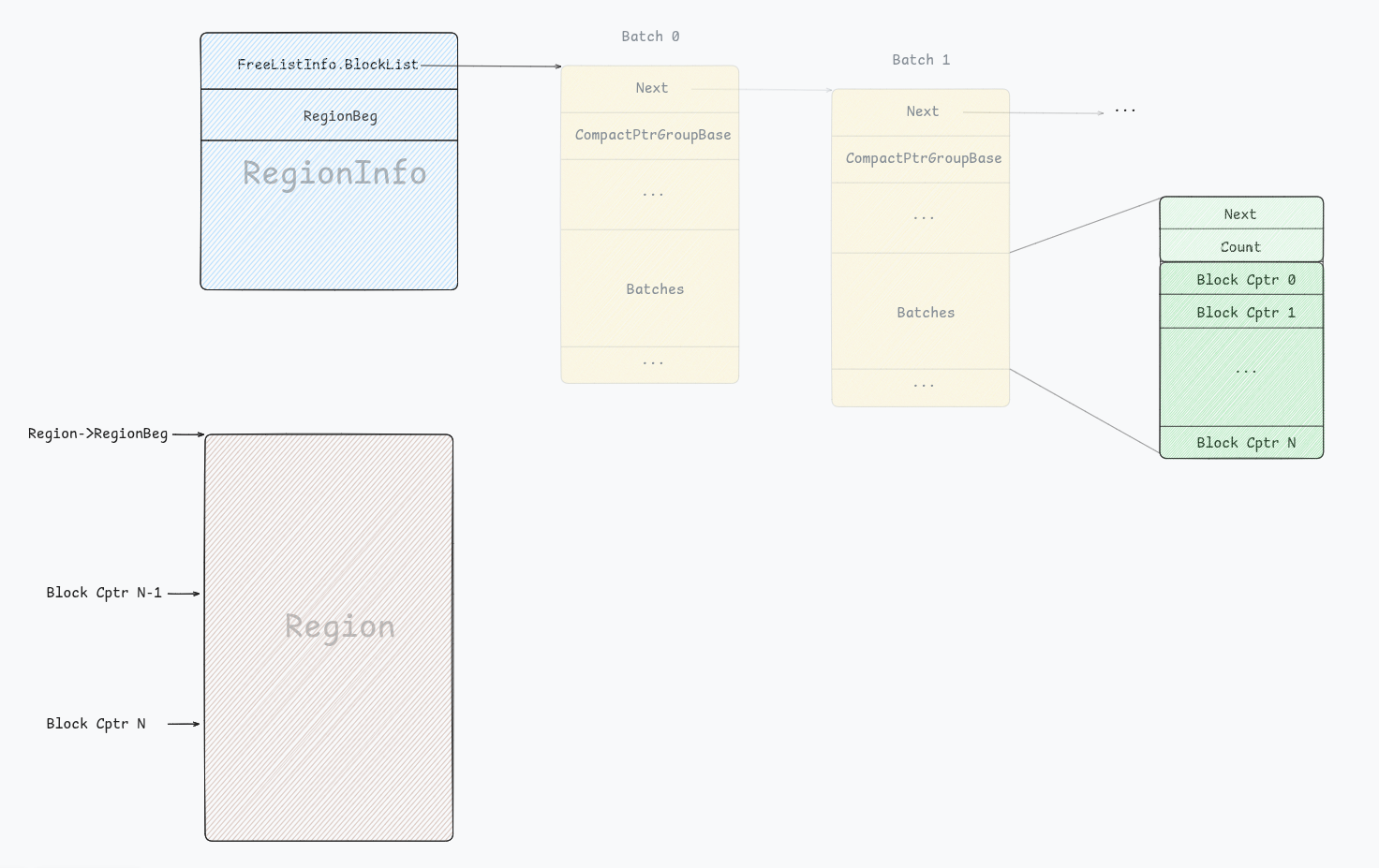
Unix GC Remastered
 AI Psychosis
Why are there so many canines in fine art?
 xAI
xAI
xAI fired an engineer who raised alarms about Grok safety, new lawsuit claims
 Anthropic
Anthropic requires 30 day data retention for Fable and Mythos
 WebSockets
A game's homemade crypto fell to a DIY supercomputer
 Quantum Computing
Pick and Place: Carbon Nanotube Nanoassembly Process
 Embedded Systems
Raspberry Pi 5 – 16 GB, $350
Show HN: Artie – Real-time data replication to your warehouse, now self-serve
 EVs and Transportation
Everyone wants a piece of Tesla’s battery business
 AI Hardware
Fresh off bond sale, Amazon borrows $17.5 billion from banks as AI spending continues
 EVs and Transportation
The Abundance Illusion
 Uber
Uber
Speed Is a Signal: When Faster Replies Increase Hiring Likelihood
 Apple
Apple
Apple Made a Sports App That Does Almost Nothing. It's Incredible
ΠFS
 Uber
Uber
Wing drone delivery might not be a novelty anymore
Richard Yen: PGDay Boston 2026
Introduction PGDay Boston 2026 was a rewarding reminder of why I value the PostgreSQL community so much. It was delightful to reconnect with familiar faces, meet new people, and finally put some faces to names for the first time. One of the best parts of the day was the sense that this community is larger than any one employer or project. It is built on shared curiosity, shared responsibility, and a willingness to help one another learn. The keynote, Michael Stonebraker’s “Where Did Pos...
 Apple
Apple
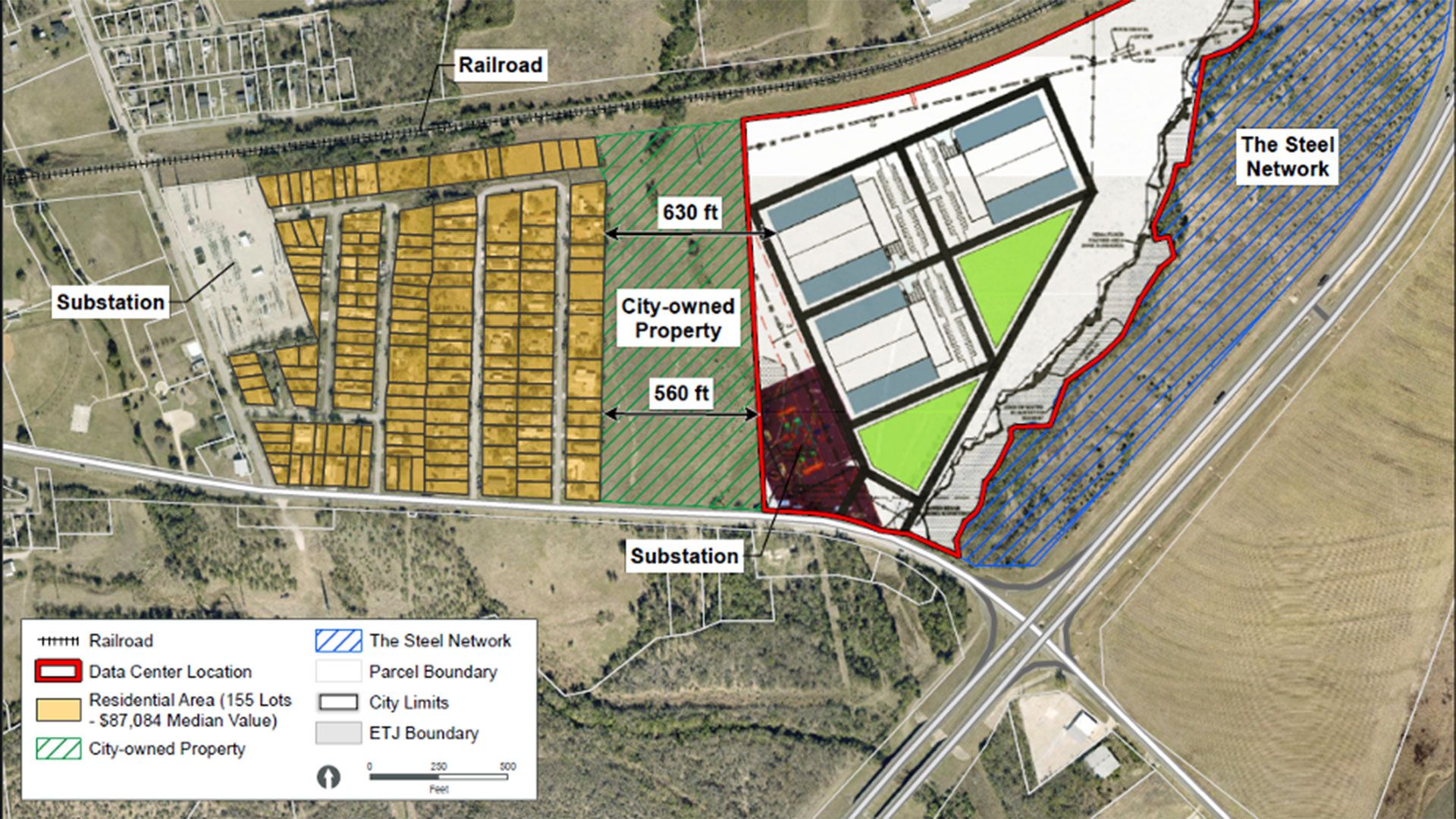
Farmer donates land for a park, city sells it for $10M as data center land
 AI Inference
A 35B MoE on a 16 GB GPU, without the offload tax
Anthropic's Model Naming, Extrapolated
GeoLibre 1.0
ITScape: Guest-to-Host Escape in KVM/arm64
 AGI and AI Safety
Policy on the AI Exponential
 Space Tech
L'Affaire Siloxane
Show HN: Extend UI – open-source UI kit for modern document apps
Why SpaceX 2040 Revenue FCST $4.3T in highly unlikely
AI agent runs amok in Fedora and elsewhere
 AI Inference
Anatomy of a high-performance EP kernel
Babel-USB: USB drive with every file
 Space Tech
How JPL Keeps the 13-Year-Old Curiosity Rover Doing Science
Claude Desktop spins up a VM without no way of stopping it
Show HN: HelixDB – A graph database built on object storage
Show HN: Ustps (UDP Speedy Transmission Protocol Secure) and USSH
 Cloudflare
Route public traffic to private applications with Cloudflare
Application Services for Private Origins is available now in closed beta. Route public hostnames to private IP origins over your existing IPsec, GRE, CNI, or Cloudflare Mesh paths. No public IPs or extra connector software required.
 Netflix
Netflix expands revamped mobile app across Asia and doubles down on kids’ gaming
 NVIDIA