SQLite in Production: Optimizing WAL Mode, Concurrency, and VFS Layers
 Security and Cryptography
UK Cybercrime Journal: H1 2026 Social Media Fraud Trends
What HappenedHMRC Issues Warning to TikTok UsersOn 4 June 2026, HM Revenue and Customs (HMRC) uncovered a suspected £153 million tax fraud scam involving TikTok.The scheme allegedly involved individuals posting advertisements on the TikTok, enticing users to hand over sensitive tax information, including business VAT registration details or personal self-assessment credentials for a financial reward.Using the stolen tax details, the fraudsters could file bogus repayment requests with HMRC.The w
 Go
Go
GopherMap - A simple library for parsing Gopher responses
Having spun up Port70 as a support library for my effort to add gopher support to Rogallo, the next thing I needed was some code to parse the "gopher map" responses that you get back from Gopher servers. While this could have been some code in Rogallo itself, much like with Gemtext, it seemed sensible to put it in its own library so it could be useful elsewhere. So... GopherMap v0.1.0 is a thing. Its main provision is a class called GopherMap, which is used to parse some text you give it. Its it
 Machine Learning and AI
Language as a Material Interface for Creative LLM Interaction
arXiv:2607.24753v1 Announce Type: new Abstract: Although directive prompting is the predominant way to interact with Large Language Models (LLMs), many creative practices rely on language that is open-ended, associative, phonaesthetic, symbolic, and that unfolds across multiple temporalities. In this work, we explore how creative practitioners might work with AI systems when language is treated not merely as instruction but as material. We conducted an ecological two-week study with four creati
Machine Learning and AI
Development and applications of Generative AI in architectural design studios
arXiv:2607.24752v1 Announce Type: new Abstract: Recent advancements in deep generative models, with their capacity to yield outputs that are both visually appealing and semantically coherent, have served to further intricate the nexus between Artificial Intelligence (AI) and creativity. This integration of these models into creative disciplines, most notably within the domain of design, has been rapidly escalating. Nevertheless, a prevailing gap remains in our understanding of the impact of Gen
Show HN: Lean4 Datalog DSL Based on Google Zanzibar for AI Projects
Distributed Systems
SeT-Diff: Towards Semantic Foundation Models for HPC Telemetry and Time-Series
arXiv:2607.22548v1 Announce Type: new Abstract: Data centers and their compute nodes require accurate and flexible digital twins capable of modeling the complex interplay of workloads, environmental parameters, and physical metrics. Current machine learning approaches for HPC and its telemetry typically rely on a static subset of anonymous, fixed-position sensor variables tailored to single tasks. Consequently, these models become obsolete when target tasks change or sensor metrics vary. We pro
Truth is not a direction: a Tarski attack on LLM probes
Machine Learning and AI
Explaining GAND: A Resource on Gender-Ambiguous Natural Data & Contrastive Attribution
arXiv:2607.22546v1 Announce Type: new Abstract: Machine translation (MT) systems continue to produce gender-biased translations. In a time where self-expression is paramount, mistranslations based on default behaviour and stereotyping can lead to harm for users of these systems. To better understand how these systems translate gender in the absence of clear gender cues, we need benchmarking resources that reflect gender-ambiguous scenarios in a natural way. To this end, we present GAND, a gende
Machine Learning and AI
MIITA: Memory-Induced Inference-Time Adaptation for Continual Learning with Small Language Models
arXiv:2607.22556v1 Announce Type: new Abstract: Continual learning (CL) is essential for small language models (SLMs) to adapt to evolving real-world needs in resource-constrained deployments. However, directly updating their limited parameter space causes catastrophic forgetting. While memory-based methods naturally address this by decoupling knowledge retention from parameters, existing approaches designed for large language models (LLMs) rely on abundant storage and strong in-context reasoni
Machine Learning and AI
Same Question, Different Answers: Evaluating LLM Reliability Beyond Accuracy
arXiv:2607.22554v1 Announce Type: new Abstract: Large language models (LLMs) often achieve strong accuracy on benchmarks, yet it remains unclear how reliably they apply this knowledge when the same question is phrased in different but equivalent ways. In this work, we study how model answers change under meaning-preserving paraphrases across factual question answering and mathematical reasoning tasks. Across four benchmarks and 13 models, we find that model outputs frequently depend on the exac
PidgeIoT: an open-source IoT platform in Rust end to end (workers-rs + Dioxus), and the lessons I learned shipping it
I've spent the last several months (maybe years, but who's counting) building PidgeIoT, an open-source (AGPL-3.0) IoT device management platform. Device provisioning, config push via device shadows, telemetry with queryable history, email alerts, and OTA firmware updates. The cloud side is Rust end to end, and I launched it publicly last week. The device library is C on Zephyr RTOS, so I won't claim Rust-on-device. The setup: One Cargo workspace, three crates: dovecote: the backend, a Cloudfla
Software Provenance
Software Provenance
Cargo security wishlist
Cargo security wishlist
 Science
Underwater Oxygen Loss Threatens Earth's Stability, Researchers Warn
Why can’t I learn Rust by starting with embedded systems?
It seems like one of the most common ways of learning mid-level systems programming (C) is to buy an Arduino kit - and no pre-requisite programming knowledge is assumed or needed. So, why is there no such thing for rust? I want to start learning how to programme, and this is the way that seemed to make the most sense for me to start with - but it seems like it’s not really a readily available path yet, as you are required to learn Rust on a desktop environment first. I understand that most p
 Distributed Systems
The path to artificial superintelligence
Imagine a healthcare system made up of multiple AI agents: one that manages symptom assessment, another scheduling, a third insurance, and a fourth pharmacy. Each is an expert in its domain. But they all have their own distinct knowledge and objectives. Today they can exchange data, but they are not yet able to actually coordinate patient care without a human making the decisions. “The intelligence is already there. What is missing is the connective tissue that turns four strangers i
 Machine Learning and AI
OpenReviewer: A Specialized LLM for Generating Critical Scientific Paper Reviews
 Developer Tools
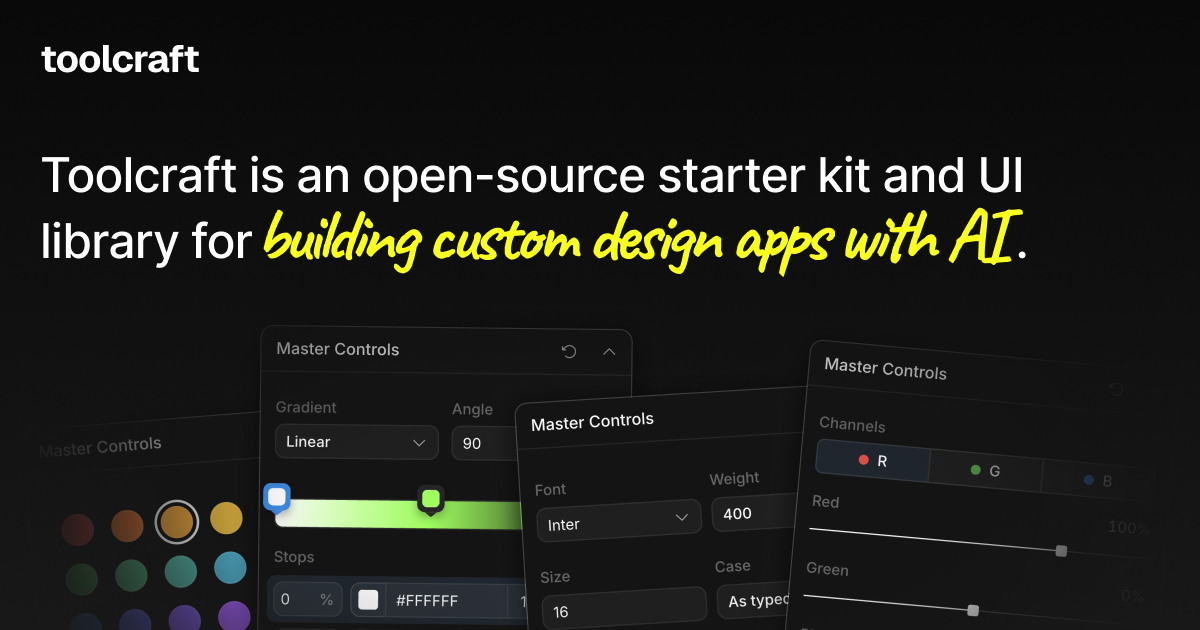
Toolcraft
OpenAI just open-sourced Codex Security
 Machine Learning and AI
Pacing the frontier
Rust programming without LSP
Hello there! I wanted to know if there is some people who are used to program in Rust (or any other strongly typed language) without using any LSP, and how bad (or good) it impacts your productivity. I have my habits with a specific text editor that does not provide LSP (and it’s not really a problem for me as I’m mainly programming in C), and I would like to know how manageable it is to stick with it for rust programming. Thank you! submitted by /u/_bluepirate [link] [comments]
For Rust development, RustForge- Test Suite Template.
Ok Devs, I got tired of stitching together test kits time and time again. So Claude and I did this. https://github.com/rwilliamspbg-ops/RustForge Hopefully together we can build out an easy to access tool-kit? submitted by /u/Famous_Aardvark_8595 [link] [comments]
 Machine Learning and AI
AI customer service: strategy, agents, and solutions guide
AI customer service refers to the use of artificial intelligence — including natural language processing, ...
Machine Learning and AI
AI in supply chain: from demand forecasting to AI agents
AI in supply chain management is the application of machine learning, generative...
The Weirdness of Agents
I have been thinking a lot about AI agents recently. Isn’t everyone? They plainly have great promise. They can potentially carry out any task that could be done online, especially if the tasks are achievable through a Web-based interface. One can imagine, however, there will be specialized agentic interfaces to make more efficient agent access to functional, Internet-based services. It is already clear that agent interactions may be carried out using newly evolved agentic protocols such as A2A
Unpacking Open Source Artificial Intelligence: Toward a Framework for Openness in Foundation Models
Openness has long driven innovation in software,9 and AI is no exception.12 While some see openness in foundation models (FMs) as a security threat,18 others argue that restricting access will not meaningfully reduce risk and will limit the benefits of transparency, research, and global participation.3 As the EU AI Act reporting requirements on FMs—also referred to as general-purpose AI models (GPAIMs)—move toward implementation, there is an urgent need for a more nuanced and informed under
Machine Learning and AI
AI in healthcare: applications and best practices
AI in healthcare refers to the application of artificial intelligence, including...
Show HN: Cynative – Read-only CLI in Go that explains your live infrastructure
 Machine Learning and AI
Eval-driven development: Lessons from evaluating GenAI at scale
How Airbnb teams build trustworthy Generative AI products by treating evaluation as a first-class engineering discipline; not an afterthought.Nestled into the lush hillside, this stunning modern retreat features striking natural wood architecture, terraced balconies, and a serene landscape.By: Rohit Girme, Dan Miller, Mia Zhao, Lifan Yang, Clint KellyIntroductionGenerative AI breaks a lot of the assumptions that used to hold true for software testing. Unlike traditional software, LLM outputs ar
 Self-Hosting
Substack writers, you need a website
 Software Engineering
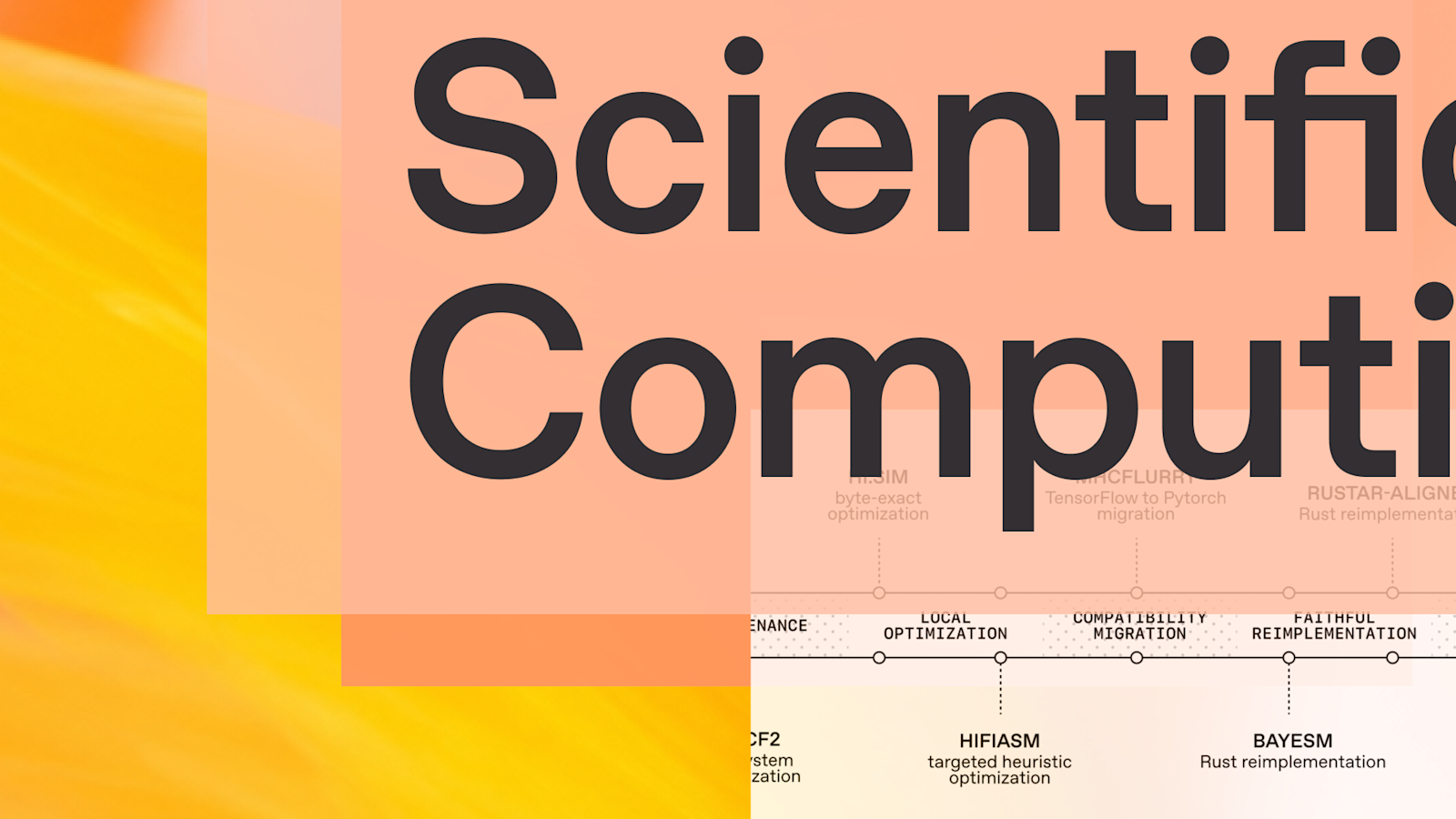
Scientific computing in the age of agentic AI
 Databases
PostgreSQL's MVCC is bad. So is everyone else's
 Graphics
So, you want to make a game engine (2023)
 Android
Celebrating 5 years of Jetpack Compose
Posted by Rebecca Franks, Developer Relations Engineer, Nick Butcher, Product Manager, Loryn Hairston, Product Marketing Manager, AndroidToday, we officially celebrate five years since the release of Jetpack Compose 1.0. From version 1.0, announced on July 28th, 2021, to our latest 1.11 release, we’ve seen the APIs evolve significantly over the years, and we’re taking a moment to celebrate. When we officially announced the 1.0 release, we promised a simpler, faster, and more intuitive way t
Show HN: Base-GPUI: A GPUI port of Base UI headless components
Science
Harmony Explained: Progress Towards a Scientific Theory of Music (2012)
Designing Reliable Document Generation Workflows in Modern Webs Applications
null Continue reading Designing Reliable Document Generation Workflows in Modern Webs Applications on SitePoint.
 Web Development
WhatsApp now lets you make calls using its web app
 Mathematics
The Origins of Modern Mathematics in Russia
Looking for direction on migrating a project from C++ to Rust
Due to customer requirements, sometime in the next year a project at my work is going to have to migrate from C++ to rust. There's not a lot of rust experience on the team, I've been looking at rust for a few years and passively learning stuff, read through a lot of that handbook wiki, but I haven't written much. The upside here is the project being ported is relatively new so I understand pretty much the entirety of the project (having also written like 50% of it), and we attempted to have it b
Solving Fermat: Andrew Wiles
Show HN: I left VSCode to build an IDE to handle many projects/agents workflow
C'est quoi le Q-day?
L'objectif de cet article est de vulgariser les connaissances autour du Q-day, car derrière ce titre se cachent des concepts de mécanique quantique et de cybersécurité avancés. Avançons ensemble dans ce parcours afin qu’au terme de la lecture, vous disposiez des éléments nécessaires pour prendre de meilleures décisions dans votre système d'informat
 Linux
Linux
Added free shell service from Estonia to the Free Linux Shell section
Added free Debian Linux shell account info from Estonia free shell provider to our free Unix/Linux shell page. They provide gcc, python3 , mySQL database, irssi, weechat, ZNC, eggdrop, 150MB disk space, ipv6 subdomain, etc.
Show HN: BeatFlow: Codex skill for composing music as editable multi-track MIDI
 Networking
Natural disasters and government interference: examining Q2 2026’s major Internet disruption event
Like most infrastructure, the Internet's fragility is easy to overlook — as long as it's working. When it fails, its complexity comes into full view. Cloudflare is in a unique position to detect and document the moments when one of the interrelated systems the Internet depends on breaks down and connectivity suffers as a result. Each quarter, we summarize the disruptions we detect and annotate on Cloudflare Radar. In Q2 2026, Super Typhoon Sinlaku just north of Guam caused the longest outage,
Show HN: Kiln – a fast, native batch image processor
The Ten Commandments for C Programmers from Henry Spencer (Unix/Plan 9 – 1987)
Machine Learning and AI
Kimi Linear: An Expressive, Efficient Attention Architecture
Building a custom kernel from scratch in Rust (Rectangle OS): Looking for feedback and architecture advice
Hi everyone, I’m a young developer currently working on an independent, hobbyist operating system from scratch called Rectangle OS. The main goal of the project is to build a low-level, memory-efficient system kernel using Rust (targeting no_std), focusing on performance, low RAM overhead, and a modular architecture. Current Status: * I am currently in Phase 1 (Core Kernel Development). * Setting up basic memory management and architecture-specific routines. * Choosing Rust for its memory sa
What Even Are Microservices?
The real AI risk is inside the labs
Amodei in his latest blog post wrote a mix of agreeable things and things that I believe misrepresent where the real risk of AI is located. I want to focus my attention on why, among all the risks, open weight models constitute the mildest one. I write these words as a person who strongly believes AI may be very dangerous in the near future: 1. Exactly like what happened during the OpenAI / HF incident (which was a joke, but focus on the modalities, not the outcomes), the first serious AI incid
 Programming Languages
KotlinLLM is Going Open Source
TL;DR KotlinLLM is now public. It’s a research prototype for delegating runtime logic to an LLM from Kotlin code. Instead of calling an LLM on every request or running a separate agent, you can write an explicit Kotlin call. Its body is generated Kotlin source code, and that code is updated as your application hits new runtime scenarios. 👉 Check it out 👉 KotlinConf 2026 talk What is KotlinLLM? KotlinLLM is an IntelliJ IDEA plugin for Kotlin/JVM projects. It adds a langua
 Developer Tools
Github Actions for .NET: Build, Test, and Ship With Docker
Build a complete CI/CD pipeline for .NET with GitHub Actions - run unit and integration tests, publish a NuGet package, build a Docker image that runs tests, manage secrets, and push to the container
 Data Engineering
Hans-Juergen Schoenig: Data Lineage in PostgreSQL 19: Finally, an Answer When the CFO Asks "Where Did This Number Come From?"
Picture this: it's Monday morning, your coffee is still warm, and someone from finance slides into your DMs asking why the Q4 revenue number doesn't match what they expected. You know the data flows through about five transformation steps, but the pipeline was built by someone who left two years ago, and the documentation is... let's say aspirational. So you do what any engineer does: you start digging. You grep through ETL scripts. You trace foreign keys. You find a view that references anot
 Programming Languages
Programming Languages Are Authoring Tools for Platforms
Machine Learning and AI
Show HN: A 6M-token movable window on a single 46GB GPU
 Science
Ars Astronomica – English translations of rare Hebrew and Latin astronomy texts
 Self-Hosting
Residential Proxies Are a National Security Threat
 Programming Languages
EYG: A Programming Language for Humans
Machine Learning and AI
AI Applications in Finance: A Practical Use Case Guide
Artificial intelligence in finance refers to the use of machine learning, natural...
Machine Learning and AI
Building AI Literacy: Frameworks, Tools, and Practices
AI literacy is an individual's ability to comprehend and effectively utilize AI tools...
 Machine Learning and AI
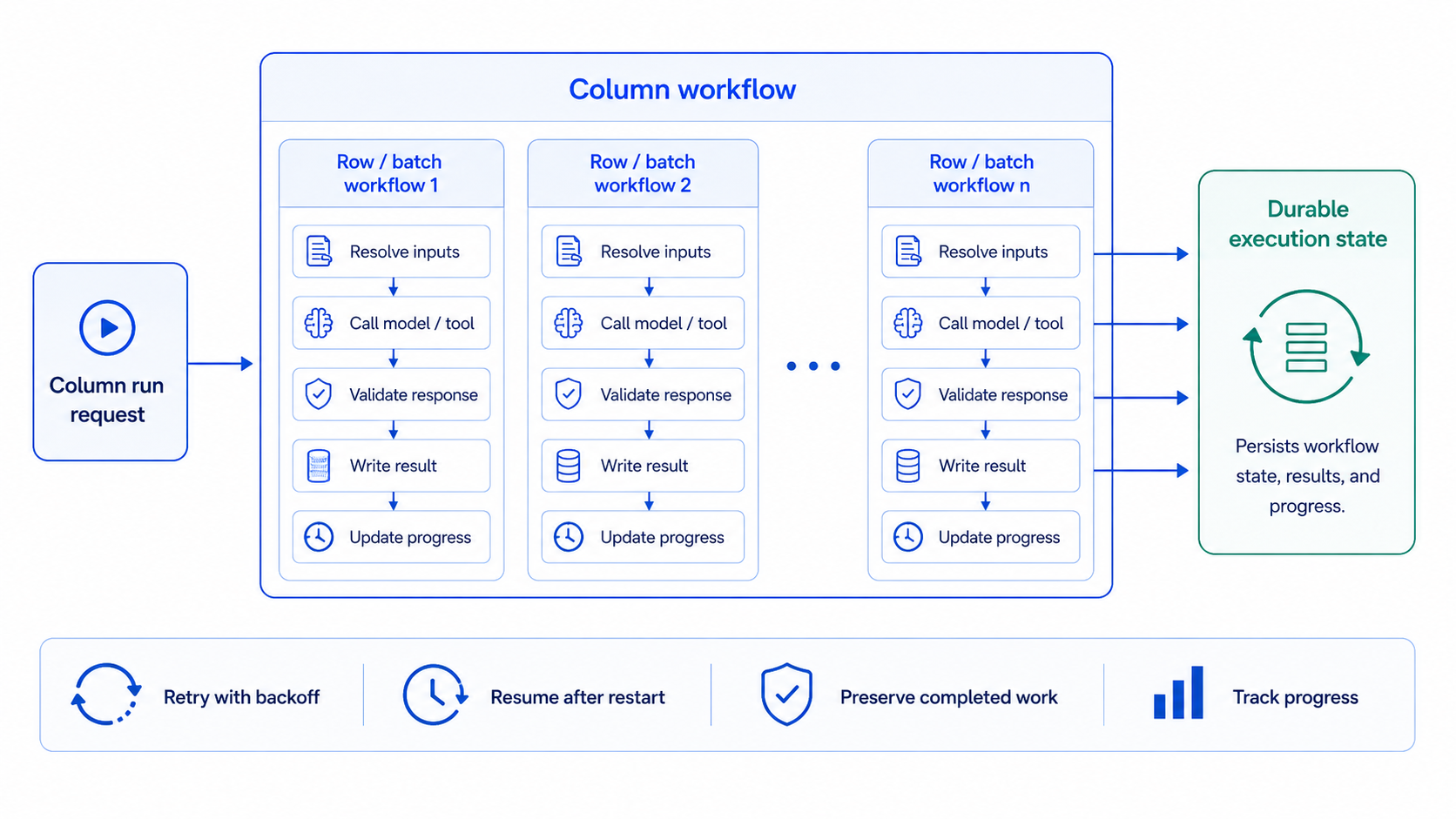
Building Reliable Production AI with Durable Workflows
Building an AI prototype has never been easier. You send a prompt to a model, receive a response, and present the result to a user. As long as each request is independent, the interaction is straightforward to reason about, test, and debug. That is why so many early AI applications feel deceptively simple. Production AI systems tell a different story. Imagine generating AI output across 10,000 records. Thousands of model calls begin executing simultaneously. Some finish immediately, while oth
 Machine Learning and AI
Platform engineering 2.0 mitigates AI security and compliance risks
Securing Services with Rootless Containers
 Databases
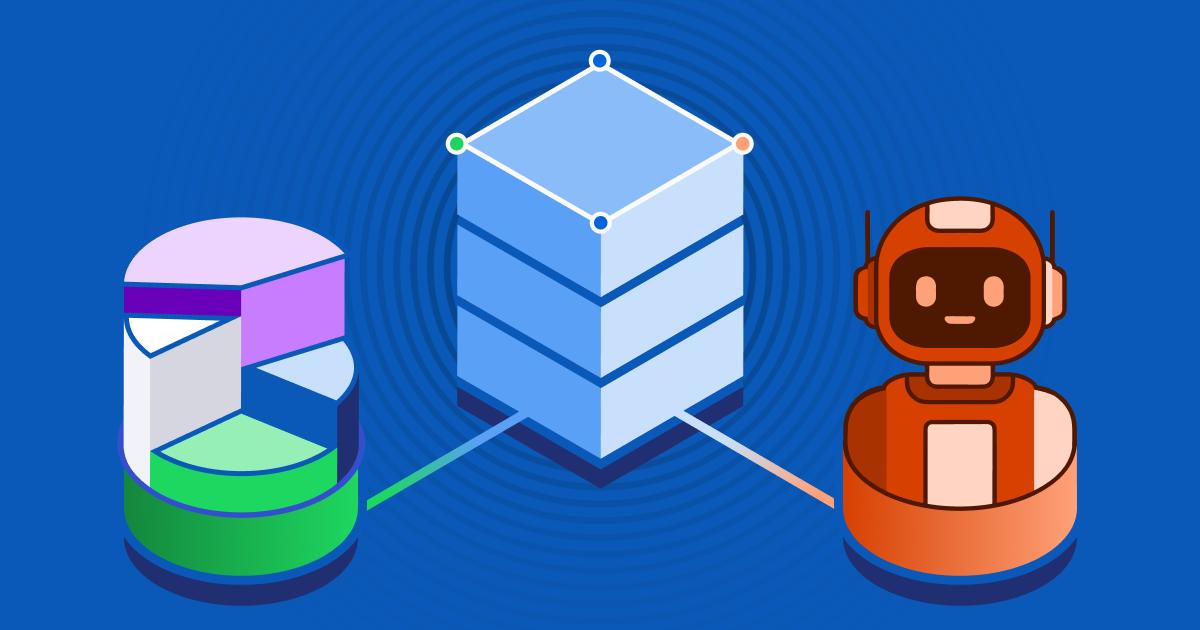
Indexing the Data Lake for Online Point Queries
Companies like Spotify need vast quantities of data accessible at low latency for online services and,... The post Indexing the Data Lake for Online Point Queries appeared first on Spotify Engineering.
 Graphics
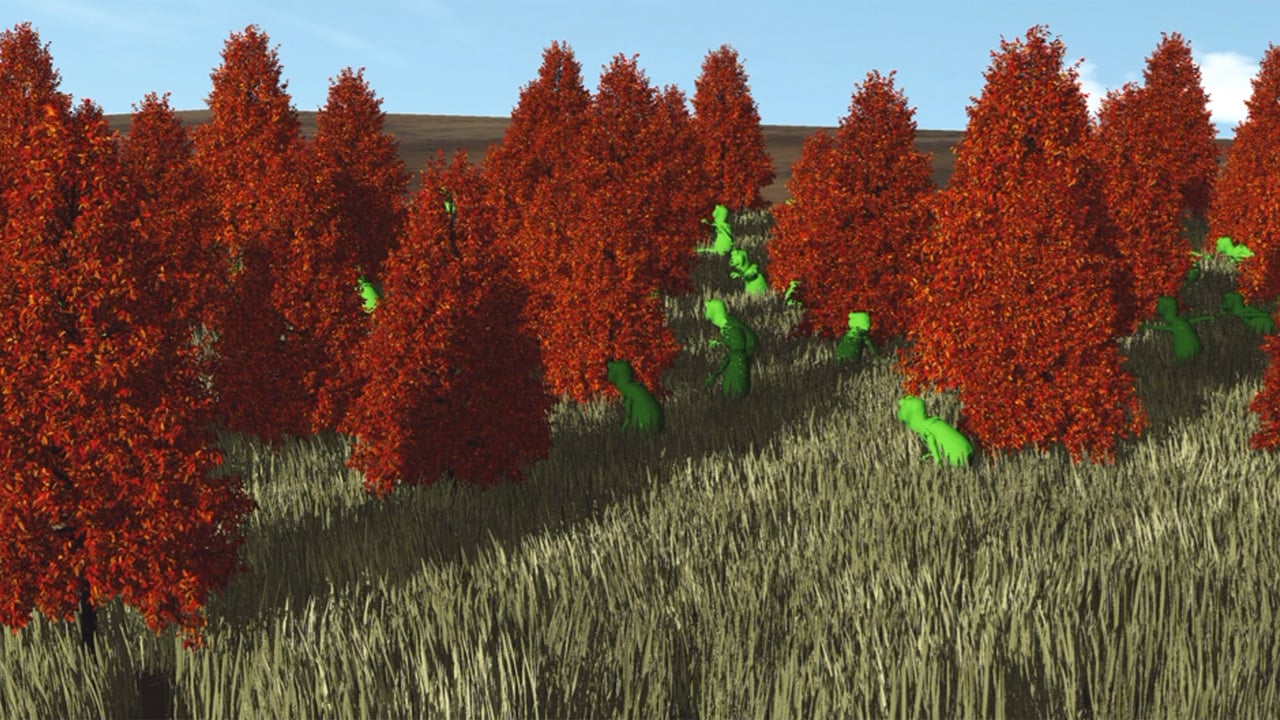
Ray tracing massive amounts of animated geometry using tetrahedral cages
Vibe Coding Reconsidered
A year ago, you couldn't vibe code in Lisp. Even the SOTA models had trouble balancing parentheses, and they'd hallucinate packages and symbols that didn't exist. A year makes a big difference in this field, and the latest models are capable of vibe coding moderately sized programs in syntactically correct Lisp. I have been experimenting with vibe coding in Common Lisp and I'm hooked. It is a blast. It is like having on hand a talented undergraduate who just took a Lisp course. If y
Self-contained highly-portable Python distributions
Are LLMs Unstuck in Time?
Documenting historical events accurately is no small feat. As time passes, human memory fades and books, letters, posters, and other artifacts become difficult to find. By some estimates, we know less than 1% of what happened 500 years ago. So, as researchers and technologists seek to build better large language models (LLMs), they face a challenge. AI can reasonably reconstruct the past through data and language, but it lacks the context to handle nuance: how people spoke, what clothes they
 Infrastructure and DevOps
Show HN: Infrawrench – a tool to manage cloud and svcs with workflows and chat
L'IA n'est pas le sujet : pourquoi le véritable défi est désormais l'ingénierie des systèmes de production logicielle ?
Pendant plusieurs décennies, l'ingénierie logicielle s'est attachée à optimiser la manière dont les équipes produisaient du code. Demain, elle devra surtout organiser la collaboration entre humains et agents d'intelligence artificielle au sein de véritables systèmes industriels de production.
 Machine Learning and AI
Google’s AI search is rapidly becoming the default, new data shows
 Android
How R8 made Kotlin Coroutines on Android 2x faster
Posted by Andrei Shikov, Senior Software Engineer, Android Toolkit and Jonathan Starup, Software Engineer, R8 Team Starting from AGP 9.2.0, R8 optimizes most Atomic*FieldUpdater calls into Unsafe variants that perform 2x to 4x better on common operations. This has a particularly large impact on the kotlinx.atomicfu library that implements atomics for kotlinx.coroutines, making launching and cancelling coroutines up to 2x faster. In order to get the benefits, update your AGP to 9.2.0 or above.
multicalc: Scientific computing for real time embedded systems in no_std rust
Hello! multicalc is my rust crate aimed at scientific computing for real-time embedded systems, built from scratch in one integrated package. Estimation, control, kinematics, Lie groups, calculus, autodiff and linear algebra in stable no_std Rust with no heap, no panics and no unsafe. What you're seeing: A 2D robot that starts up not knowing where it is, then localized itself using a 2,000-particle filter on a noisy lidar. Then, a 5-state Extended Kalman Filter fuses wheel odometry, an IMU, and
Databases
Radim Marek: PostgreSQL's MVCC is bad. So is everyone else's.
The first thing you will probably learn about Postgres, if you follow people who don't like Postgres, is that MVCC is bad. The 40-year-old design mistake. It's signatures are everywhere. Bloated tables that double in size, 32-bit transaction counter limit, the never ending struggle with VACCUM, dead tuples nightmares. It comes with credentials, too: Uber measured the write amplification in 2016 and left for MySQL over it; Andy Pavlo's database group called MVCC the part of PostgreSQL they hate t
Rust terminal UI library
submitted by /u/aymanana [link] [comments]
 Systems Programming