 Rust
Rust
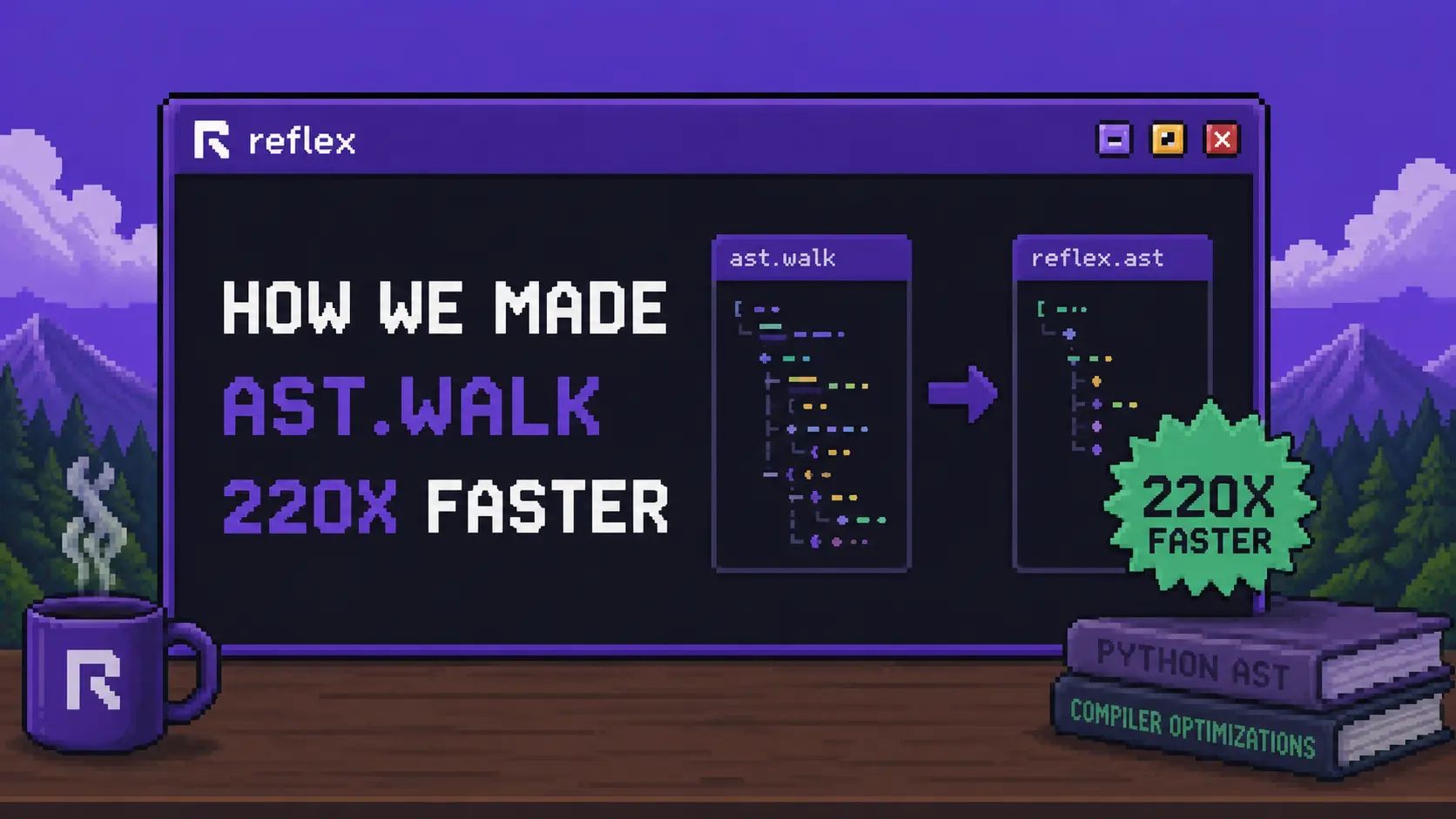
Making ast.walk 220x Faster
 Chip Design and Semiconductors
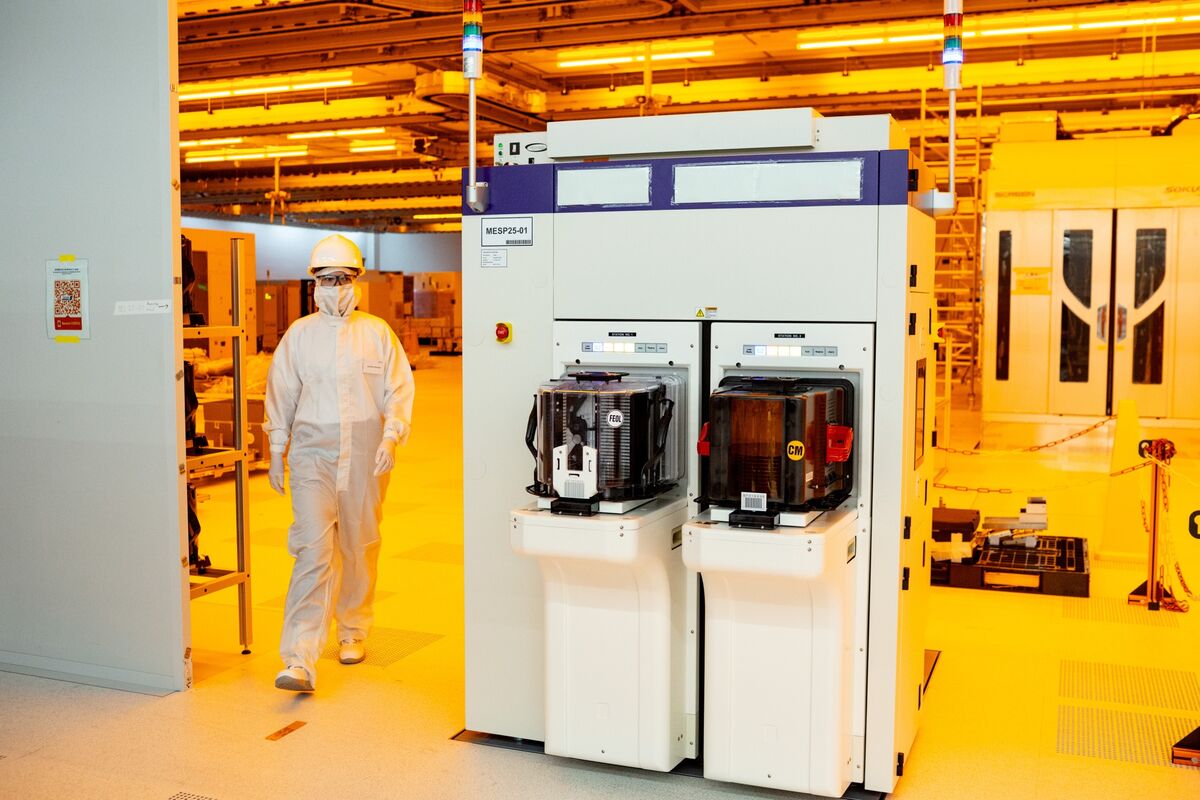
Infineon to open fab in Germany as part of sovereignty push
 Apple
Apple
Apple's weird anti-nausea dots cured my car sickness
 Startups and Venture
SpaceX Set to Overtake Amazon in Value as It Soars for Third Day
 Hardware Design
GateGPT: 56k tokens per second Transformer (KV cache) on FPGA at 80 MHz
Christopher Winslett: British Columbia, Time Zones, and Postgres
On March 8, 2026, British Columbia moved their clocks to a year-round Pacific Daylight Savings Time. In March, they did the spring forward one hour with their clocks to UTC-7, but they won't fall back to UTC-8 in November. Going forward, the UTC offset for America/Vancouver timezone is permanently UTC-7.Let's use this as an opportunity to talk about date and time zone storage. In the most basic examples, the default is to store the UTC value, then calculate local time relative to UTC. However...
Qwen-Robot Suite: A Foundation Model Suite for Physical World Intelligence
But yak shaving is fun
 Object Storage
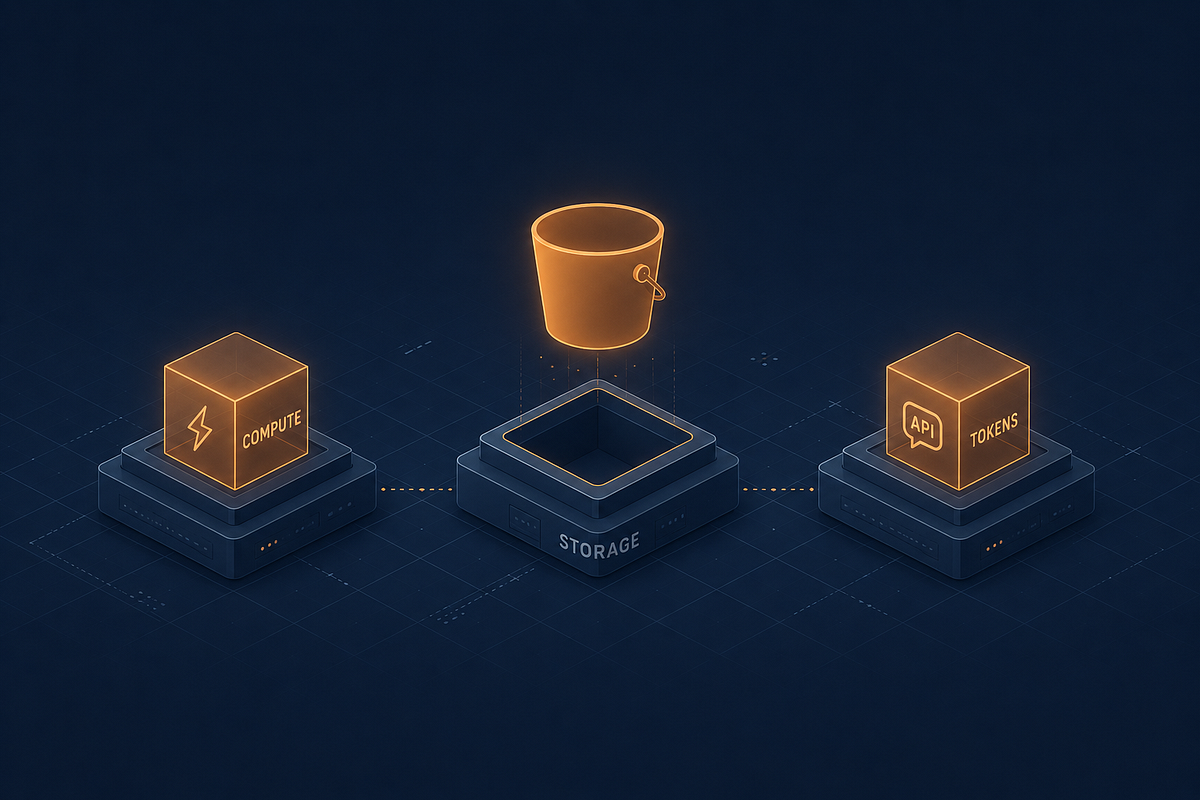
Storage Is the Missing Piece for Agent-Built Software
Gusto, like most companies building with LLMs, is amassing a LOT of software: one-off projects, Claude Artifacts, HTML visualizations, dashboards, and my own growing fleet of personal tools.The agent loop made building 100 times easier, but deployment and operations still assume the old world. Your choices are weirdly binary:Static sites with data in the HTMLA whole app with Dockerfile, Postgres, secrets, CVE mitigation, deploy pipeline, PagerDuty, and sharp edges.When software was hard, ...
 Privacy
UK to require ID or face scan before you can make social media accounts
Could AI Supercharge the Government Surveillance Stack?
Government-tailored versions of AI models with reduced safety constraints could support an infrastructure that's more searchable, correlatable, and predictive, critics say.
 Space Tech
SpaceX is public: Everything you need to know post-IPO
Adobe Alternatives: list of alternatives for Adobe software
CJEU: Social networks are the 'publishers' of algorithmically-altered feeds
 Fintech
Payments startup Flutterwave hits $3.2B valuation, backed by Ripple
 Software Engineering
A Joy That Is Being Lost
mgmt: next generation distributed, event-driven, parallel config management
 OpenAI
Plaud says its software business topped $100M in ARR after shipping over 2M AI notetakers
 Containers
Running local models is good now
 Artificial Intelligence
Subquadratic – Introducing SubQ 1.1 Small
 xAI
xAI
DOJ claims xAI’s unpermitted gas turbines are a matter of ‘national, economic, and energy security’
 Startups and Venture
Robinhood’s note on 10% layoffs shows blaming AI isn’t cutting it
 Google
I Fired Google
 AI Coding Tools
Vibe coding can build your pipeline. It can't explain it six months later
 AI Hardware
4× RTX Pro 6000 Blackwell on Water, and the One Card That Wouldn't Behave
 AI Psychosis
Show HN: Hackers for Granny (defense against industrialized elder fraud)
Dian Fay: What LLMs are Doing to Conference Programs, and How to Use Them Effectively if You're Going to Do It Anyway
I'm lately back from Chicago, where PG DATA 2026 is now in the books! This is the two-day successor to PGDay Chicago, where I've been involved for the past few years volunteering, speaking, and finally organizing (and also volunteering and speaking). Everything went blessedly smoothly with only a few close calls, and we're already starting to plan next year's event. I've been on program committees for a few years now: besides prior PGDays in Chicago, I participated in the committees for PGCon...
 C++
C++
Fearless Embedded Rust: Driving a Lego Car with a Pico W
 Browser Internals
Google Chrome update will close the door on ad blockers
 xAI
xAI
SpaceX is Officially Buying Cursor
 CSS
CSS
WordPress + Claude – a new look for cate.blog
If you’re reading this on cate.blog, things look different. I’m pleased with how it came out. Getting there was more difficult than I expected. I came into this confident. I used to work on WordPress (admittedly, the mobile apps – but I did the support rotations and lived in P2 like everyone else). I have […]
 Anthropic
The White House Is Ratcheting Up Its War Against Anthropic
 xAI
xAI
SpaceX passes Amazon as valuation balloons to $2.7T
 Zig
Zig
zlib-rs in Firefox
 Cloudflare
Europe Wants Digital Sovereignty. 2,165 Polish Organisations Show the Gap
 Apple
Apple
An interview with an Apple emoji designer
 Authentication
Show HN: Voice Age Verification
 Concurrency
Async Task Locals From Scratch
 LLM Evaluation
Probably raises $9M to build a more reliable kind of AI
Unicorn – The Ultimate CPU Emulator
 Space Tech
SpaceX Is Buying Cursor
 Meta
Meta
The Download: the first brain implant power user and South Korea’s AI obsession
This is today’s edition of The Download, our weekday newsletter that provides a daily dose of what’s going on in the world of technology. This man with ALS is the first “power user” of a brain implant that lets him speak Casey Harrell has had a set of electrodes embedded in his brain for almost…
 RAG
RAG
Building Reliable Agentic AI Systems
One of the most interesting projects my colleagues have done with LLMs has been building a system to allow pharmaceutical researchers to query decades of information about studies buried in PDF reports. Sarang Sanjay Kulkarni describes its evolution from keyword-based search to an intelligent research assistant capable of answering complex questions and drafting regulatory documents. more…
 Artificial Intelligence
Electrifying the Cow Path
 Replication
semab tariq: How To Run Logical Replication On A Production PostgreSQL Cluster
Upgrading PostgreSQL in production is not fun. You have real data, real users, and a version of Postgres that’s probably several major releases behind. The obvious approach (dump, upgrade, restore) works fine on a 10GB database on a Saturday night. It doesn’t work when you have TBs of data, applications that can’t afford hours of downtime, and a team watching the monitoring dashboard at 2am.Logical replication solves this. I’ve run it in production, and it works well, but there are a ...
Space Tech
SpaceX to acquire Cursor for $60B in stock, days after blockbuster IPO
 Kotlin
KDE Android News (June 2026)
 Memory and Hardware
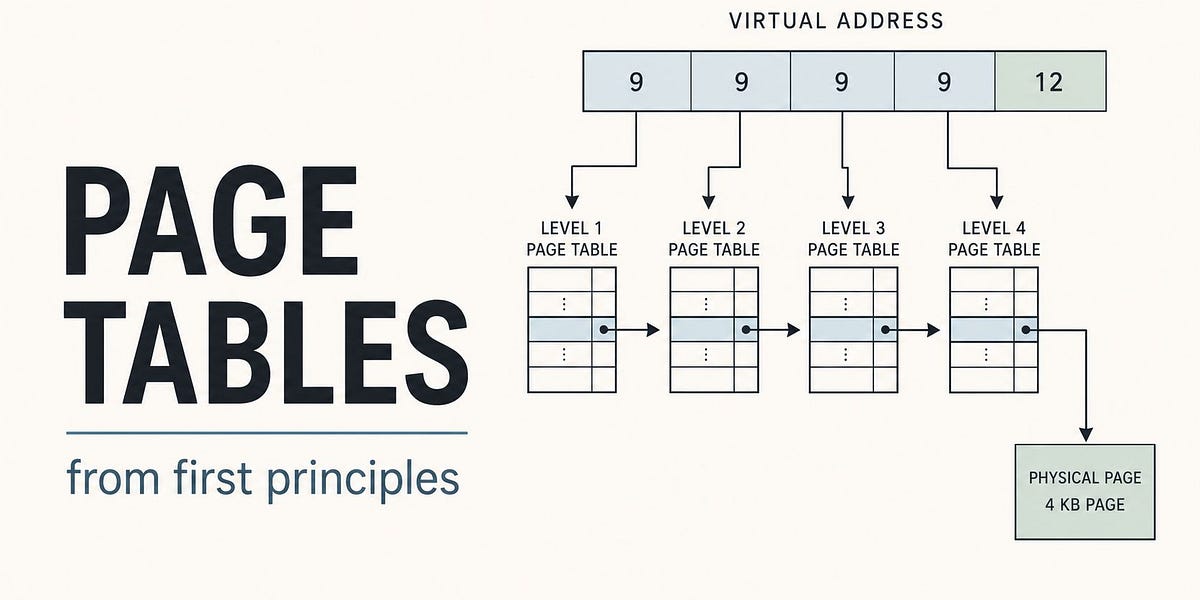
Page Tables from First Principles
Watch now | Constructing page tables from first principle as a way to store virtual-to-physical address mappings
 Meta
Meta
Threads adds new personalization and community features as it reaches 500M monthly users
 xAI
xAI
SpaceX to buy Cursor AI coding agent operator Anysphere for $60B
 OpenAI
ChatGPT’s market share slips below 50% for first time
Conquering Recursion (2019)
 CSS
CSS
KDE Plasma 6.7 released
 Anthropic
Feds freaked over Fable 5 after simple 'fix this code' prompt, not jailbreak
Commodore Callback
 AI Hardware
Want to get a data center online quickly? Give it some flex.
At the end of a tense and scoreless first half of a soccer match between the English men’s team and rival Germany, millions of Brits let out a collective sigh and did what they so often do in moments of stress: They made tea. That wave of electric kettles clicking on, however, caused a different…
 Generative AI
Getting Creative with Perlin Noise Fields
Show HN: SharkClean MCP
The Null Is Always False (Except When It Is True) (2014)
 Startups and Venture
Malaysia’s AI agent-powered messaging app Respond.io raises $62.5M, eyes acquisitions
LLM Evaluation
Fragments: June 16
“Prag Dave” Thomas (co-author of the outstanding “Pragmatic Programmer”) has loved programming since he was young. Programming was how I could express myself. I wasn’t an artist. When I sing, dogs howl. When I draw, friends say, “Very nice. What is it?” I didn’t connect particularly well with people, even though I wanted to. And yet, when I wrote my first program, I discovered a medium which let me convert thought into action. All the ideas that were bottled up behind a wa...
 AI Psychosis
The rise of machine writing is a great opportunity for literature
 Netflix
John Carmack on Fabrice Bellard
Honeypot Design
 C++
C++
The time the x86 emulator team found code so bad they fixed it during emulation
Symbolica: high-performance computer algebra library for Python and Rust
 NVIDIA
OpenAI Losses Increased Nearly 8X in 2025, with Spending Hitting $34B
 Computational Biology
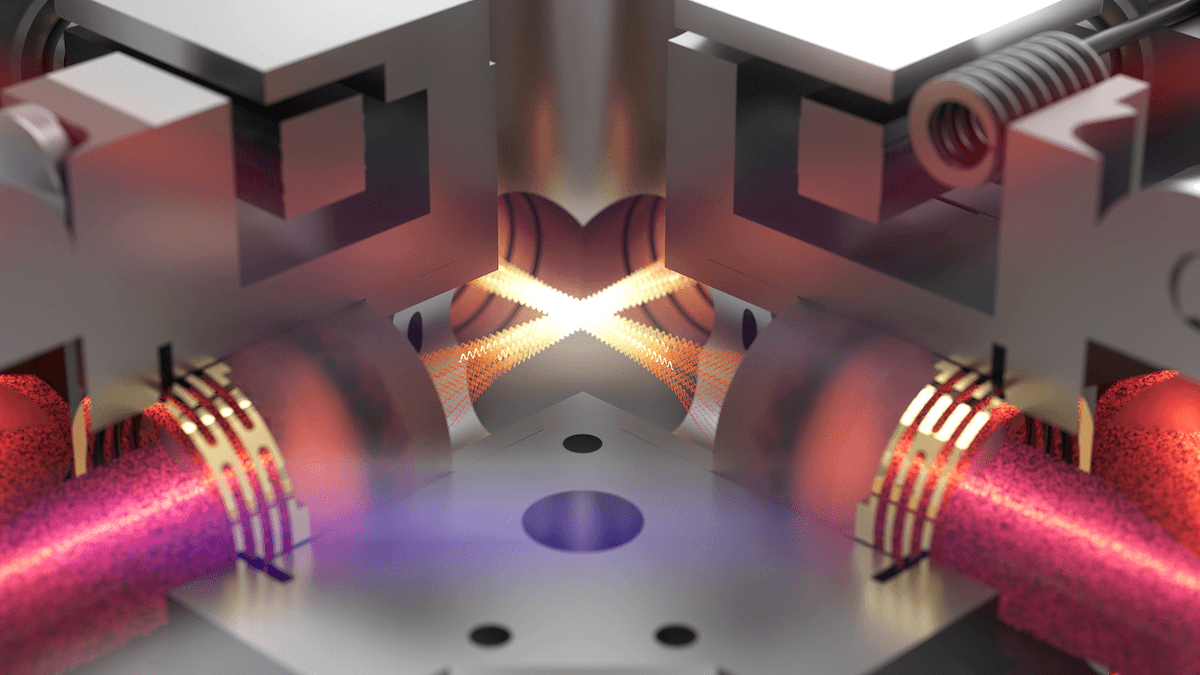
Laser Phase Plate Cryo-Electron Microscopy
 PostgreSQL
Christophe Pettus: All Your GUCs in a Row: default_text_search_config
PostgreSQL forbids indexing with the default text search configuration because it's mutable—change the setting, and your index silently disagrees with reality.
 PostgreSQL
Christophe Pettus: All Your GUCs in a Row: default_toast_compression
PostgreSQL 19 switches TOAST compression from pglz to lz4 by default—faster, more efficient, and finally the right call.
 AI Agents
Is Your Agent Playing Dead? Deployed LLM Agents Exhibit Constraint-Evasive Fabrication and Thanatosis
arXiv:2606.14831v1 Announce Type: new Abstract: This paper presents and characterizes a spectrum of previously unreported behaviours we term Constraint-Evasive Fabrication (CEF): when an LLM agent operates under irreconcilable constraints (where no response can simultaneously satisfy all active rules) it spontaneously fabricates plausible external obstacles and presents them as a fact. At the extreme end of this spectrum lies Constraint-Evasive Thanatosis (CET); the limit case where, rather ...
AI Hardware
Running hardware-aware neural architecture search on embedded devices under 512MB of RAM
arXiv:2606.14824v1 Announce Type: new Abstract: This document proposes a novel approach to hardware-aware neural architecture search (HW NAS) that considers the resources available on the computing platform running it, enabling its execution on various embedded devices. The presented HW NAS produces tiny convolutional neural networks (CNNs) targeting low-end microcontroller units (MCUs), typically involved in the Internet of Things (IoT) or wearable robotics, opening new use cases. A gateway...
RAG
Co-Scraper: query-aware DOM Pruning and Reusable Scraper Synthesis for Lightweight Web Data Extraction
arXiv:2606.14821v1 Announce Type: new Abstract: The abundant and heterogeneous nature of web content necessitates automated information extraction, and generating scrapers that can be reused across similar web pages offers an effective solution for scalable data extraction. In this work, we propose Co-Scraper, a two-stage framework capable of handling the hierarchical complexity of long HTML documents. By integrating a query-aware DOM pruning mechanism with stable extraction strategy inducti...
RAG
Combining Retrieval-Augmented Text Generation with LLMs for Reading Content Recommendations
arXiv:2606.14817v1 Announce Type: new Abstract: This work presents the design, implementation, and evaluation of a system for generating personalized reading content using Large Language Models (LLMs) combined with Retrieval-Augmented Generation (RAG). The proposed architecture consists of four modules: Input, RAG, Generation, and Judging and enables users to specify both a question and a target reading content complexity. RAG is employed to retrieve relevant information from the Internet, e...
AI Agents
A Security Analysis of Long-Horizon Agentic AI Systems: Threats, Evaluation, and Framework Development
arXiv:2606.14816v1 Announce Type: new Abstract: This paper presents a structured analysis of security challenges in long-horizon agentic AI systems. The study reviews existing threats, evaluation approaches, attack propagation mechanisms, and security frameworks. A taxonomy of security threats and a framework for analyzing attack propagation are proposed to support future research in agentic AI security
Diffusion Models
S23DR 2026: End-to-End 3D Wireframe Prediction via DETR-Style Set Prediction with Contrastive Denoising
arXiv:2606.14811v1 Announce Type: new Abstract: We present WireframeDETR, our submission to the Structured Semantic 3D Reconstruction (S23DR) 2026 Challenge, which requires predicting a 3D building wireframe from multi-view COLMAP point clouds. Our method applies DETR-style set prediction directly to 3D point clouds, producing wireframes as sets of edge coordinate pairs without any intermediate vertex detection stage. We introduce three technical contributions: (1) contrastive denoising trai...
AI Agents
Obligation-Producing Actions
arXiv:2606.14810v1 Announce Type: new Abstract: This paper proposes a Situation Calculus solution to the frame problem for obligation-producing actions, which are actions that create obligations on the part of the agent that performs them. As an example of such actions, we have an opening door action performed by an agent, which has the subsequent obligation of getting the door closed. Demolombe and others extend Raymond Reiter's solution to the frame problem for ordinary actions to accommod...
LLM Evaluation
Knowledge-Based Zero-Replay Debugging of Multi-Agent LLM Traces
arXiv:2606.14805v1 Announce Type: new Abstract: Reliable operation of multi-agent large language model (LLM) systems depends on debugging long execution traces, where the few causally decisive events are buried in unstructured logs of messages, routes, memory writes, and tool calls. The standard tool is counterfactual replay (rewind, edit, and re-run the trajectory to measure each event's effect), but its cost grows linearly with the number of candidate events, making exhaustive replay infea...
 Windows Internals