 Security Engineering
Security Engineering
Security Engineering
Security Engineering
Security Engineering
 CVE and Exploit Development
 Chip Design and Semiconductors
 Graph Databases
In the previous post, we discussed the basic syntax of graph queries in PostgreSQL 19 and discussed some simple SQL/PGQ examples. However, more often than not applications are more complex and need more than just two basic tables. Therefore, we want to dig a little deeper and see how we can write more complex queries and model some more sophisticated graphs based on real world scenarios. Loading sample data for graphs To demonstrate a couple queries, which happen to be increasingly adva...
 CSS
CSS
 Chip Design and Semiconductors
 Startups and Venture
 Database Migration
 Rust
Rust
 Clojure
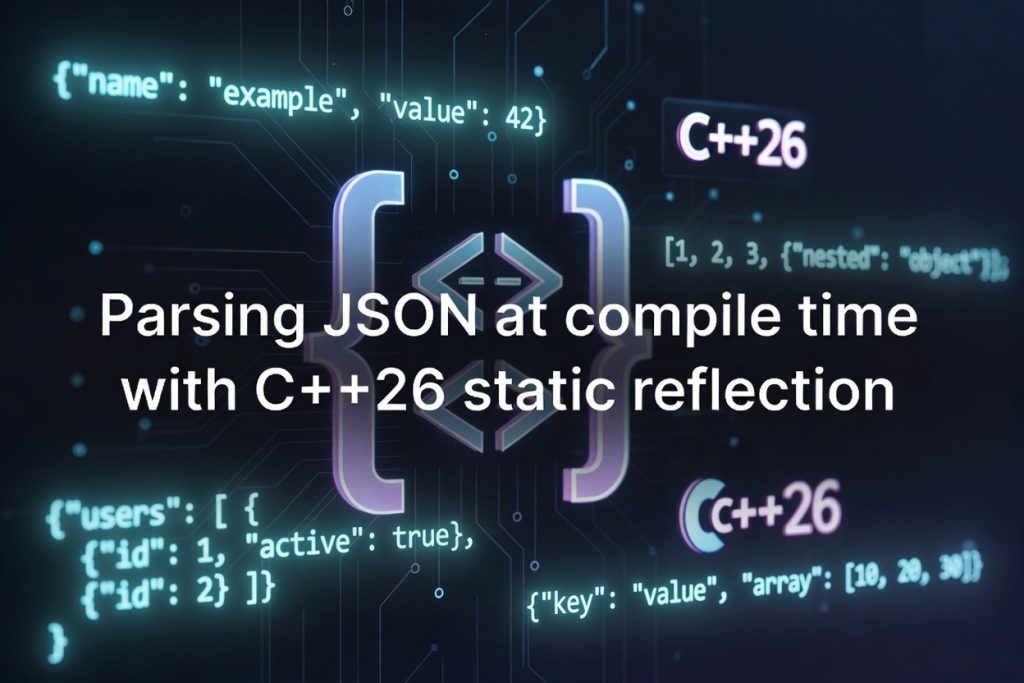 C++
C++
 Query Planning
Reorder GROUP BY and DISTINCT keys to cut comparison costs and skip sorts—new optimizations in PostgreSQL 17 and 18 that usually stay invisible but…
 Anthropic
 AI Psychosis
 xAI
xAI
 xAI
xAI
 PostgreSQL
 ClickHouse
 Startups and Venture
 Startups and Venture
 Google DeepMind
 Storage Engines
 NVIDIA
 Authentication
 NVIDIA
 Kubernetes
 PostgreSQL
 Agentic Commerce and Payments
 Network Security
What happens to everything surrounding code—the conjectures that seed research, the review systems that validate it, and the platforms where it is shared—when science goes agentic?
Bandying about possible solutions.
 EVs and Transportation
As vision-language models move from the lab into enterprise automation and robotics, the industry is discovering that "mostly right" is a recipe for failure.
 Compilers
 C++
C++
 Web Application Security
 xAI
xAI
 Flink
Flink
Yisheng Zhou | Software Engineer IILiang Mou | Sr Staff Software EngineerGabriel Raphael Garcia Montoya | Staff Software EngineerIstvan Podor | Staff Software EngineerIntroductionIn the first post of this series, we introduced Pinterest’s next-generation CDC-based ingestion platform built on Kafka, Flink, Spark, and Iceberg. In production, upstream schemas are constantly evolving, and in a distributed CDC pipeline, schema is not just metadata — it is a cross-system contract spanning ...
 Rust
Rust
 Google DeepMind
 Open Source
 Meta
Meta
 Spotify
 AI Inference
 Compliance and Privacy
 Artificial Intelligence
 Robotics
 Meta AI
 AI Hardware
 AI Agents
Part 2: Planning, Tool Use, and Reflection Key takeaways Memory gives an agent continuity. It does not give it judgment. Planning, tool use, and reflection are the three capabilities that turn a well-informed model into a system that can act on a real business process. Treat the execution plan as an artifact, not a transcript. If you can’t persist it, version it, and pause it for human approval, it isn’t a plan — it’s improvisation with extra steps. A tool named ‘run a ...
 Computer Vision
 Git
Git
 Open Source
 AI Coding Tools
 Artificial Intelligence
 Quantum Computing