 Privacy
Privacy
Privacy
Privacy
Privacy
 AI Psychosis
 Rust
Rust
 Large Language Models
Ryan sits down with Frank Portman, CTO at Yobi, to talk about why next-token prediction, though great for language, isn’t the right inductive bias for forecasting human behavior. They discuss how Yobi builds a “foundation model of behavior” using transformers and graph neural networks instead of chat-style LLMs, and what it takes to run millions of personalization decisions per second while keeping consumer data private.�...
 X / Twitter
 Anthropic
 AI Agents
arXiv:2606.28434v1 Announce Type: new Abstract: Long-horizon software engineering agents often need to manage lengthy and noisy interaction histories under limited context budgets. Existing memory management methods typically rely on static compression workflows or impose rigid constraints on compression timing and granularity. Moreover, these approaches fail to jointly optimize memory management and issue resolution capabilities to improve performance while reducing token usage. We present ...
Artificial Intelligence
arXiv:2606.28433v1 Announce Type: new Abstract: One goal in reinforcement learning (RL) research is to understand general-purpose sequential decision-making, using benchmark simulators as a proxy for learning in deployment settings. When running experiments, however, the goal of achieving high performance in the simulator can mutate into focusing exclusively on solving the simulator. To achieve high scores, researchers may adopt solutions exclusively meant for solving simulators, rather than...
LLM Evaluation
arXiv:2606.28430v1 Announce Type: new Abstract: Benchmarks are widely used to evaluate task completion by Large Language Models (LLMs), but this approach has accumulated construction-validity problems, and a passing score may not show whether the requested task was delivered. We study both problems. In a controlled code-as-spec setup, two production Copilot CLI agents (claude-opus-4.7, gpt-5.5) re-implement a React Fluent-UI data table in Angular as a reusable library under a hidden 222-test...
Formal Methods
arXiv:2606.28429v1 Announce Type: new Abstract: Spatio-Temporal Logic with Graph Operators (STL-GO) extends Signal Temporal Logic (STL) to multi-agent systems via graph operators that count neighboring agents satisfying a property, together with multi-agent quantifiers. While Boolean semantics for STL-GO are well-defined, quantitative semantics have not yet been developed and existing quantitative semantics for spatio-temporal logics such as STREL cannot capture the counting constraints in S...
Artificial Intelligence
arXiv:2606.28425v1 Announce Type: new Abstract: Increasingly autonomous agentic AI systems pose novel multi-agent risks, such as secret collusion via covert communication channels. The natural defence to these collusion attempts is to monitor plain-text communication, but the efficacy of monitors has been called into doubt by increasingly sophisticated model steganography; indeed, some theoretical schemes have been proposed that are information-theoretically or computationally indistinguisha...
Diffusion Models
arXiv:2606.28421v1 Announce Type: new Abstract: Text-to-image (T2I) diffusion models typically require substantial computational resources and cloud infrastructure, posing significant challenges for edge deployment in terms of latency, cost, and user privacy. We present JuZhou 1.0, an ultra-lightweight T2I foundation model designed for fully offline, on-device execution. JuZhou 1.0 achieves its efficiency through four key designs: (1) a compact image-generation backbone consisting of a 0.385...
Diffusion Models
arXiv:2606.28419v1 Announce Type: new Abstract: Limited data availability, class imbalance, and domain variability remain major barriers to reliable medical image classification. Conventional augmentation can improve training diversity but may distort diagnostically informative structures, whereas unconstrained generative augmentation may introduce label-inconsistent content. This paper proposes MedDiffuseMix, a saliency-guided diffusion mixing framework for controlled medical image augmenta...
Diffusion Models
arXiv:2606.28417v1 Announce Type: new Abstract: Recently, diffusion models have been widely adopted in generative modeling and have served as foundational models for many image generation tasks. To control the generation without costly re-training or fine-tuning, many works seek inference-time guidance methods to steer the latent via a differentiable objective at inference time. However, these methods cannot effectively preserve the original Gaussian distribution because they introduce distr...
Computer Vision
arXiv:2606.28416v1 Announce Type: new Abstract: Deep neural networks (DNNs) have shown outstanding performance in visual recognition tasks within vision sensor networks; however, they are still vulnerable to adversarial manipulations and imperceptible perturbations that can lead to erroneous predictions. To address that, this paper presents AEGIS, a semantic aware and uncertainty guided adversarial detection framework designed for robust image classification in vision sensors pipelines. At i...
Artificial Intelligence
arXiv:2606.28413v1 Announce Type: new Abstract: A mesh of sovereign agents has no center: no shared clock, no shared model, and no coordinator to gather data or retrain. Its competence rests on each agent folding the projections its peers emit into a single internal state, online, from observations that arrive at irregular, unscheduled times, on a substrate whose weights it cannot retrain. Any one of these constraints is tractable on its own; folding optimally under all three at once is not....
 Artificial Intelligence
Artificial Intelligence
Artificial Intelligence
arXiv:2606.27394v1 Announce Type: new Abstract: The exponential increase in scientific publications has driven the emergence of new trends. Accurate forecasting of these developments is essential for researchers and professionals to stay updated with advancements in the field. This study presents an automated pipeline for trend prediction in the wireless networks and mobile computing domain by integrating clustering, topic modeling, and time series analysis. The process begins with the colle...
AI Agents
arXiv:2606.27386v1 Announce Type: new Abstract: Scientific publication is still organized primarily around static manuscripts, even though much of scientific progress depends on tacit know-how: how to run code, reproduce figures, interpret edge cases, choose useful follow-up directions, and avoid failed paths. Large language model agents create an opportunity to publish not only knowledge, but also operational know-how in a form that future readers and researchers can directly use. This pape...
Fine-tuning and PEFT
arXiv:2606.27385v1 Announce Type: new Abstract: The most widely used RANSAC variants score candidate models by counting inliers or summing per-point scores that saturate beyond a residual threshold. Every such score requires a user-supplied parameter that is a function of the inlier scale, which must itself be estimated from contaminated data. We remove this dependence by reversing the usual order of inference: rather than estimating the scale and then scoring against it, we marginalize the ...
Quantum Computing
arXiv:2606.27384v1 Announce Type: new Abstract: The published scientific literature is a rich, continuously growing record of measurements, correlations, and observations that modern AI tools can now make accessible in new ways. The Materials Explorer Pipeline digests collections of scientific papers into a structured, queryable database, producing sample records with full provenance and confidence, making them interactively explorable, and surfacing hypothesis candidates for scientist revie...
LLM Evaluation
arXiv:2606.27383v1 Announce Type: new Abstract: Large language models (LLMs) are increasingly used as research assistants, yet it remains unclear whether they can calibrate research takeaways to the strength and scope of the supporting evidence. We study evidence-calibrated scientific briefing: given a bounded package of related papers, a system should generate package-level takeaways with evidence strength, scope boundaries, and missing-evidence caveats. We contribute a verified pilot bench...
Artificial Intelligence
arXiv:2606.27382v1 Announce Type: new Abstract: While the primary function of computers lies in computation and processing, the core value of the Internet is rooted in sharing and collaboration. Computers create the Internet, and the Internet empowers the value of computers. The rapid development of the Internet, cloud computing, and big data is pushing artificial intelligence into the era of large models (LMs). However, the practical application of LMs is currently hindered by high training...
Service Mesh
arXiv:2606.27381v1 Announce Type: new Abstract: Queue overflow, a severe consequence of urban traffic congestion, occurs when vehicle queues exceed intersection capacity, obstructing upstream traffic and triggering cascading gridlocks. Prevailing traffic signal control (TSC) algorithms, primarily optimized for throughput, often fail to address overflow during peak hours, exacerbating congestion and creating safety hazards. We propose OverFlowLight, a real-time framework designed to preemptiv...
Large Language Models
arXiv:2606.27380v1 Announce Type: new Abstract: Automated coaching for oral presentations sits at the intersection of computer-assisted pronunciation training (CAPT), prosody modeling, and speech synthesis, yet no prior work has systematically surveyed and compared existing systems along these dimensions. This survey reviews and categorizes automated presentation coaching systems, spanning pronunciation tutors, fluency and prosody coaches, multimodal trainers, and conference Q&A practice too...
LLM Evaluation
arXiv:2606.27379v1 Announce Type: new Abstract: Large language models increasingly face demands to "forget" training data, knowledge, or behaviors due to regulatory deletion obligations, copyright/licensing disputes, and safety or product-policy requirements. This position paper argues that machine unlearning is overused as a term in LLM research and should be reserved for dataset-defined deletion: removing the training influence of a precisely specified forget set such that the resulting mo...
LLM Evaluation
arXiv:2606.27378v1 Announce Type: new Abstract: We introduce an axiomatic evaluation framework for latent thought representations in LLMs, comprising metrics that are independent of downstream benchmark scores and reveal representational failures that benchmark accuracy masks. Existing evaluations conflate representation quality with model capacity. Therefore, failures cannot be attributed to the representation rather than to the model that processes it. We formalize four functional axioms (...
 xAI
xAI
 AI Hardware
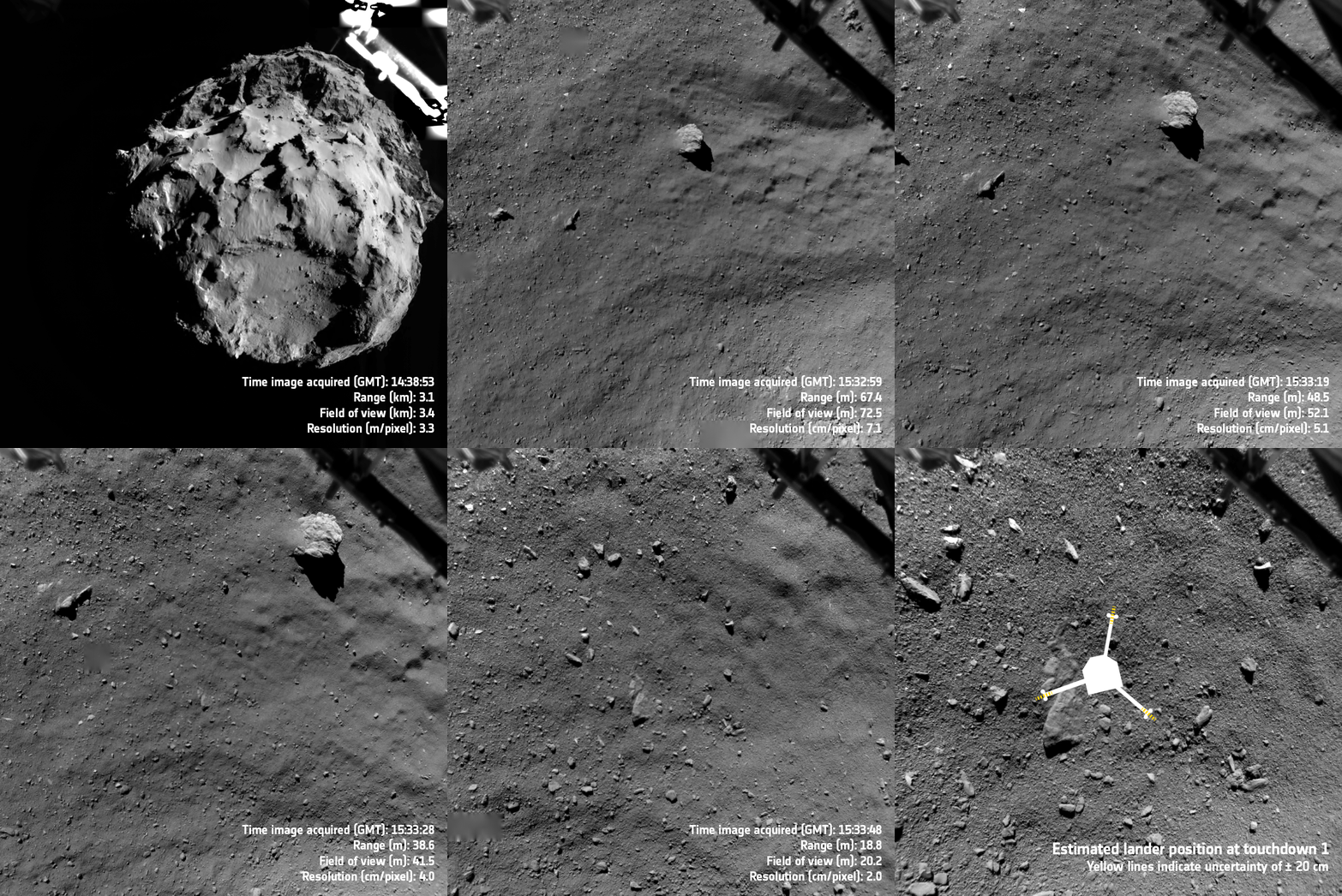 Space Tech
 Apple
Apple
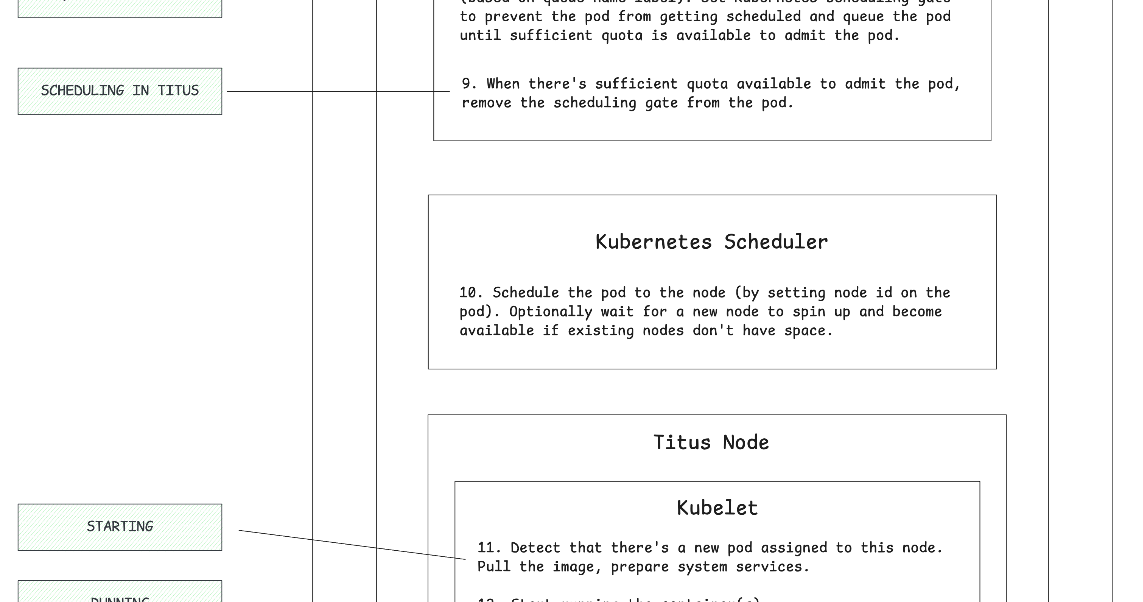 Netflix
 Privacy
 Database Internals
The third way to use an index, after the plain index scan and bitmap scan of enable_indexscan and enable_bitmapscan — and the one with the most-misunderstood catch, because an index-only scan can be physically possible and still end up reading the heap on nearly every row. Why that happens is the…
 Replication
Upgrading PostgreSQL 19 clusters has become more seamless with tools like pg_upgrade and pg_createsubscriber, which together enable near-zero-downtime upgrades by first converting physical replicas into logical subscribers and then performing the upgrade with minimal service interruption.However, this approach exposes a long-standing gap in logical replication: sequence state is not replicated.
 Mobile Development
 Meta
Meta
 Robotics
 AI Hardware
 Artificial Intelligence
 Nix
Nix
 RAG
RAG
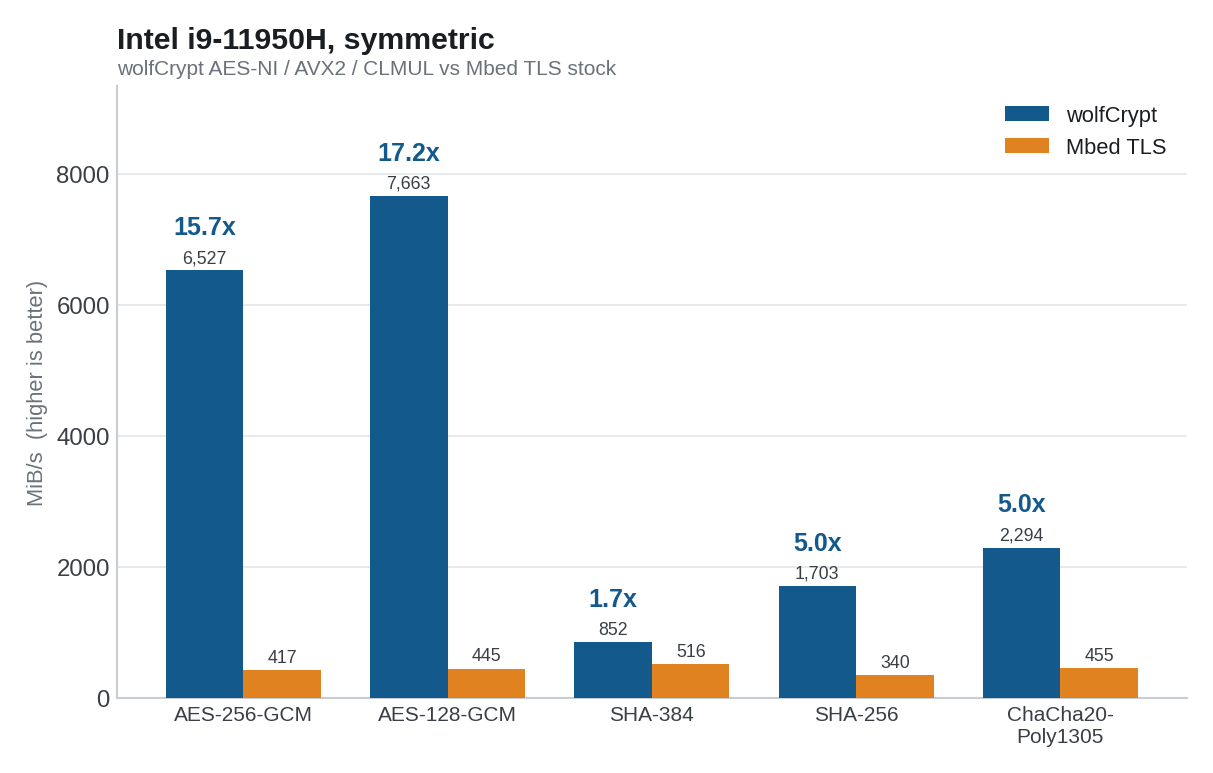 Embedded Systems
 Apple
Apple
 Privacy
 xAI
xAI
 X / Twitter
 Google DeepMind
WAL makes a commit "durable." On a single machine it's fast because the write-ahead log goes straight to local disk. In the cloud that disk is ephemeral, it's gone if the instance dies, so the database has to ship every commit's log to remote storage before it can tell you "done." That round trip is a big reason cloud commit latency is what it is. This VLDB'26 paper (BtrLog) lays out the problem and one fix pretty clearly: * EBS-style remote disk: easy, but adds latency and cost to every comm...
 AI Agents
 AI Inference
 Exploit Development
 Spotify
Spotify competitor Tidal built a reputation by collaborating with musicians and focusing on audio quality. How will it handle the era of AI-generated slop?
 Amazon
 Functional Programming
 Artificial Intelligence
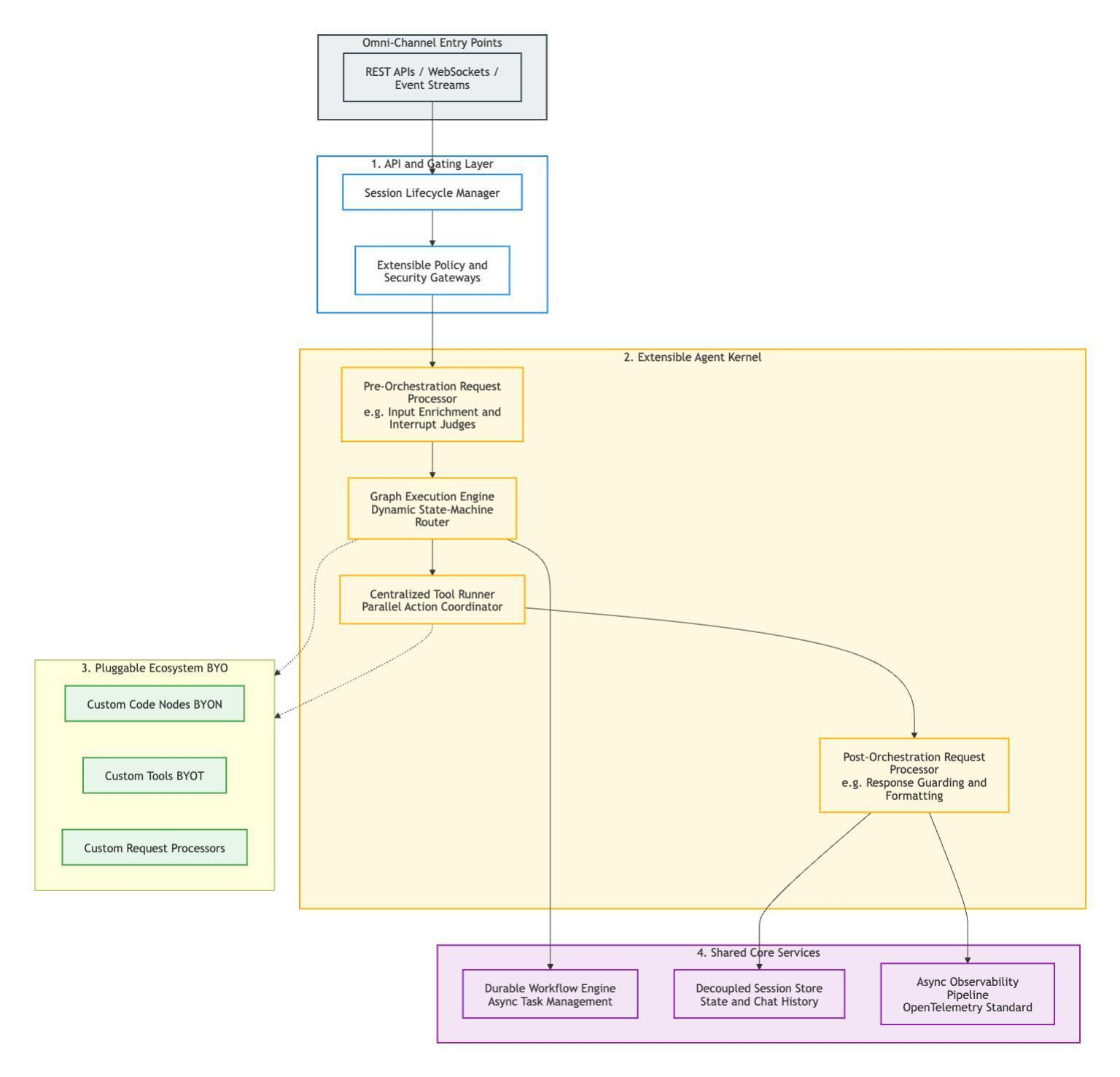
In our Engineering Energizers Q&A series, we highlight the engineering minds driving innovation across Salesforce. Today, we spotlight Gaurav Aggarwal, a Software Engineering Architect. Gaurav developed the Unified Planner, the new AI execution and reasoning engine behind Agentforce. All new Agentforce agents run through Unified Planner across voice, text, and chat experiences, and the platform […] The post Inside Unified Planner: The AI Brain Behind Agentforce appeared first on Salesforce ...
 Software Engineering