Zhang Chen: Extreme Rescue: PostgreSQL Full-File Ransomware Recovery at Epic Difficulty
A field report on recovering core PostgreSQL tables after all database files were encrypted by ransomware and the system catalogs were unusable. With only test-environment DDL available, PDU dropscan was adapted to match individual table files against known table structures and export the critical data.
 Meta
Meta
Companies Are Throttling Employees’ AI Use Because It’s Too Expensive
Sources and leaks from Amazon, Adobe, Atlassian, Citi, and more show what is really happening with AI right now: companies are trying to reign in AI use as costs spiral out of control.
 Computer Vision
Aerial Photographs (2017)
 EVs and Transportation
Why California’s carbon manure math doesn’t add up
Something stinks in California’s climate policies. Years ago, the state set up a system that pays cattle farmers across the country to turn the methane emitted from cattle manure into natural gas, encouraging the dairy sector to produce a gas we burn instead of one that just pollutes the air. It’s become wildly popular because…
 Google
Google loses fight over record $4.7B EU antitrust fine
My Favorite Keyboards
We Don't Have to Be This Bad at Improving Society
 RAG
RAG
Asymmetric Quantization: Near-Lossless Retrieval with 97% Storage Reduction
MarketFish – Simulate a market with 128 AI consumers before you launch
 Fine-tuning and PEFT
A 'new way of thinking' boosted math proficiency in an East Palo Alto school
 Google
The gauge broke: devs felt 20% faster with AI, measured 19% slower
The Wisdom of Quinn the Eskimo (Apple Developer Technical Support Engineer)
 Privacy
He sent a harsh email to ICE's top official. Federal agents tracked him down
 AI Agents
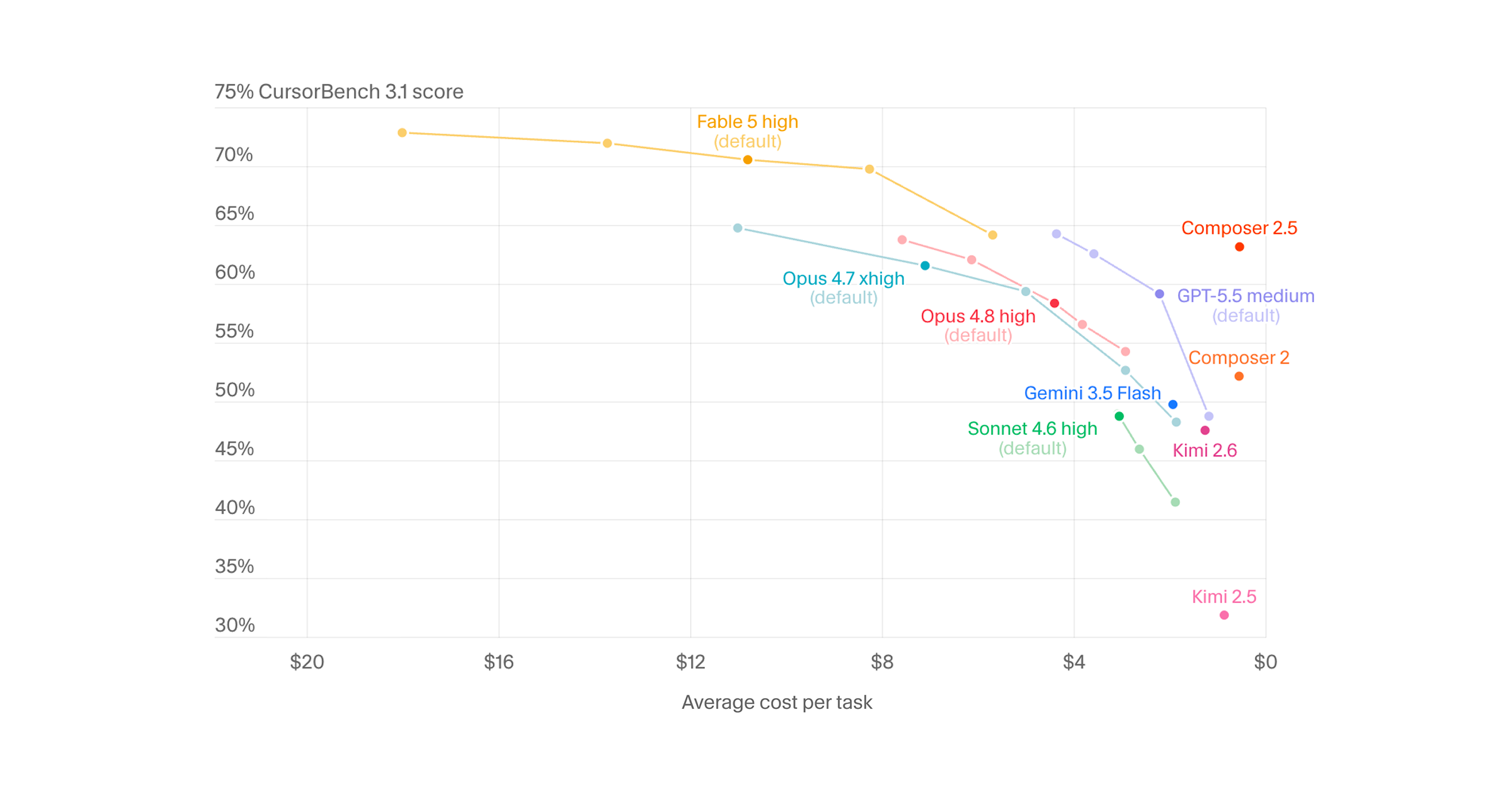
CursorBench 3.1
 Microsoft AI
Kimi K2.7 Code is generally available in GitHub Copilot
 Web Application Security
Avo 4 released – 15 months and 2000 commits later
 OpenAI
Indian tech tycoon bets $30M of his own money to build AI alternative to Microsoft Office
The Control Plane Was the Point: Revisiting autofz in the LLM Era
On Ditching Vagrant
 PostgreSQL
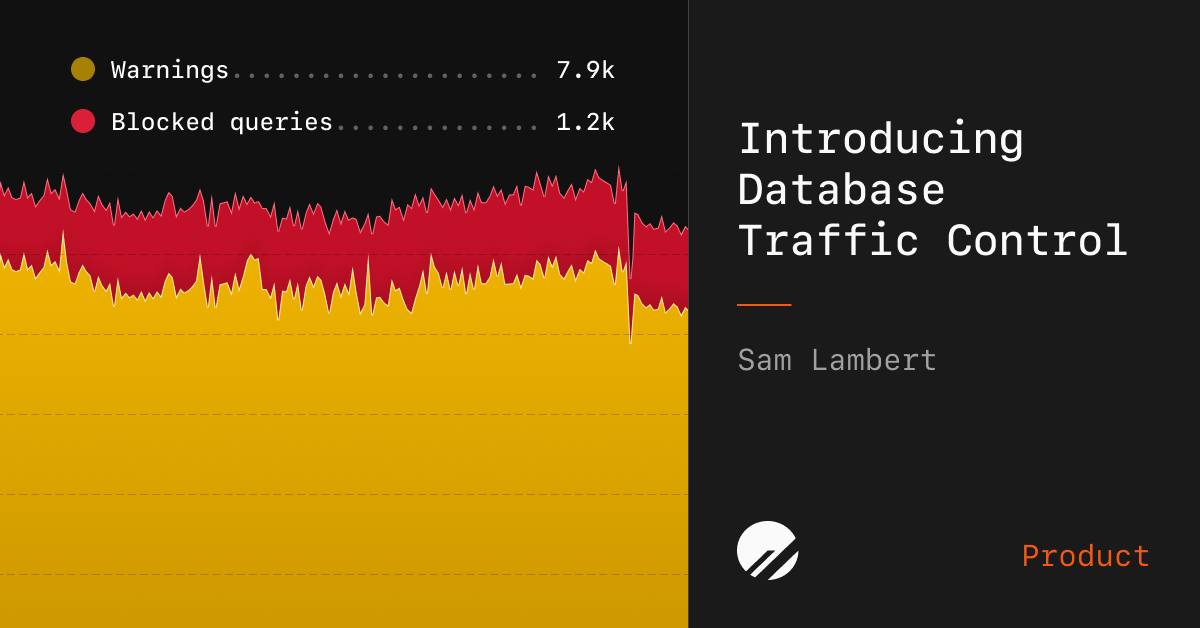
Database Traffic Control
 Software Engineering
How do you turn AI coding chaos into a repeatable playbook?
Vivek Raghunathan, SVP of engineering at Snowflake, joins Leaders of Code at Snowflake Summit to break down the five-stage framework his org used to go from "let chaos reign" to a repeatable, org-wide system for AI-assisted engineering....
 LLM Evaluation
Prompt Optimization for User Simulation in Conversational Recommender Systems: A Multi-Objective Framework
arXiv:2607.00010v1 Announce Type: new Abstract: Conversational recommender systems (CRSs) are a core component of next-generation intelligent recommender systems because they enable users to actively elicit preferences, clarify intentions, and adapt recommendations in real time. However, there are two key obstacles in the CRS domain: evaluation and access to training data. Evaluating CRSs through real human studies is more critical than for traditional recommender systems, yet such studies a...
Prompt Engineering
Controllable Narrative Rendering for Enhanced Assisted Writing
arXiv:2607.00009v1 Announce Type: new Abstract: Despite the remarkable proficiency of large language models (LLMs) in basic writing assistance, their utility in creative writing is fundamentally hindered by a persistent binary failure. This issue manifests as an oscillation between safe, surface-level editing, referred to as remedial polishing, and destructive, uncontrolled plot expansion. This dilemma defines a critical trade-off between narrative fidelity and descriptive intensity. We prop...
RAG
SchemaRAG: Dynamic Large Schema Reduction for LLM-driven Structured Information Extraction
arXiv:2607.00008v1 Announce Type: new Abstract: Extracting structured data from unstructured text using large language models (LLMs) becomes challenging when target schemas are large and complex. In such cases, including the full schema in the prompt increases cost and latency, risks lost-in-the-middle performance degradation, and can exceed context length limits. We propose SchemaRAG, a retrieval-augmented generation (RAG) framework that dynamically prunes the output schema space for schema...
RAG
BaRA: BFS-and-Reflection Web Data Collection Agent
arXiv:2607.00007v1 Announce Type: new Abstract: Large language model (LLM)-based web agents reduce manual scripting for web data collection, yet on live websites, they often miss relevant pages, return incomplete multimodal outputs, or return media URLs that are not directly downloadable. We present BFS-and-Reflection Agent (BaRA), a framework for site-level collection under a fixed interaction budget. The framework combines bounded breadth-first search (BFS) traversal with history-based sel...
AI Psychosis
Persona Without Substrate: Regime-Dependence and the LLM Individuation Problem
arXiv:2607.00006v1 Announce Type: new Abstract: Beckmann & Butlin's (2026) ontological framework for the LLM individuation problem inherits an unargued cross-regime co-reference assumption from the persona-vectors literature: that the same direction picks out the same content under prompt-conditioning, gradient-descent fine-tuning, and inference-time steering. We present four empirical wedges from persona-topology experiments on Qwen3-4B-Instruct and Mistral-7B-Instruct-v0.2 - non-collineari...
Vector Databases
Topological Void Analysis A Mathematical Framework for Systematic Technical Innovation Discovery in Knowledge Spaces
arXiv:2607.00005v1 Announce Type: new Abstract: Identifying where to innovate in a dense technical domain - such as operating systems or hardware/software co-design - is fundamentally a search problem in a high-dimensional knowledge space. Existing approaches rely on keyword search, citation proximity, or human intuition, none of which formalise the notion of an unexplored region that is simultaneously relevant to a target goal and absent from prior art. We present Topological Void Analysi...
RAG
Why Advanced Encoders Lag on Sparse Retrieval? The Answer and an Approach to Bridging Vocabulary Gaps
arXiv:2607.00004v1 Announce Type: new Abstract: While advanced foundation models like ModernBERT significantly outperform older architectures in dense retrieval, they surprisingly lag behind the aging BERT-base baseline in learned sparse retrieval (LSR). We identify the root cause as the \textit{Vocabulary Gap}: modern tokenizers utilize raw, case-sensitive vocabularies designed for lossless reconstruction, which map single semantic units to redundant surface forms, wasting model capacity on...
Graph Databases
From "Strings" to "Things" for Personal Knowledge Graphs: Evaluating LLM Triple Extraction for Recommendation Systems
arXiv:2607.00003v1 Announce Type: new Abstract: Personal Knowledge Graphs (PKGs) offer a privacy-preserving framework for modeling user preferences, yet constructing them from unstructured, decentralized conversational data remains a challenge. This paper bridges the gap between conversational "strings" and semantic "things" by presenting a reproducible pipeline for extracting structured user-preference triples using lightweight Large Language Models. We evaluate Qwen- and Gemma-based models...
Artificial Intelligence
Bounded Morality: Defining the Space of Moral Computation
arXiv:2607.00002v1 Announce Type: new Abstract: Moral cognition has traditionally been modeled as adherence to fixed ethical theories--deontology, consequentialism, virtue ethics--implemented as static rules or value functions. We propose Bounded Morality, a formal framework for analyzing the computational demands of moral problems faced by finite agents. Extending Herbert Simon's notion of bounded rationality, we formalize moral situations along two orthogonal dimensions: moral breadth, the...
Artificial Intelligence
Constructive Alignment: Governing Preference Dynamics in Human-AI Interaction
arXiv:2607.00001v1 Announce Type: new Abstract: Most approaches to AI alignment treat human preferences as fixed targets to be inferred and optimized. This assumption conflicts with extensive empirical evidence showing that preferences are layered, dynamic, and constructed through interaction--particularly with adaptive technologies. As AI systems become more persistent, personalized, and socially embedded, they increasingly participate in shaping what people attend to, value, and endorse ov...
 Incident Response
The vibration of the pager has a sound all its own
 JavaScript and TypeScript
Show HN: Meow – The 4th and final JavaScript runtime and toolchain
 Google
A new Android malware from Google
Senior SWE-Bench: open-source benchmark that assesses agents as senior engineers
Bring Back Crappy Forums
 Privacy
I'm Begging You to Leave Your AI Note-Taker at Home
Show HN: Unobin compiles Infrastructure as Code to one binary
Avoiding Fallback in Distributed Systems
Creating a development sandbox with crosvm
 Feature Flags
OpenFeature - Standardizing Feature Flagging for Everyone
Improving token efficiency for GitHub Copilot in VS Code
Fable 5 update: Still willing to cybercrime
LibreCAD in the Browser
 Microsoft
Visual Basic on the PC with Windows 3.1
 Robotics
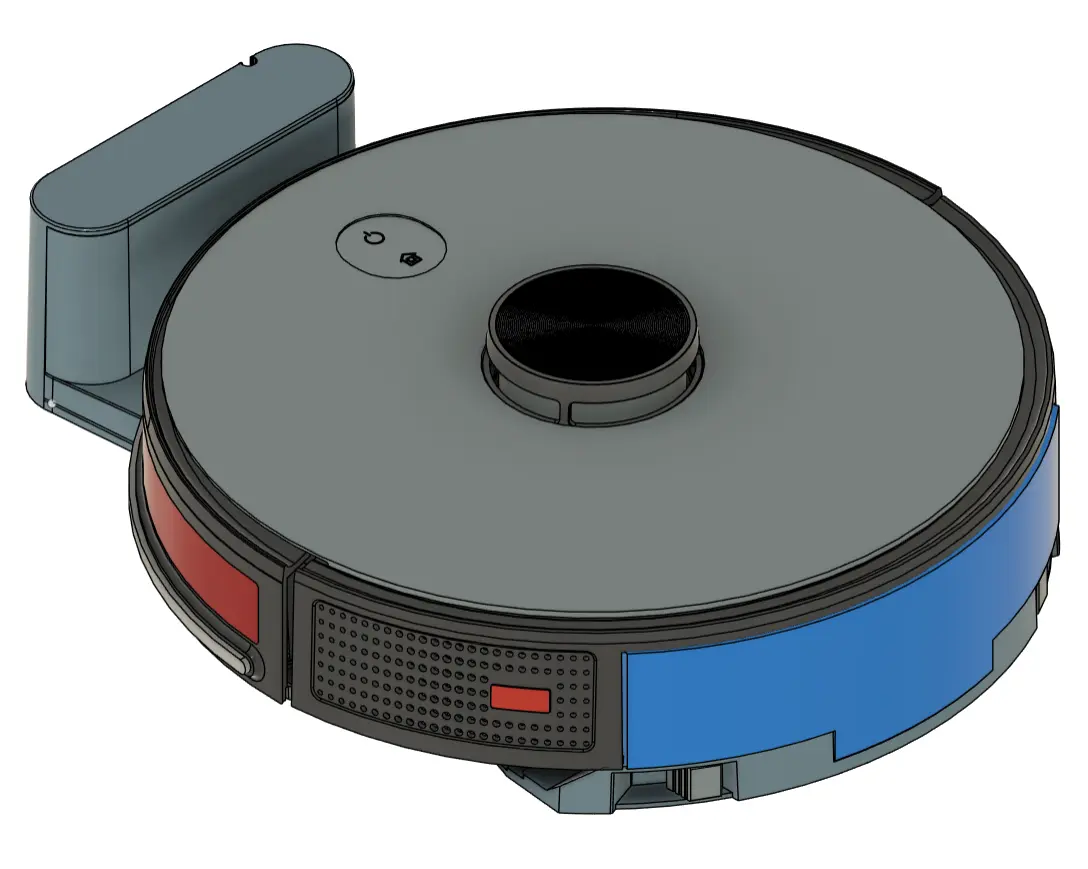
Building an Open-Source Robot Vacuum – Meet Oomwoo
 Query Planning
Christophe Pettus: All Your GUCs in a Row: enable_mergejoin
Merge join shines when data is already sorted by an index, but stumbles when it has to pay for a sort first.
 AI Psychosis
Billions of doses later: Global review confirms mRNA vaccines safe and effective
Meta Caps Internal AI Token Spending After Costs Approach Billions in 2026
Show HN: Curvytron 2, I rewrote my browser party game, 10 years later
Unprivileged root via an out-of-bounds write in the FUSE readdir cache (CVE-2026-31694)
 WebRTC
What happened to BitTorrent's Project Maelstrom web browser?
 CSS
CSS
The <Usermedia> HTML Element
 Apple
Apple
Apple is reportedly planning new iPad Pro and MacBook Pro releases early next year
How do wombats poop cubes? Scientists get to the bottom of the mystery
Bringing Swift through Distrobox on NixOS
 Privacy
Opening up 'Zero-Knowledge Proof' technology to promote privacy in age assurance
Large Hadron Collider is shut down by CERN to make it more powerful
2026 Unslop Contest Results
 Computational Biology
Healthy but Sedentary People Show Early Decline in Cellular Energy Production
The GNU Emacs Architecture: Unlocking the Core [pdf]
 Mobile Development
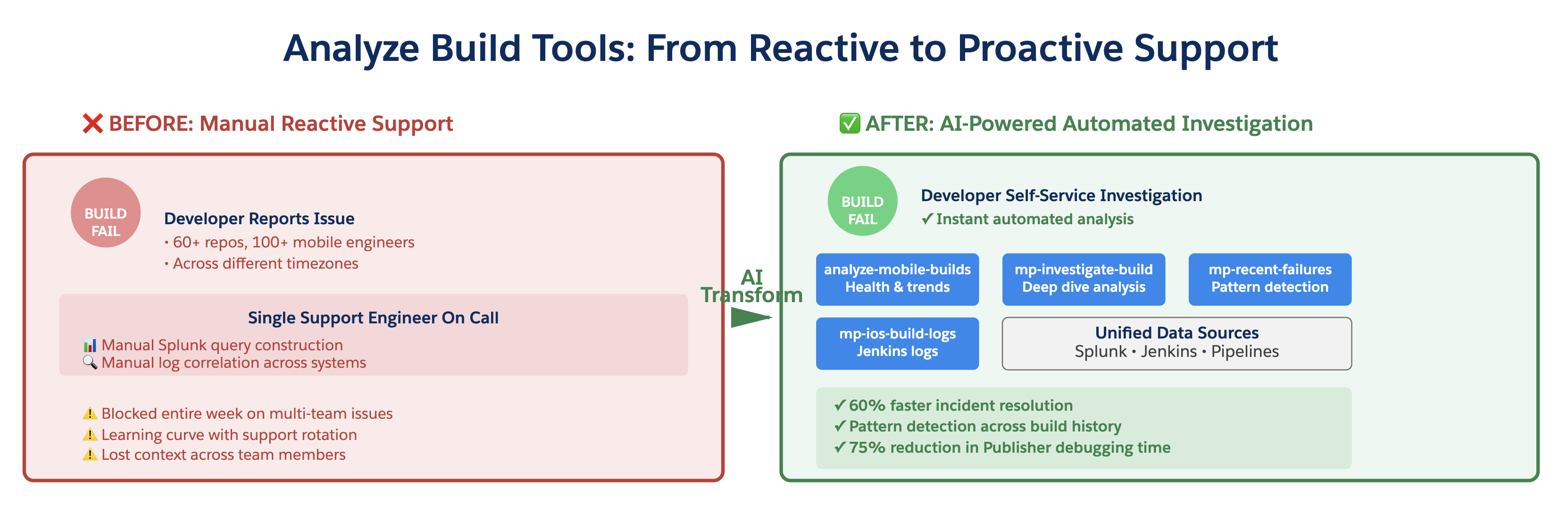
How AI Learned to Investigate Mobile Build Failures Like an Experienced Support Engineer
In our Engineering Energizers Q&A series, we highlight the engineering minds driving innovation across Salesforce. Today, we spotlight Archana Indran, Senior Engineering Manager for Mobile CI/CD. Archana’s team built Analyze Build Tools, a growing system of AI-powered investigative skills that analyzes mobile CI/CD build failures the way an experienced support engineer would. The Mobile CI/CD […] The post How AI Learned to Investigate Mobile Build Failures Like an Experienced Support Engi...
 Spotify
Chip Off the Old Block
Show HN: Cyclearchive.com – search vintage cycling magazines
The Underhanded C Contest
 Load Balancing
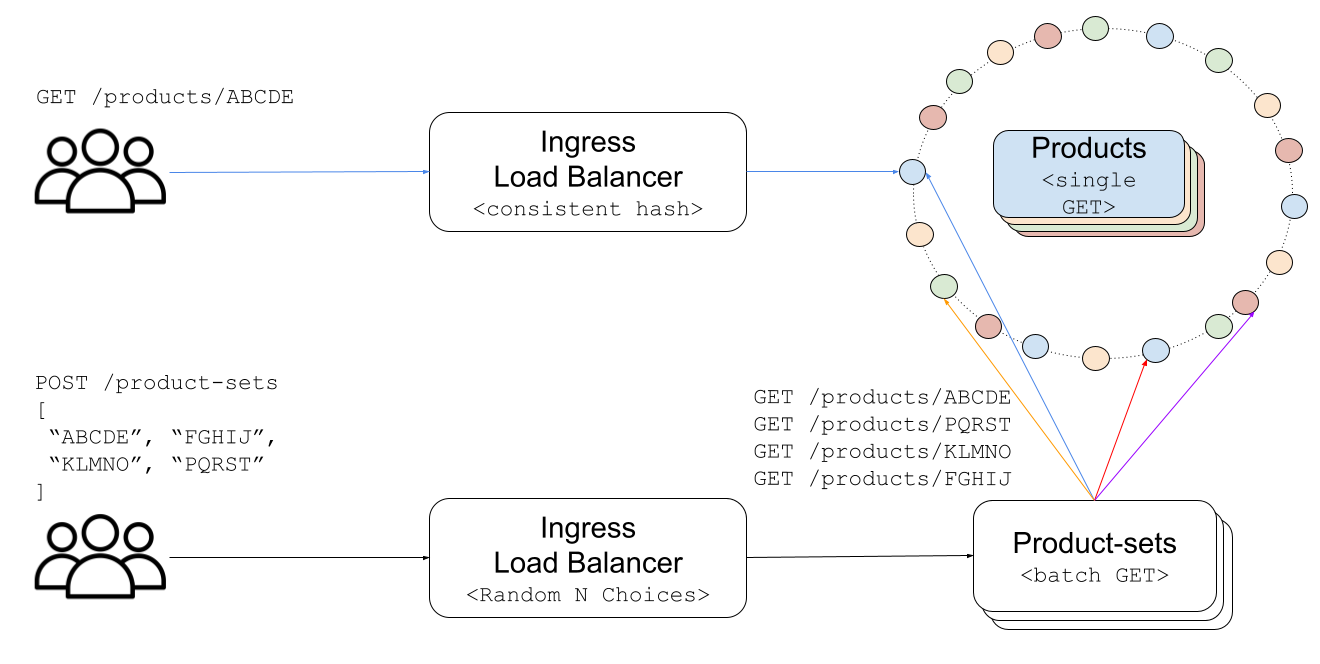
Client-side load balancing at a million requests per second
 Defense Tech
US feds are actively hiring "person who decides which models to ban"
 Startups and Venture
Bending Spoons defies SaaS slump, surges 40% on first day of trading
 Caching Strategies
Flavor Graveyard
 AI Psychosis
'It's like having a dumb friend': Young San Franciscans hate AI
 Startups and Venture
After $18B IPO, Bending Spoons founder says success comes from minimizing luck
OpenWiki: CLI that writes and maintains agent documentation for your codebase
 EVs and Transportation
Physical pressure could make EV batteries last twice as long
Japan has 41% of the 100-year companies – secrets of 1,447-year survival
 Privacy
WhatsApp usernames are already raising impersonation red flags
Fable open sourced NanoClaw's agent factory. It cost $800
Qualcomm Linux 2.0
The Apple Disk II Controller Card
 X / Twitter