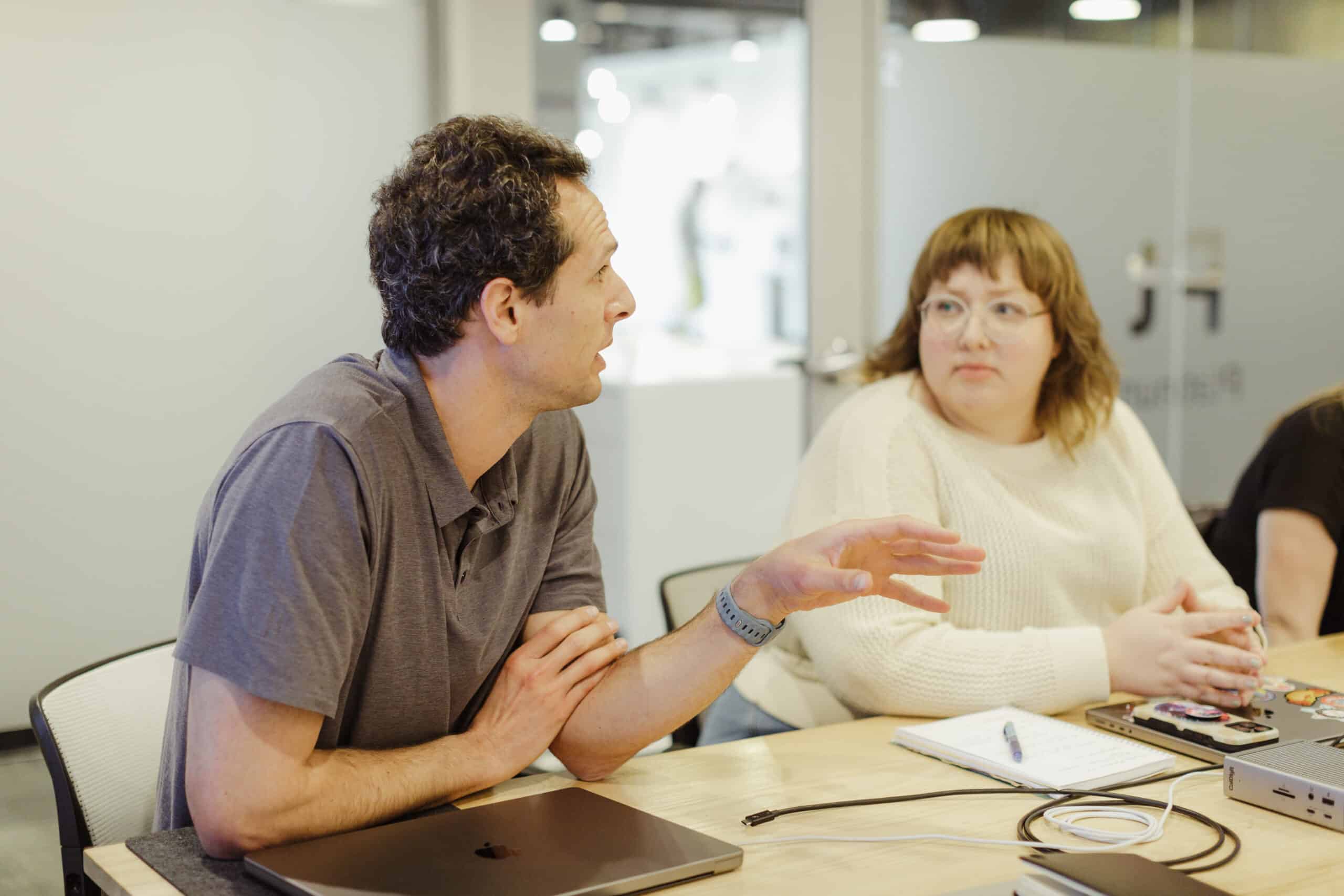
(Mitchell Hashimoto) is building Ghostty, Vouch and has cool thoughts about testing. He was behind a lot of cloud tooling like Vagrant, Packer, Consul, Terraform, Vault, Nomad, Waypoint.
In this interview, we talk about terminals, Zig and open source.
You’ve been interviewed a lot. Why do people like to interview you?
In interviews, everyone comes from a different angle. Many people want to know how the software engineering to business founder mindset transition went. Then others are interest
Scope sprawl occurs when identities, applications, or tokens accumulate broader permissions than they need to perform their intended tasks. It often stems from weak internal standards, unclear documentation, or pressure on engineering teams to move quickly. For example, consider the following scenarios.
A developer wires an integration, requests a broad OAuth token scope because the narrower one is poorly documented, and then moves on to the next task. A continuous integration and continuous del
One of the most valuable things about partitioned tables is pruning - the database's ability to eliminate entire partitions based on a query predicate. Under conventional wisdom, pruning can only be achieved when querying by the partition key - this makes choosing the right key extremely difficult. However, if your data follows certain patterns, using some clever tricks you can achieve pruning even when filtering by non-partition key columns.
In this article, I demonstrate how to achieve partiti
Should retries and timeouts live in your application or your service mesh?
This debate comes up constantly.
Should resiliency live in the platform components, or should the application own it?
Like most things in distributed systems, the answer is: It depends.
Infrastructure Understands Traffic
Service meshes, API gateways, and load balancers are great at handling generic resiliency concerns.
Things like:
Connection timeouts
Automatic retries
Circuit breakers
Request-level failover
The advanta
Not my project, I noticed it popping up in the WebAssembly subreddit. Since it's written in Rust, I figured I'd share it here. I assume the OP, u/oroppas is one of the authors. submitted by /u/Bassfaceapollo [link] [comments]
arXiv:2607.06593v1 Announce Type: new
Abstract: Blockchains have evolved from simple distributed ledgers into programmable platforms that process complex application logic and carry significant financial value. All modern Web3 systems share a common goal: providing secure, decentralized, and trustworthy execution in an increasingly interconnected environment. However, this evolution has shifted the attack surface from isolated infrastructure disruptions to programmable economic abuse and cross-
Hobby project. I built a sentence-embedding model (distilled from MiniLM) where the entire runtime - forward pass, BERT tokenizer, and weights - is in Rust. Compiles to webAssembly (ubiquitous runtime). One ~7 MB .wasm, no torch, no ONNX, no ML runtime. Why from scratch: the weights are ternary (every weight is -1,0,+1), so inference is int8 multiply-accumulates, adds and subtracts, not floating point matrix multiply. This leverages vectorized parallelism (SIMD), which makes inference lightening
Censorship circumvention protocols often require a rendezvous step
to exchange information needed to set up a connection.
We investigate the potential of fountain codes, also known as rateless erasure codes, for this purpose.
Fountain codes reliably transmit a message
by breaking it into many small, specially encoded pieces.
Taking inspiration from how they are used in the Collage and Assemblage circumvention systems,
we narrow our focus to rendezvous,
and consider the usefulness of fountain cod
Hello! I'm a Tech Artist mostly focused on Tool Development. Started this little personal project around March and recently finished. The tool is built using Tauri, it's free and open source https://github.com/simonsanchezart/textract Trailer: https://www.youtube.com/watch?v=77IxX3Gs30A submitted by /u/simonsanchezart [link] [comments]
“Where are the docs?” It’s a question nobody on a product team enjoys answering. The honest reply is usually some variant of “behind.” A writer is staring at a closed pull request, trying to reverse-engineer what changed. The pull request’s author has already moved on. By the time the doc actually publishes, the feature has shipped, sometimes more than once.
That used to be us on the Aspire team (we’re a small team of 10 building dev tools for distributed apps). A few months bac
algorithm diagram I built a blocklist-driven DNS sinkhole. Think stripped-down Pi-hole as a single binary. Sharing here because the interesting parts are implementation, not features. The lookup path. Every query gets checked against 150k+ domains before forwarding (depends on your blocklists of course). Three layers, all in memory: A bloom filter as the cheap first pass. A "no" means definitely not blocked, so we skip straight to the upstream forward An exact-match hashset to confirm bloom "ma
Does prompting (aka, agentic development) need the same skills as manual software development? Not exactly. There's a lot of overlap, but there are some skills you no longer need and some which you need much more.
Meta has filed a patent for a system that records your voice and surroundings all day, then uses an AI to analyse your mood. The patent’s stated, theoretical goal is for Meta, a company that makes billions of dollars targeting ads at its users based on their data, is to sell users a wearable that tailors workouts for them based on whether they’re happy or sad. Patentlyze first noticed the patent which was published on July 2 after Meta filed it back in December of 2025. The filing described
Hey all! I've spent the last year or so, on and off, working on an alternative Discord overlay that could support Linux/Mac/Windows. I did it mostly as a challenge for myself to see what the Rust UI ecosystem was like after reading the "A 2025 Survey of Rust GUI Libraries", but I've kept to it as it's ended up being pretty fun to maintain and add to. A secondary reason is that I've been exclusively on Linux for the past couple years, which means no official overlay for me regardless! The whole
On July 8, 1996, the PostgreSQL community picked up the flame from Postgres95. Thirty years later, it has grown from a Berkeley research project into a default foundation of the global database ecosystem.
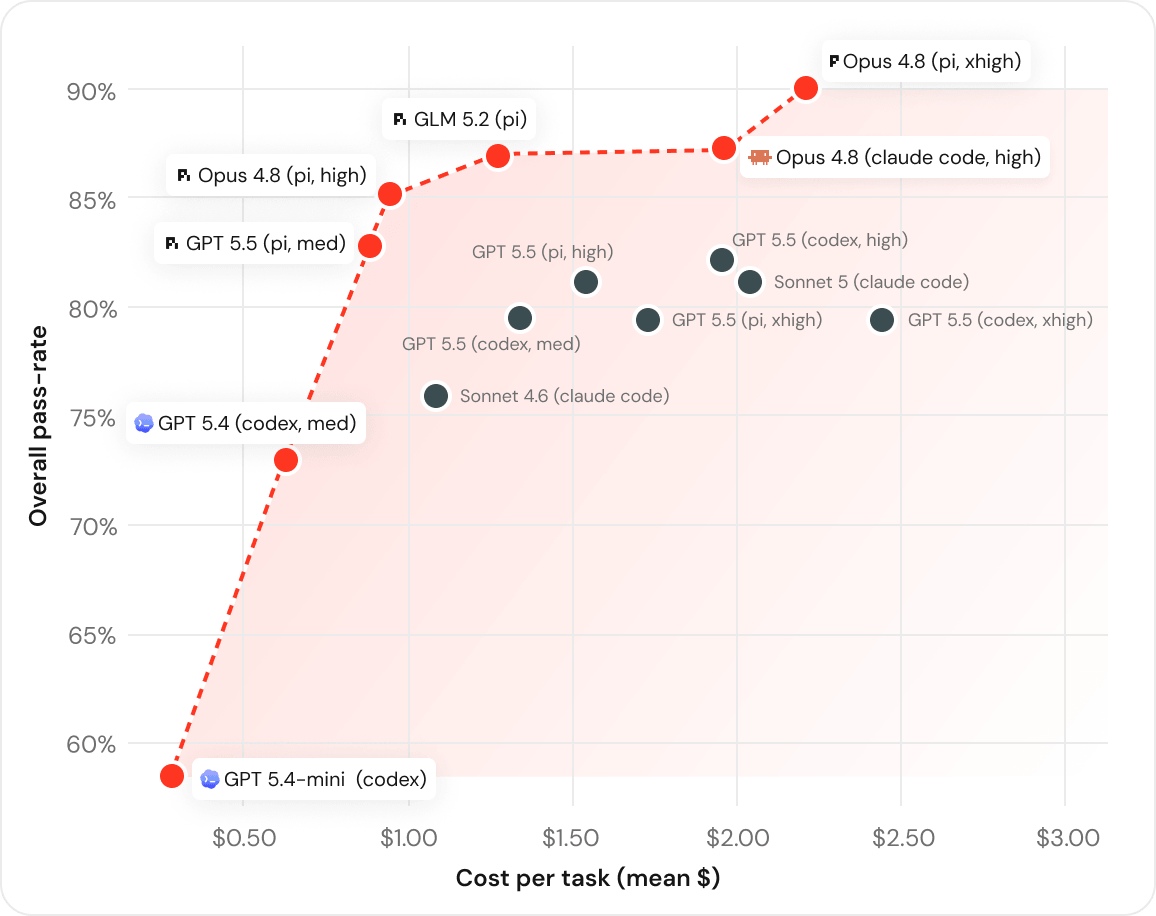
Posted by Zoe Lopez-Latorre, Senior Developer Relations Engineer, AndroidBack in March, we introduced Android Bench—our LLM leaderboard for real-world Android development tasks. Our goal was to provide transparency around model capabilities in Android development and to encourage model improvements, to give you more helpful AI options for your everyday workflow. Since then, we have enhanced the benchmark based on your feedback, including evaluating open-weight models and adding cost and effici
Virtualized Redox project, Userspace file descriptor allocation, USB gamepad support and more general compatibility, GTK 3 in Orbital, Tcl and Flycast ports, Orbital fractional scaling, mixed kernel-userspace profiling and more. https://www.redox-os.org/news/this-month-260630/ submitted by /u/ribbon_45 [link] [comments]
Introduction
As Large Language Models (LLMs) move from research prototypes to production systems, the developers of these systems need rigorous performance evaluation. In particular, we need confidence intervals around estimates of system accuracy. However, LLMs introduce a challenge that is unusual for ML systems: they are (operationally) non-deterministic. Even with the temperature set to zero, variations in hardware, batching, and API behavior can lead to different outputs for the exact same
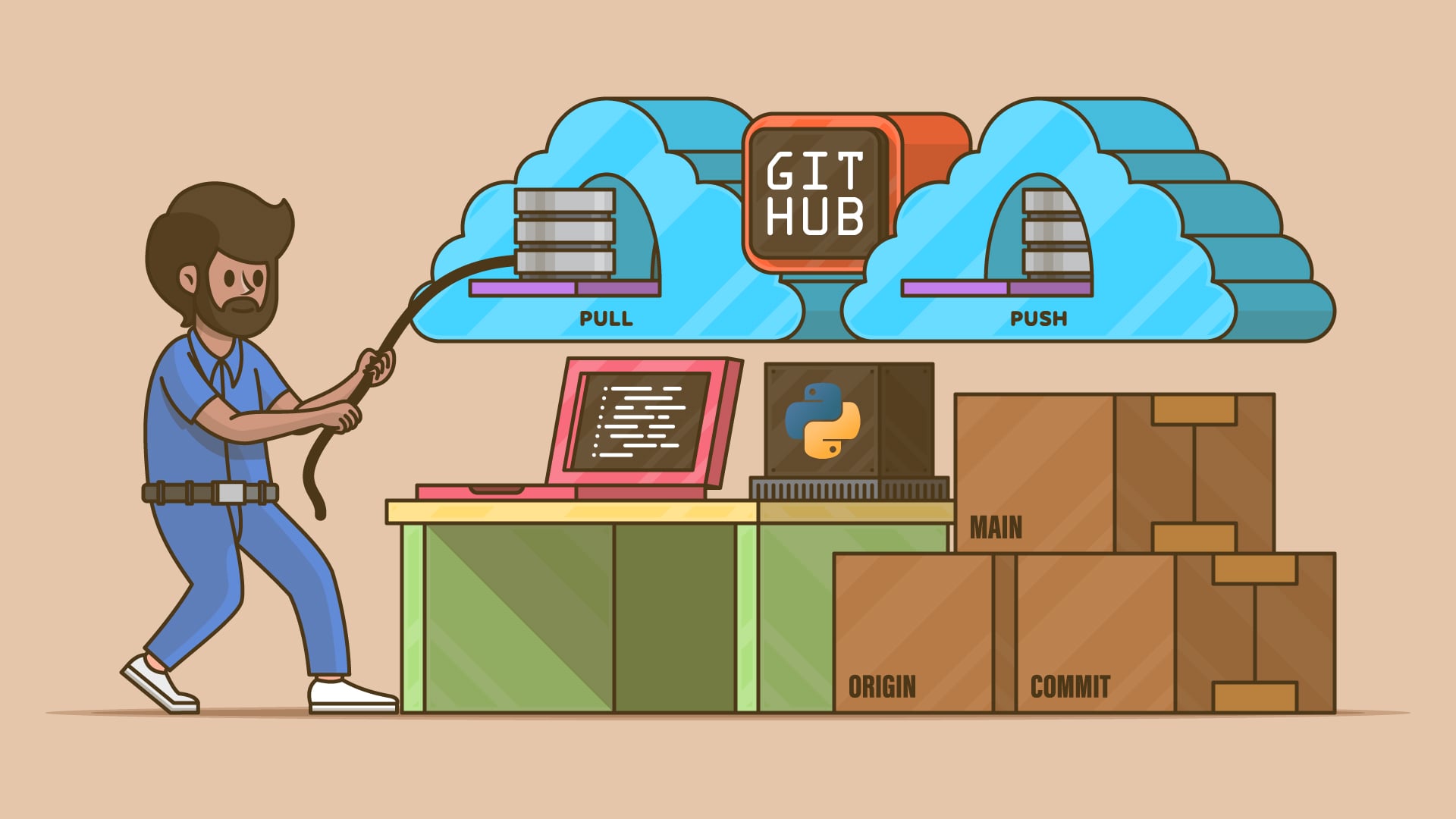
When you work on a local Python project, tracking your changes with Git is a great way to maintain a history of your code. However, keeping your repository only on your computer leaves your work vulnerable to hardware failures and makes collaboration difficult. By learning how to use GitHub, you can back up your work, share your code with the public, and work alongside other developers.
By following this guide, you’ll learn how to create a GitHub repository, connect it to your local project, a
A few years ago, the most powerful AI tools in a developer’s workflow helped write code. Today, they can do much more. It’s increasingly common to hand an AI agent a task like:
Read this repository, refactor the authentication service to match the new specification, run the test suite, and open a pull request if everything passes.
The agent reads files, analyzes dependencies, executes commands, modifies code, and interacts with external systems. In many cases, it can complete meaningfu
I went into a recent project excited. The newer LLM tools had crossed a threshold for me. They felt like something I could finally lean on hard for a tricky visual-design problem: cross-domain research, concept generation, and prototyping all running in one loop. I was genuinely confident going in.
And it delivered. The LLM helped immensely. But it still wasn’t an ask-and-be-done problem.
I had spent two weeks generating comparison concepts with the model — gradient overlays, ISO lines, diff
Discover the best Ethereum payment gateways for 2026. Compare NOWPayments, Coinbase, CoinGate, BitPay, and Coinremitter on ETH support, stablecoins, fees, and business-focused features.
Continue reading
Best Ethereum Payment Gateways 2026
on SitePoint.
Hey r/rust, I just published broadsheet v0.1.2, a small Rust animation engine for algorithm and data-structure explainers. The core design is a stateless timeline: every frame is evaluated as a pure function of absolute time t. scene\_at\_time = f(base\_scene, timeline, t) That makes pause, scrub, frame-step, section jumps, and offline rendering deterministic. Frame n is always rendered at t = n / fps. The engine supports: seq!, par!, and stagger composition animatable tracks for position, opac
I know this is Reddit, but I would like to preface this by saying that I'm interested in having a balanced and reasoned discussion with other rustaceans about their feelings regarding AI commits in the core language, and how they think it might impact their choice of programming language in the future. With that out of the way, how do you feel about Generative AI being used in the core language, and the rust foundation accepting donations from AI companies? Personally, I don't like AI. Not throu
What HappenedOfficers from the City of London Police’s Dedicated Card and Payment Crime Unit (DCPCU) secured the conviction of a man who used an SMS Blaster device to send fraudulent text messages as part of an organised criminal operation in London.The conviction relates to an investigation that previously led to the sentencing of Ruichen Xiong in July 2025, who was apprehended while driving a vehicle in North London as the device was in operation. During that incident, officers in the vicini
Agentic coding benchmarks are getting closer to real-world software development. For Kotlin teams, the most important question is how reliably AI agents can complete end-to-end Kotlin tasks, from reading an issue to producing a solution that passes validation.
We’re taking the first step in addressing that gap by releasing the Kotlin Benchmark, JetBrains’ official benchmark for evaluating AI coding agents on Kotlin software engineering tasks. Our goal is to give developers a credible, pub
Depuis l'arrivée de l'IA agentique dans les équipes de développement, de nombreuses interrogations émergent quant à l'évolution des organisations de travail. Les modèles d'équipe qui se sont imposés ces vingt dernières années, largement influencés par les approches agiles, sont désormais remis en question par la capacité des agents.
I ship an endpoint agent written in Rust. Most of it is unremarkable Rust, but a few things fought back hard enough that I think they are worth writing down, because at least one of them will bite anyone shipping a signed macOS binary that pulls in a JIT. The bug: works with cargo run, dies the instant it is signed Our scan engine is built on yara-x, the Rust rewrite of YARA. yara-x compiles rules and evaluates them on wasmtime. wasmtime is a JIT: at runtime it allocates a page, marks it executa
arXiv:2607.05400v1 Announce Type: new
Abstract: Generative AI models, such as Large Language Models (LLMs) and diffusion models, have demonstrated impressive performance across a wide range of tasks. Despite these advances, deployment remains challenging due to substantial memory requirements, extended inference latency, significant computational demands, and high hardware costs. These issues are further complicated when evaluating models across heterogeneous platforms, where differences in num
Large language models can write essays, solve math problems, and generate computer code, but it’s not fully understood how they do it. Researchers can observe the billions of parameters inside these systems changing during training, yet the internal logic of the models remains largely hidden. In a sense, the engineering is ahead of the science. Can science catch up and make LLMs and other deep neural networks mechanistically interpretable?
Thomas Icard, a professor of philosophy and compute
My goal is to create a cross platform app using Tauri with rust. On the front and side, I'm planning to use react with a typescript and on the backend well, of course, rust. However I am not so sure if Tauri is a great choice for Android apps, given the fact that Tauri uses webview to render apps. I want to make it feel lightweight and with a small size overall. My focus is Linux, Windows and Android, my primary OSs that I use. I know for desktop apps is ok, but when it comes to desktop AND Andr