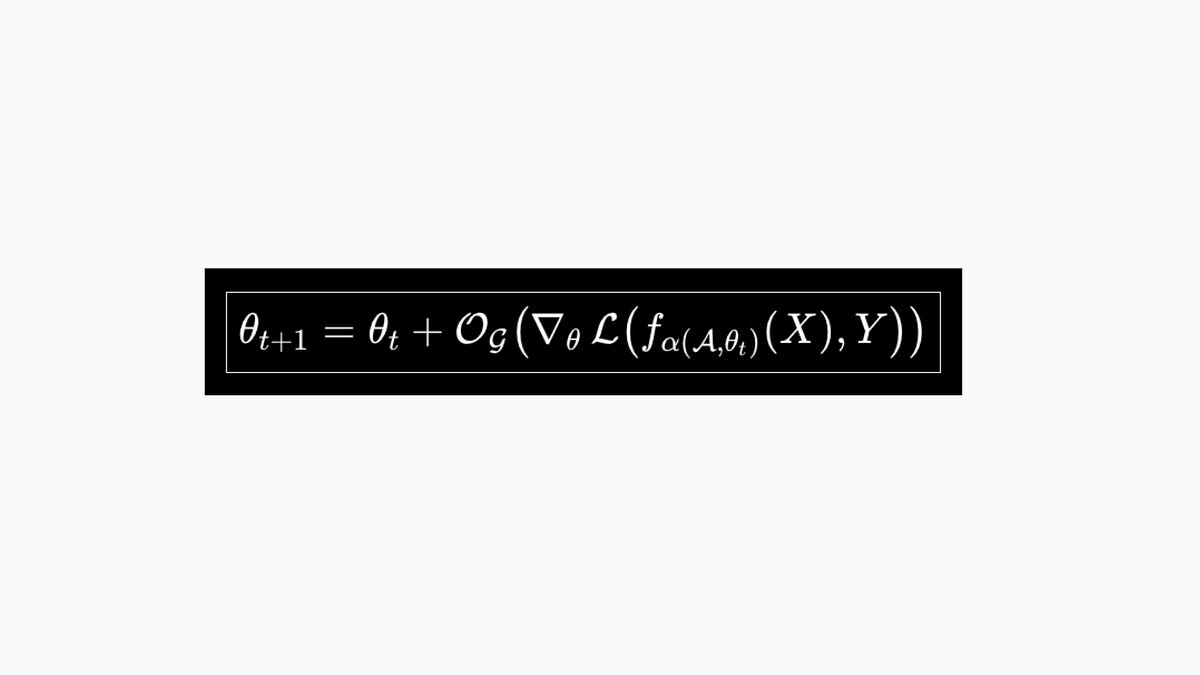
The One-Step Trap (In AI Research)
 Infrastructure and DevOps
Karpenter + Cluster API
One of Kubernetes’ great strengths is being able to manage our resources elastically. If a stateless pod consumes too much, we can add replicas; if it has irregular consumption, we slap an HPA (Horizontal Pod Autoscaler) on it and it adapts to the load. Our cluster is full? We can add nodes to it. But while autoscaling replicas is automatic, doing the same for nodes isn’t necessarily trivial. In my article about the Cluster API, I ended on a little teaser:
 Software Engineering
Why write code in 2026
 Databases
Radim Marek: The tests passed. The plan didn't.
TL;DR - RegreSQL 1.0 tested that your queries return the right rows. 2.0 tests that they return them the right way, and it does the checking against production's real statistics instead of your empty dev database, which lies. A migration cleanup dropped an index nobody thought was load-bearing. Every test passed: same rows, same order, green. Three days later the API started timing out on a query that hadn't changed a character, because the planner had quietly switched it from an index scan to a
Croc: Securely transfer files and folders between two computers
 Mathematics
Automation Without Understanding
I built RustWave, an async WebSocket framework for Rust
Hi everyone, I've been learning Rust and recently built RustWave, an async WebSocket framework. The goal was to create a simple event-driven API for building real-time applications while learning async Rust, API design, and WebSocket internals. Current features: - Event-driven API - Namespaces - Rooms - Broadcasting - Typed payloads with Serde It's available on crates.io and the source code is on GitHub. I'm still learning Rust, so any suggestions or constructive feedback are welcome. GitHub: ht
Show HN: Shirei, cross-platform GUI framework in native Go
 Software Engineering
Agent Harness Engineering
Morphometrics: Introduction to the Analysis of Shape
Why study Diophantine equations?
Goal: Voxel game engine with Rust
submitted by /u/Skaners8 [link] [comments]
Relm – local LLMs as base-R objects, with interpretability
Show HN: Skillscript – A declarative, sandboxed language for tool orchestration
 Infrastructure and DevOps
Running Hermes at Razorpay: a network-isolated, self-improving “second brain” for every employee
How we run a personal AI agent for everyone at Razorpay: always on, multi-model, and safe by construction.Contributors: Siddharth TripathiHermes Agent is an open-source, autonomous AI agent created by Nous Research.TL;DRWe give every person at Razorpay their own always-on AI assistant, one isolated container per person, so it keeps working when their laptop is closed.Isolation is a property of the infrastructure, not the application. One person, one pod, one namespace, one encrypted volume, one
 Mathematics
Ditching Zotero for a Text File
 Programming Languages
Understanding the Odin Programming Language
 Infrastructure and DevOps
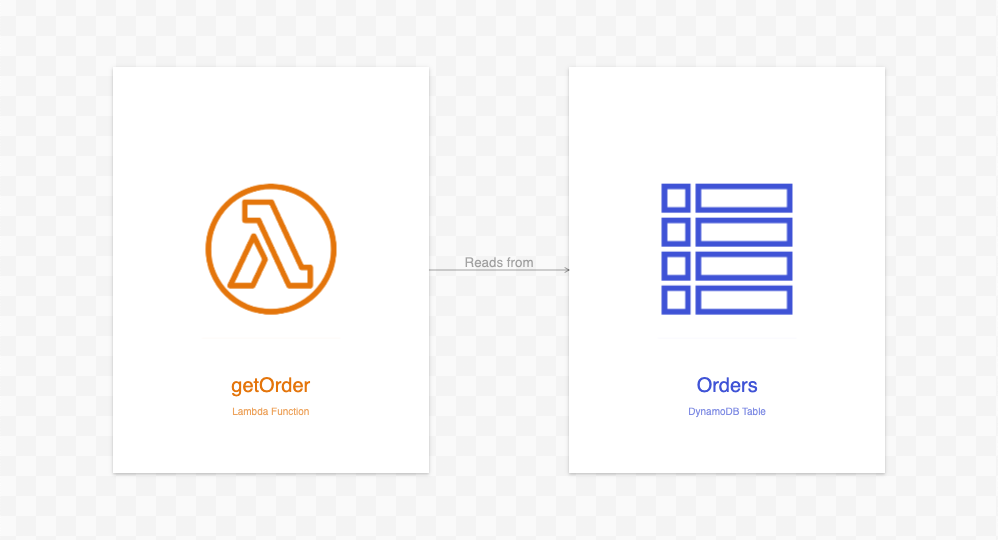
Yt-Dlp Sequence Diagrams
Ghostel.el: Terminal emulator powered by libghostty
gitm - A CLI release tracker
Hello everyone. I recently released gitm, a CLI tool written in Rust aimed at super users that tracks GitHub and Codeberg releases and streamlines the update process. Its workflow is similar to that of a package manager: it queries the given source's API and installs a given asset that gets chosen by the user, it then saves the release info in order to check for updates later. I built this because I needed something like this myself, but, most of all, because I thought it would be a good way to
 Blockchain
Hacking Apple - SQL Injection to Remote Code Execution — ProjectDiscovery Blog
 Machine Learning and AI
The Token Tax: Why Bad AI Architecture Is Becoming Enterprise Debt
The Token Tax: Why Bad AI Architecture Is Becoming Enterprise Debt The collective delusion of effortless AI scale has officially run into the brick wall of corporate finance. When Palantir CEO Alex Karp stepped onto CNBC’s Squawk Box, he didn’t just give an interview. He channeled the quiet, boiling fury building in enterprise boardrooms. He flatly stated that enterprise customers are livid because they are paying millions for tokens that create absolutely zero value. Karp called the current
Show HN: Mindwalk – Replay coding-agent sessions on a 3D map of your codebase
fru - Fast Random Forest Implementation
Hello, I wanted to share the work my colleague and I have been doing. We developed a Rust-based implementation of Random Forest. It has bindings for both Python and R. Fru is highly optimized, offering competitive runtime performance and better scalability than popular implementations on these platforms. For Python, Fru outperforms the scikit-learn implementation by several factors, and in some scenarios it can be hundreds of times faster. In R, Fru is typically a few dozen percent faster than t
 Python
6× faster binary search: from compiled code to mechanical sympathy
 Go
Go
G#: A modern .NET language with Go, Kotlin, and Swift ergonomics
I built TradingSpy: local, privacy-first AI trading assistant(First Open Source)
Software Engineering
Why Write Code in 2026
appto, a minimal CLI tool that integrates AppImages into your desktop for linux
Hey! Recently I've been working on appto, which is a CLI tool to "install" AppImage applications by generating desktop entries and extracting their icon. The reason why I made this was because I didn't enjoy writing desktop entries for AppImage applications and only had a couple. I originally looked at other tools, but they weren't as minimal as I hoped. This one only uses anyhow and clap. Each AppImage when installed gets its own container directory, keeping it organized and easy to find. Then
 Blockchain
The Future of Digital Money: The Race Between Tortoise, Hare and Rhino
 Web Development
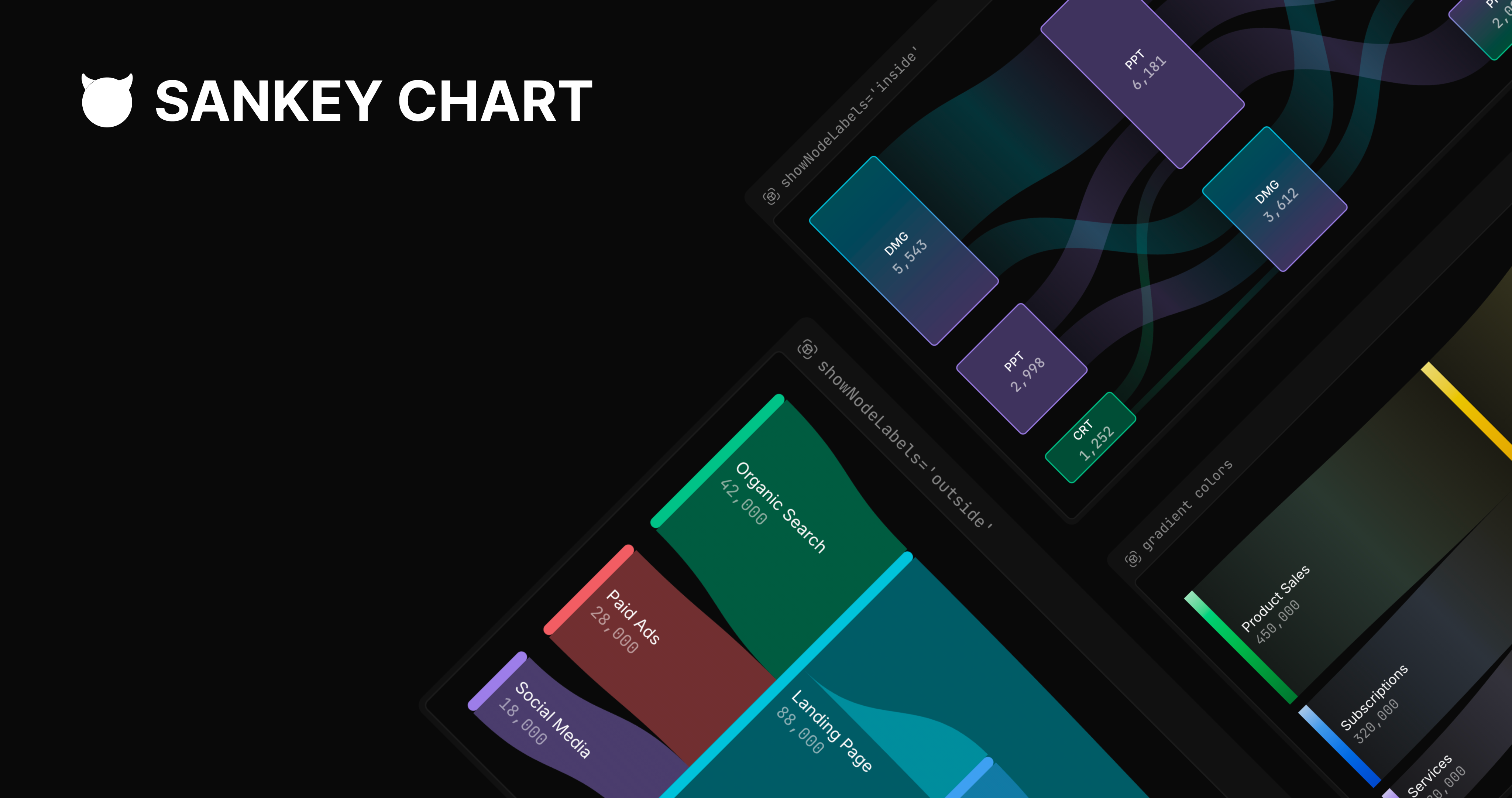
Evilcharts
Show HN: Quantum-Qec / Matrix-Free Quantum Homeostatic Engine(Blueprint)
A Erlang style pure Scheme Webserver and further
fru - Fast Random Forest Implementation
Hello, I wanted to share the work my colleague and I have been doing. We developed a Rust-based implementation of Random Forest. It has bindings for both Python and R. Fru is highly optimized, offering competitive runtime performance and better scalability than popular implementations on these platforms. For Python, Fru outperforms the scikit-learn implementation by several factors, and in some scenarios it can be hundreds of times faster. In R, Fru is typically a few dozen percent faster than t
 Mathematics
Long Covid May Physically Damage the Nerves That Control the Stomach
 Hardware
Optimization Solver as a Service
Show HN: Sqlsure – deterministic semantic checks for AI-generated SQL
Mesh LLM: distributed AI computing on iroh
RISCBoy is an open-source portable games console, designed from scratch
I need an advice
Hello everyone I've learned the basics of Rust, including how to work with traits. I've also learned how to split code into modules. However, I haven't started learning about lifetimes yet. However, I've encountered several challenges: When I try to solve a problem or work on a project, I struggle to start writing code. I try to visualize the structure of the code in my mind, but I'm stuck. I don't know how to write code, and I find myself Googling for information that I don't understand. This
OpenAI Forked Git on GitHub
Show HN: Ant – A JavaScript Runtime and Ecosystem
The Consensus Weekly, July 11, 2026
From The Consensus Of forks and clones and package management Package management is tough. When licenses change and forks appear, your package manager might decide another package is what you really want. And sometimes, it might even keep giving you a package you probably wouldn't have wanted. Read
Of forks and clones and package management
Package management is tough. When licenses change and forks appear, your package manager might decide another package is what you really want. And sometimes, it might even keep giving you a package you probably wouldn't have wanted.
Biff.graph: structure your Clojure codebase as a queryable graph
Building a commercial OFX plugin for DaVinci Resolve in Rust (wgpu + vello): GPU interop war stories
I've spent the last year building framechart, a closed-source chart renderer that ships as a DaVinci Resolve OFX plugin — turns a CSV into animated bar/line charts and chart races, rendered live on the GPU inside the editing timeline. It's a commercial product, but this post is about the Rust and the interop, not the pitch — link's at the end if you're curious. The stack: one Rust workspace — core (the render engine: vello for GPU vector rasterization on wgpu, kurbo for geometry, parley f
Show HN: Earth Game – An offline CLI for turning life goals into quests
 Graphics
Nvidia, CoreWeave, and Nebius: Inside the Circular Financing of the GPU Boom
 Science
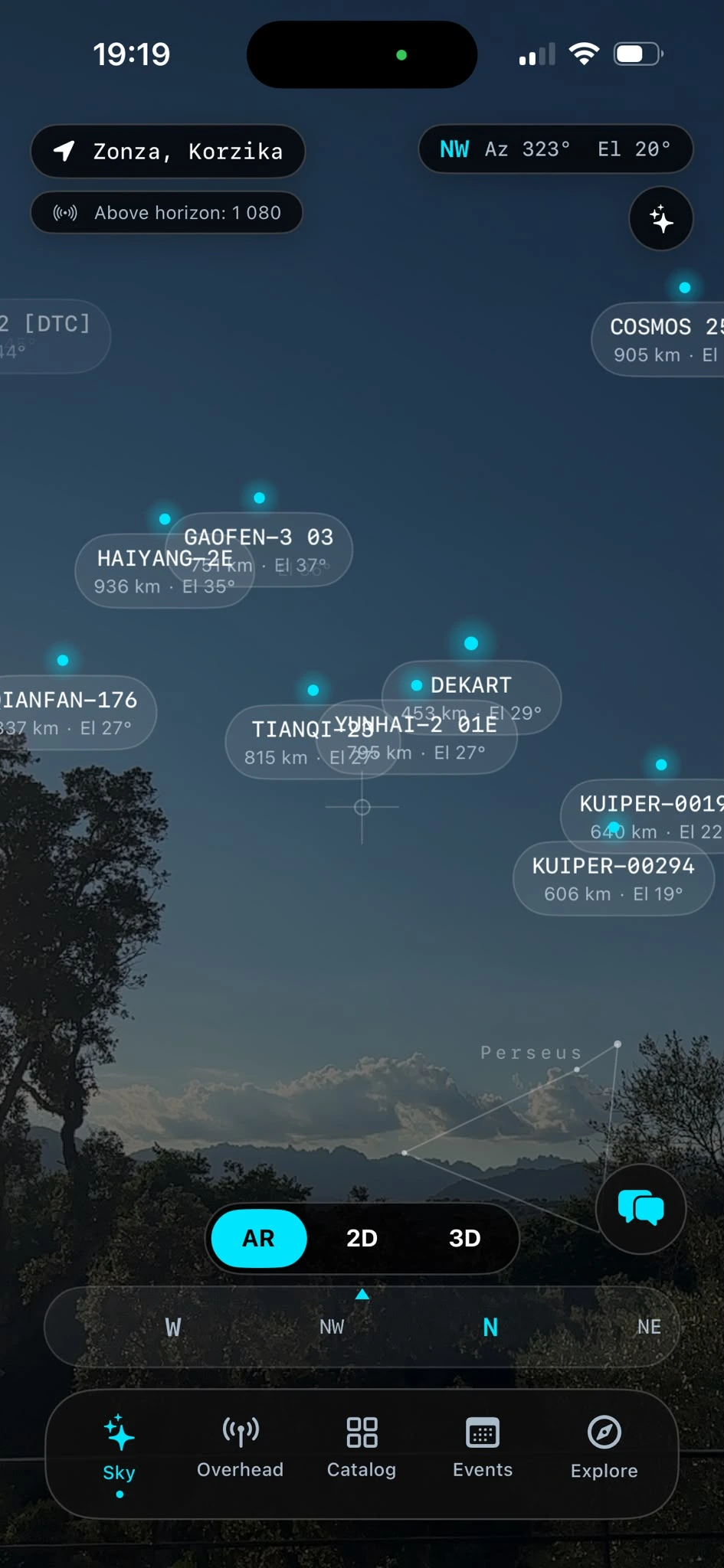
Show HN: Orbit – AR satellite tracker, watch 15k+ objects
BLISS
 Machine Learning and AI
Theories of Deep Learning
Reimplementing pf as an eBPF/XDP dataplane on Linux
 Science
Earendel (Astronomical Object)
Prefer STRICT tables in SQLite
In short: I prefer strict tables in SQLite because they avoid some datatype problems, such as putting text in number columns. SQLite has a feature that I think is underrated: strict tables. Strict tables help enforce rigid typing, preventing mistakes like putting text into integer columns. I like them, and wrote this post to promote their use! To make a strict table, add STRICT to the end of its definition. Like this: -CREATE TABLE people (name TEXT); +CREATE TABLE people (name TEXT) STRICT; Tha
 Web Development
The one thing every experienced engineer gets wrong
In the last few months every engineer I hired stumbled in exactly the same way: Project management. They learned quickly, but that first big project has become a right of passage.
Show HN: Learn by rebuilding Redis, Git, a database from scratch
Rust bindings for NetworkManager
nmrs makes it easier to write GUIs, network applications, system utilities and other programs in Rust, without writing heavy boilerplate zbus/dbus code. To best demonstrate its use, compare the following implementations of scanning and listing available Wi-Fi networks and displaying them in nmrs, and non-blocking D-Bus, respectively. ```rust use nmrs::{NetworkManager, WifiSecurity}; [tokio::main] async fn main() -> nmrs::Result<()> { let nm = NetworkManager::new().await?; // List networks let
 Science
FCC approves test of space mirror to light night sky
 Science
Scientists Solve Mystery of Bizarre ‘Alien Megastructure’ Star
Welcome back to the Abstract! Here are the studies this week that busted their butts, scaled great heights, got it right, and discovered a new world.First, Hannibal marched an army of men, horses, and elephants over the Alps to threaten Rome. Scientists ask the question: Just how hard did they grind? Then, the mouse at the top of the world, the ancient origins of handedness, and a throwback to the alien megastructures.As always, for more of my work, check out my book First Contact: The Story of
 Self-Hosting
Hostinger partners with Patchstack to bring vulnerability management to Node.js hosting
Hostinger customers now receive automatic security scanning for application dependencies, helping protect AI-built applications after deployment.Hostinger, an AI-driven business growth platform, has partnered with Patchstack, a leader in open-source vulnerability intelligence, to introduce built-in vulnerability management for its Node.js hosting. Applications are now continuously scanned for newly disclosed vulnerabilities in their dependencies, with customers automatically alerted and guided t
Your code is fast – if you're lucky
 Networking
Networking and the Internet, from First Principles
Do you think Rust is a good language for beginners?
I've learned some Python, so I understand the very basics of programming, like arrays and variables. I've heard that Rust is becoming increasingly popular, and apparently even parts of Windows are being rewritten in Rust, so I'm thinking about learning it next. Do you think Rust is a good choice for someone who's still a programming beginner? Or would it be better to learn something like C++ first before moving on to Rust? submitted by /u/Dangerous-Dust-8730 [link] [comments]
Looking for a simple TUI framework (smaller than Ratatui?)
Hey everyone, I'm looking to build a relatively straightforward TUI app in Rust and am trying to pick the right framework. I’m well aware of ratatui (and tui-rs), but it feels a bit like overkill for my scope. I really only need a few basic features: - Tile/Grid Layout: (of course ^_^) just a clean way to split the screen into sections/tiles. - Key Bindings: Handling a few simple keyboard shortcuts to trigger commands. - Modals: (a plus) just a way to pop up a basic modal dialogue with a text
 Machine Learning and AI
What Is Cognitive Orchestration? Why AI Systems Can’t Be Built Like Traditional Software
What Is Cognitive Orchestration? Why AI Systems Can’t Be Built Like Traditional Software Coordinating probabilistic cognition into reliable systems. The first time I wired a handful of models together, it worked. The second time, it drifted. By the tenth, I couldn’t tell you where the system had gone wrong, only that it had, somewhere between step three and step seven, quietly and with complete confidence. What I eventually understood is that the model was almost never the thing that failed.
 Algorithms
Documentation is still in your Mum's filing cabinet
 Security and Cryptography
What's the best way to do authentication in modern applications
 Machine Learning and AI
Context Compaction Is Becoming a Training Objective
Every long agent session ends the same way. Context fills, a summary fires, and the run continues on a compressed memory of what came before. In Claude Code the trigger is /compact, or the automatic pass that runs as you approach the window limit. Operators treat the moment as friction to manage: protect the state that matters, hope the summary keeps it, move on. A cluster of recent research says that instinct is about to age. Compaction is moving from an inference-time patch you engineer around
 Software Engineering
The Lindy Effect in Software
Show HN: Phobos – A tiny scale-free kernel language with tile-DAG support
Dot product: Component vs. Geometric definition
The goal of this post is to answer a simple question: why are the following two definitions of the vector dot product in Euclidean space [1] equivalent for vectors and : Component definition: Geometric definition: , where is the magnitude of and is the angle between the vectors’ directions Here’s a graphical depiction of our vectors (focusing on for clarity, though this applies to any-dimensional vectors). It shows both the components of the vectors and the angle between them. The le
 Systems Programming
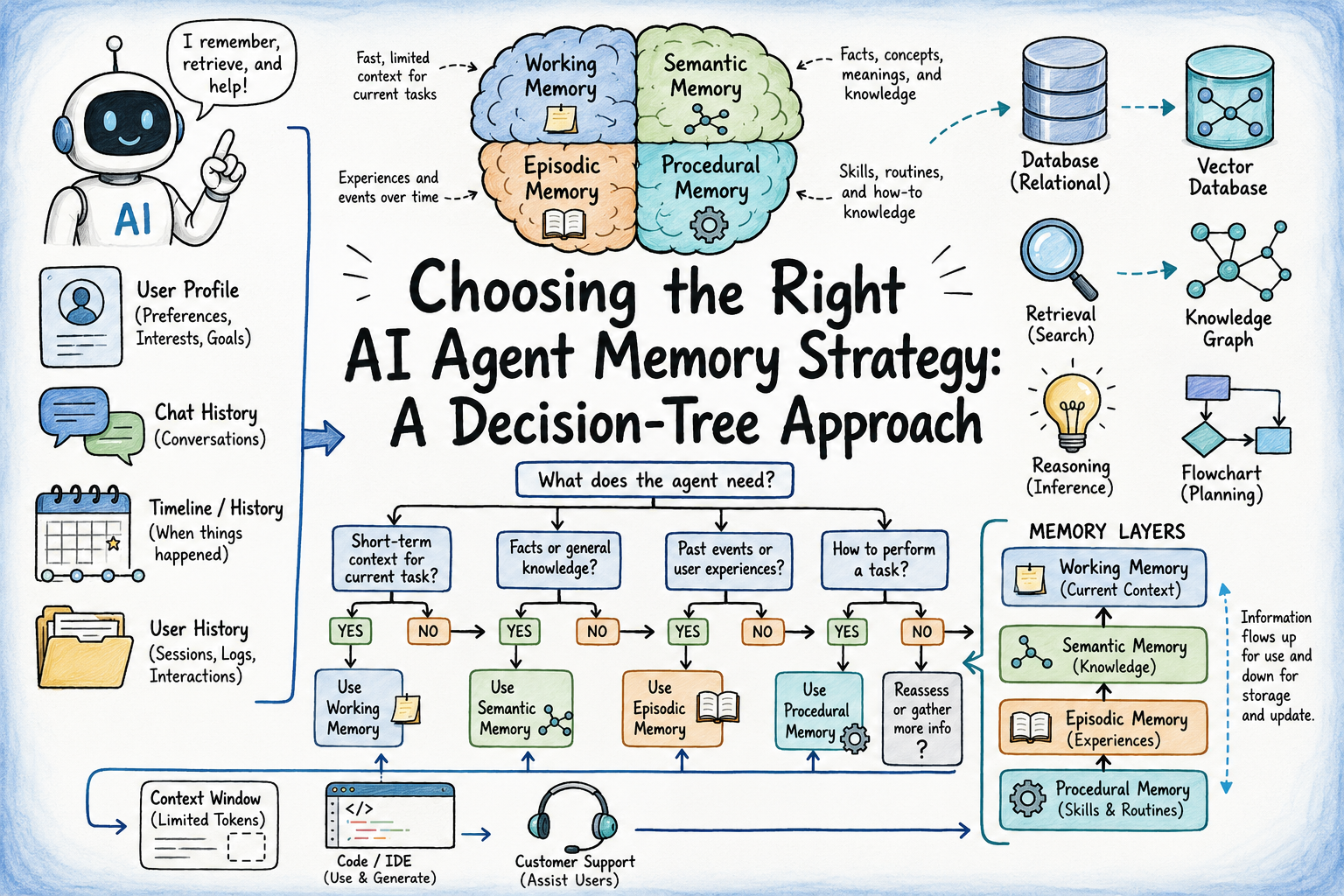
Choosing the Right AI Agent Memory Strategy: A Decision-Tree Approach
FreeCAD in the Browser
 Databases
Christophe Pettus: All Your GUCs in a Row: enable_self_join_elimination
You are rarely the only thing writing your SQL. Your ORM writes some of it, your nested views write more, and sooner or later one of them joins a table to itself on its own primary key. That join returns exactly the rows it started with. enable_self_join_elimination is the PostgreSQL 18 optimizat…
 Science
Einstein's relativity rules chemical bonds in heavy elements, new research shows
 Databases
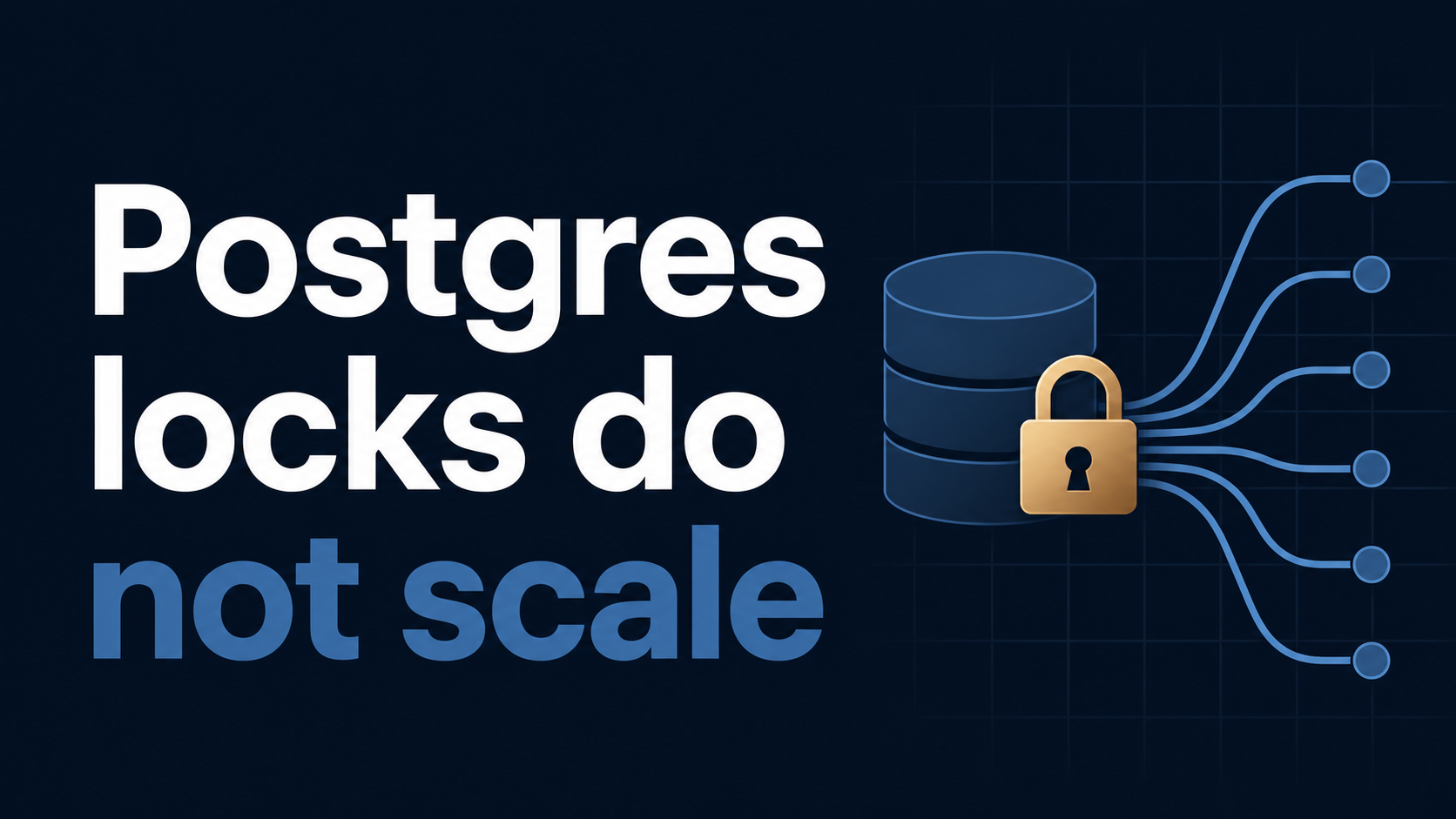
Postgres locks do not scale
Inference Optimization for MiMo v2.5: Pushing Hybrid SWA Efficiency to the Limit
 Software Engineering