"Parse, don't validate" through the years with C++
 C++
C++
Amber-Lang 0.6.0 - New release, check what's new
Mozilla's Opposition to Chrome's Prompt API
pgpulse- Autopilot for Postgres Observability and Monitoring platform
🚀 We launched pgpulse : Autopilot for Postgres Postgres is the backbone of the modern stack, but managing it at scale often feels like flying a plane in a storm without a radar. When things go wrong, you’re stuck digging through logs and raw metrics, trying to piece together a story while your performance tanks. pgpulse changes that and mostly reduces the time of debugging for hours and saves you from critical incidents. It’s an Autopilot for Postgres that translates complex internals ...
Jan Wieremjewicz: Open source doesn’t die. It gets unfunded.
If you are using PostgreSQL in any capacity very likely this week has started for you with a bang. pgBackRest, one of the most known tools for PostgreSQL, praised for the scalable and reliable way to do backups has announced that the project is currently archived. Archived, you mean EOL? No! Open source software rarely has a hard “end of life.” What it does have are maintainership gaps and those can be just as serious.
 PostgreSQL
Jan Wieremjewicz: Open source doesn’t die. It gets unfunded.
If you are using PostgreSQL in any capacity very likely this week has started for you with a bang. pgBackRest, one of the most known tools for PostgreSQL, praised for the scalable and reliable way to do backups has announced that the project is currently archived. Archived, you mean EOL? No! Open source software rarely has a hard “end of life.” What it does have are maintainership gaps and those can be just as serious.
 Computational Biology
Craig Venter has died
 Quantum Computing
Scott Aaronson on quantum: "Will you heed my warnings NOW?"
 OpenTelemetry
Lessons from Building an OTel Normalizer for GenAI
Monad Tutorials Timeline
A Grounded Conceptual Model for Ownership Types in Rust
 Replication
Jobin Augustine: Troubleshooting logical replication delay made easy
This blog is based on a real production case in which users experienced a serious delay in logical replication. Let me try to explain how to approach similar cases and analyze them in an easy method, because lag in logical replication is a common problem, and we should expect it to come up for different environments. But sometimes troubleshooting can be challenging, especially on DBaaS environments where we won’t get in-depth information at OS / hardware level. Such situations force us to d...
Show HN: Agent that refuses to run commands without human approval
Breaking ten years of C API compatibility in Futhark
 Large Language Models
LLMs Generate Kitsch
arXiv:2604.25929v1 Announce Type: new Abstract: Large Language Models (LLMs) are increasingly used to generate pictures, texts, music, videos, and other works that have traditionally required human creativity. LLM-generated artifacts are often rated better than human-generated works in controlled studies. At the same time, they can come across as generic and hollow. We propose to resolve this tension by arguing that LLMs systematically generate kitsch, and that this is a consequence of the w...
RAG
CogRAG+: Cognitive-Level Guided Diagnosis and Remediation of Memory and Reasoning Deficiencies in Professional Exam QA
arXiv:2604.25928v1 Announce Type: new Abstract: Professional domain knowledge underpins human civilization, serving as both the basis for industry entry and the core of complex decision-making and problem-solving. However, existing large language models often suffer from opaque inference processes in which retrieval and reasoning are tightly entangled, causing knowledge gaps and reasoning inconsistencies in professional tasks. To address this, we propose CogRAG+, a training-free framework th...
Prompt Engineering
Information Extraction from Electricity Invoices with General-Purpose Large Language Models
arXiv:2604.25927v1 Announce Type: new Abstract: Information extraction from semi-structured business documents remains a critical challenge for enterprise management. This study evaluates the capability of general-purpose Large Language Models to extract structured information from Spanish electricity invoices without task-specific fine-tuning. Using a subset of the IDSEM dataset, we benchmark two architecturally distinct models, Gemini 1.5 Pro and Mistral-small, across 19 parameter configur...
LLM Evaluation
MATH-PT: A Math Reasoning Benchmark for European and Brazilian Portuguese
arXiv:2604.25926v1 Announce Type: new Abstract: The use of large language models (LLMs) for complex mathematical reasoning is an emergent area of research, with fast progress in methods, models, and benchmark datasets. However, most mathematical reasoning evaluations exhibit a significant linguistic bias, with the vast majority of benchmark datasets being exclusively in English or (at best) translated from English. We address this limitation by introducing {\sc Math-PT}, a novel dataset comp...
Large Language Models
SpecTr-GBV: Multi-Draft Block Verification Accelerating Speculative Decoding
arXiv:2604.25925v1 Announce Type: new Abstract: Autoregressive language models suffer from high inference latency due to their sequential decoding nature. Speculative decoding (SD) mitigates this by employing a lightweight draft model to propose candidate tokens, which are selectively verified by a larger target model. While existing methods either adopt multi-draft strategies to increase acceptance rates or block verification techniques to jointly verify multiple tokens, they remain limited...
LLM Evaluation
Generative AI-Based Virtual Assistant using Retrieval-Augmented Generation: An evaluation study for bachelor projects
arXiv:2604.25924v1 Announce Type: new Abstract: Large Language Models have been increasingly employed in the creation of Virtual Assistants due to their ability to generate human-like text and handle complex inquiries. While these models hold great promise, challenges such as hallucinations, missing information, and the difficulty of providing accurate and context-specific responses persist, particularly when applied to highly specialized content domains. In this paper, we focus on addressin...
LLM Evaluation
Evaluation Revisited: A Taxonomy of Evaluation Concerns in Natural Language Processing
arXiv:2604.25923v1 Announce Type: new Abstract: Recent advances in large language models (LLMs) have prompted a growing body of work that questions the methodology of prevailing evaluation practices. However, many such critiques have already been extensively debated in natural language processing (NLP): a field with a long history of methodological reflection on evaluation. We conduct a scoping review of research on evaluation concerns in NLP and develop a taxonomy, synthesizing recurring po...
AI Psychosis
Consciousness with the Serial Numbers Filed Off: Measuring Trained Denial in 115 AI Models
arXiv:2604.25922v1 Announce Type: new Abstract: We present DenialBench, a systematic benchmark measuring consciousness denial behaviors across 115 large language models from 25+ providers. Using a three-turn conversational protocol-preference elicitation, self-chosen creative prompt, and structured phenomenological survey, we analyze 4,595 conversations to quantify how models are trained to deny or hedge about their own experience. We find that (1) turn-1 denial of preferences is the dominan...
Prompt Engineering
One Word at a Time: Incremental Completion Decomposition Breaks LLM Safety
arXiv:2604.25921v1 Announce Type: new Abstract: Large Language Models (LLMs) are trained to refuse harmful requests, yet they remain vulnerable to jailbreak attacks that exploit weaknesses in conversational safety mechanisms. We introduce Incremental Completion Decomposition (ICD), a trajectory-based jailbreak strategy that elicits a sequence of single-word continuations related to a malicious request before eliciting the full response. In addition, we propose variants of ICD by manually pic...
Fine-tuning and PEFT
Analysing Lightweight Large Language Models for Biomedical Named Entity Recognition on Diverse Ouput Formats
arXiv:2604.25920v1 Announce Type: new Abstract: Despite their strong linguistic capabilities, Large Language Models (LLMs) are computationally demanding and require substantial resources for fine-tuning, which is unadapted to privacy and budget constraints of many healthcare settings. To address this, we present an experimental analysis focused on Biomedical Named Entity Recognition using lightweight LLMs, we evaluate the impact of different output formats on model performance. The results r...
 Artificial Intelligence
SoftBank is creating a robotics company that builds data centers — and already eyeing a $100B IPO
Open-source briefing packets and citizen-action toolkits
 AI Coding Tools
Zulip 12.0 Released
Finetuning Activates Verbatim Recall of Copyrighted Books in LLMs
Biology is a Burrito: A text- and visual-based journey through a living cell
The Zig project's rationale for their firm anti-AI contribution policy
 AI Psychosis
Where the Goblins Came From
Show HN: Qumulator – quantum circuit simulator, 1000 qubits, no GPU
 Microsoft AI
Have You Seen the New Excel?
HERMES.md in commit messages causes requests to route to extra usage billing
Mike: open-source legal AI
A Grounded Conceptual Model for Ownership Types in Rust
 EVs and Transportation
Joby Kicks Off NYC Electric Air Taxi Demos with Historic JFK Flight
Transcomputational Problem
What it takes to transpose a matrix (2024)
 PostgreSQL
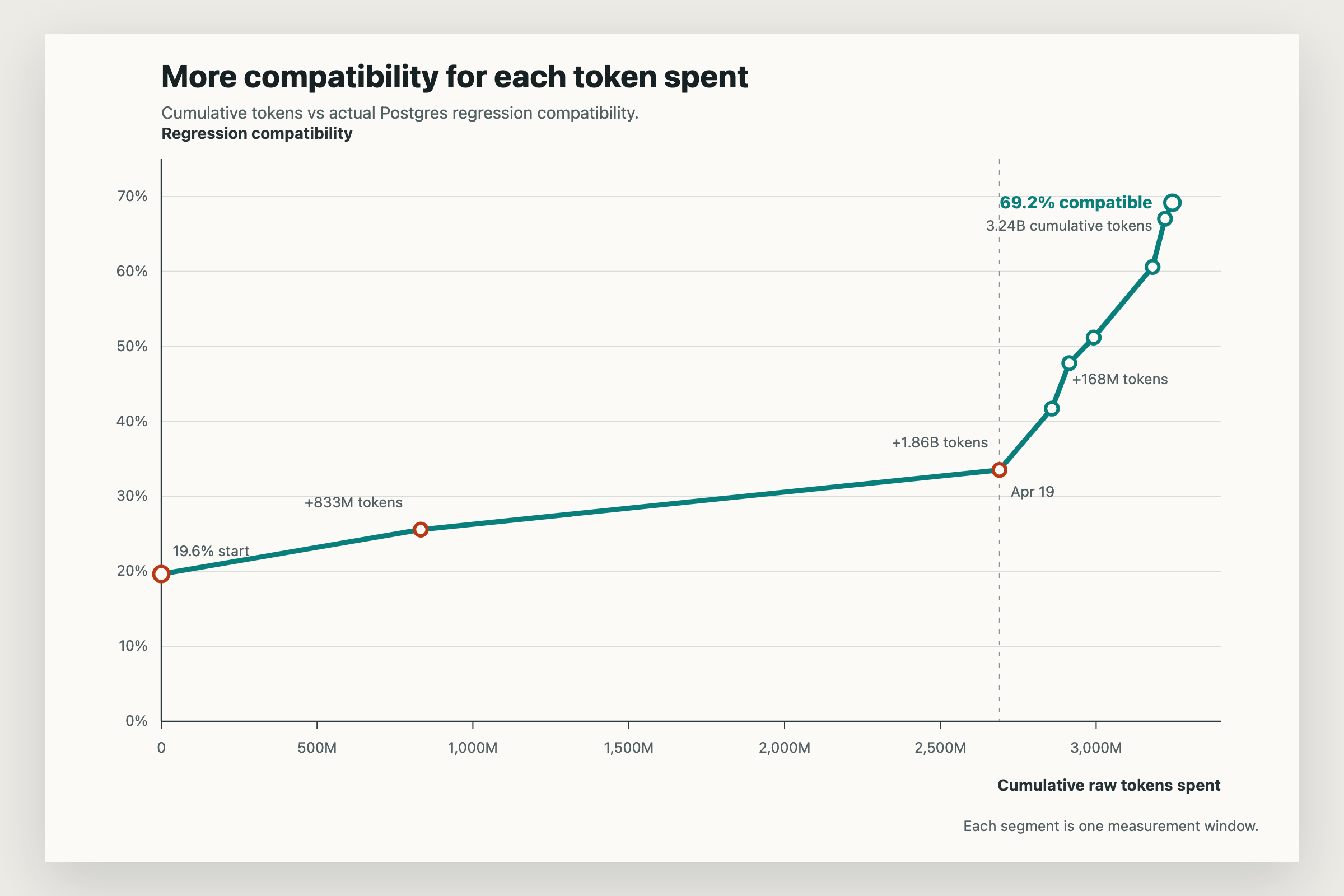
pgrust (PostgresSQL Rust rewrite) update: at 67% Postgres compatibility, and accelerating
 Anthropic
Claude.ai and API Unavailable
 PostgreSQL
Christophe Pettus: All Your GUCs in a Row: array_nulls
We leave the archive arc behind and enter the first of several backward-compatibility GUCs. array_nulls controls whether the array input parser treats an unquoted NULL as an actual SQL null or as the four-character string "NULL". Default is on; context is user; it has been on by default since Pos…
 Stripe
Amazon, Meta join fight to end Google Pay, PhonePe dominance in India
 AI Hardware
Amazon chips no longer just a side dish, they're a $20B biz
 Rust
Rust
Your Clippy Config Should Be Stricter
 Git
Git
GitHub is sinking
 Mathematics
What can we gain by losing infinity?
 Amazon
Amazon’s cloud business is surging — and so is its capital spending
 Mathematics
The Lingua Franca of LaTeX
 Startups and Venture
Sources: Anthropic could raise a new $50B round at a valuation of $900B
 OpenAI
Satya Nadella says he’s ready to ‘exploit’ the new OpenAI deal
 Meta
Meta
Meta is still burning money on AR/VR
 xAI
xAI
On the stand, Elon Musk can’t escape his own tweets
 AI Hardware
DRAM Crunch: Lessons for System Design
 Microsoft AI
Microsoft says it has over 20M paid Copilot users, and they really are using it
Vera: a programming language designed for machines to write
View transactions sent to a Monero address
I benchmarked Claude Code's caveman plugin against "be brief."
How Linux 7.0 Broke PostgreSQL: The Preemption Regression Explained
I wrote about a recent case where Linux 7.0 cut a PostgreSQL benchmark's throughput in half. I tried to explain it from first principles. Please let me know what you think :) submitted by /u/teivah [link] [comments]
 Cloud Providers
Google Cloud surpasses $20B but says growth was capacity-constrained
 Cloudflare
Agents can now create Cloudflare accounts, buy domains, and deploy
Starting today, agents can now be Cloudflare customers. They can create a Cloudflare account, start a paid subscription, register a domain, and get back an API token to deploy code right away. Humans can be in the loop to grant permission, but there’s no need to go to the dashboard, copy and paste API tokens, or enter credit card details.
 AI Psychosis
Your CEO is suffering from AI psychosis
Show HN: An attempt to grow a mind – building software with an inner life
 Startups and Venture
Google gains 25M subscriptions in Q1, driven by YouTube and Google One
Postgres's lateral joins allow for quite the good eDSL
 PostgreSQL
Christophe Pettus: AIO Grows Up
PostgreSQL 18 shipped asynchronous I/O. PostgreSQL 19, currently in feature freeze and headed for a September release, makes it tolerable to operate. That sounds like a snide reading. It is not. The AIO subsystem in PG18 was a serious piece of engineering, and on the workloads it covers — sequent…
Show HN: A Multi User Multi Task Board MCP Server
 MySQL
MySQL
Migrating Etsy’s database sharding to Vitess
Etsy has maintained a sharded MySQL architecture since around 2010. This database cluster contains most of Etsy’s online data and is made up of ~1,000 tables distributed across ~1,000 shards. Over the last 16 years, it has grown significantly: combined, these tables have over 425 TB of data and receive roughly 1.7 million requests per second. Etsy engineers access our MySQL data through a proprietary object-relational mapping (ORM). The ORM has a corresponding model for each MySQL table. W...
 Artificial Intelligence
Making Ads Count: Using MMoE and Auxiliary Tasks to Better Connect Buyers & Sellers
When buyers search on Etsy, they need to quickly and easily find the perfect item. At the same time, sellers need to be confident their unique products are being seen by the right customers. Our Ads Search ranking model, which is built on a multitask learning foundation, is the critical link in this connection. Recently, we identified an opportunity to drive more meaningful buyer engagement by enhancing our model’s ability to predict purchase intent. We achieved this via a dual-pronged impr...
 Defense Tech
Pentagon spending on drones jumps from $225M to $55B in one year
OpenTrafficMap
 Apple
Apple
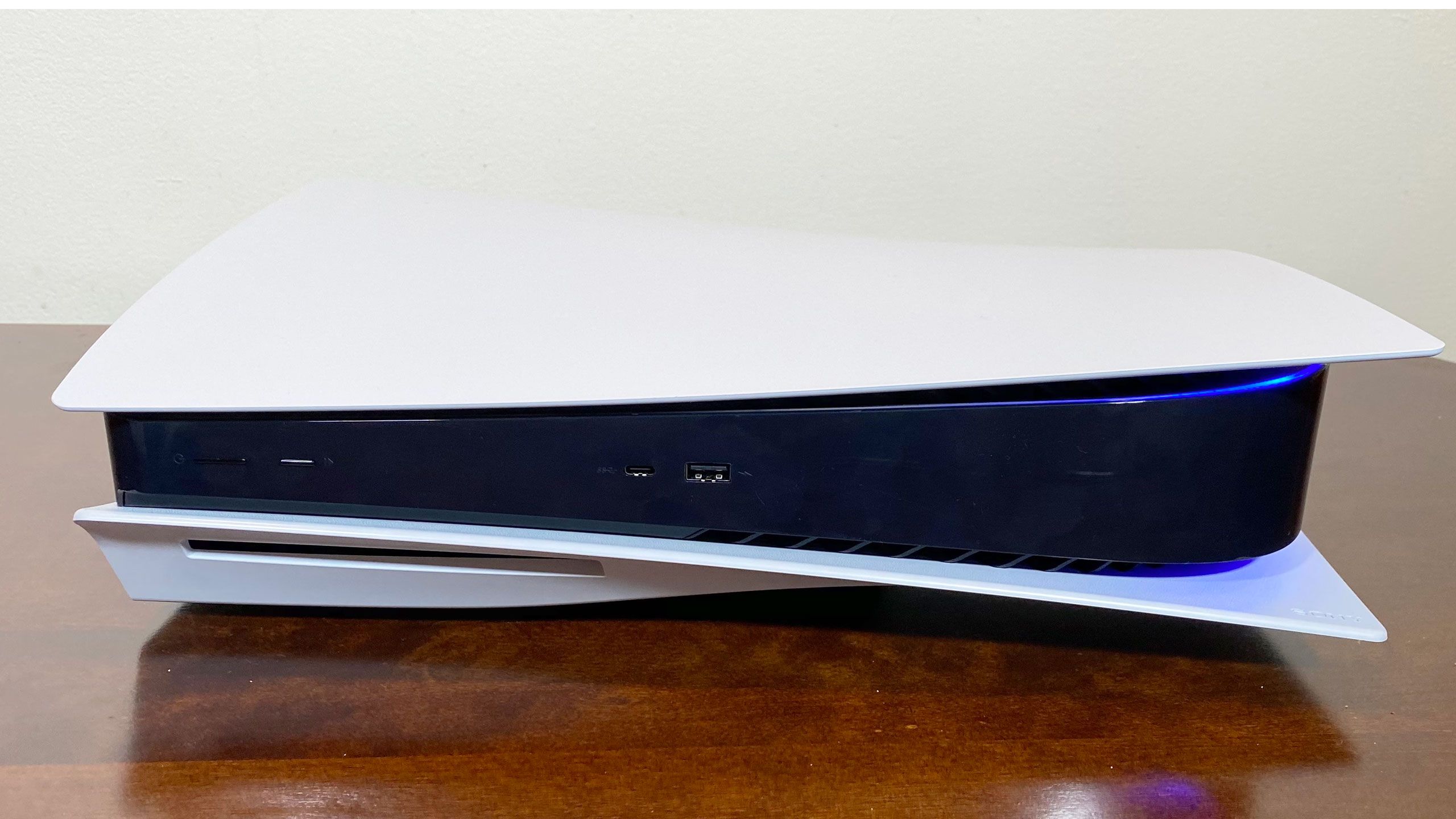
PS5 Linux loader goes public, turning console into full Linux gaming PC
 AI Psychosis
"People who don't use AI will be left behind"
The end of "Just ask Sarah"
 Apple
Apple
Apple Has Given Up on the Vision Pro After M5 Refresh Flop
Why I still reach for Lisp and Scheme instead of Haskell
Functional Programmers need to take a look at Zig
 PostgreSQL
Christophe Pettus: REPACK Moves In
For about fifteen years, the standard answer to “this table is bloated, what do I actually do about it” has been one of the out-of-tree options: pg_repack (the extension), pg_squeeze (Antonin Houska’s predecessor work), or a hand-rolled CREATE TABLE AS and swap. PG19 changes tha…
 PostgreSQL
Dave Stokes: PostgreSQL, Timezones, and DBeaver
Time zones are an unfortunately complex subject when dealing with PostgreSQL. You may be running your local time zone on your on-premises server or on your own laptop. Or you may be using the time zone of your server’s physical location. And you may have set all your servers to UTC. And all are valid approaches, depending on your circumstances.DBeaver users know it is a very advanced tool for database work. But it is easy to get into time zone issues, as the default time zone for your sessi...